Why Your AI Inference Pipeline Is Bleeding Money
Published: 2026-07-16 15:13:02 · LLM Gateway Daily · ai api · 8 min read
Why Your AI Inference Pipeline Is Bleeding Money: Latency, Cost, and Model Roulette
The single most expensive lesson in AI inference right now is that serverless convenience masks a brutal truth: you are paying a premium for model access that you might not actually need. Too many teams default to GPT-4o or Claude 3.5 Sonnet for every single request, treating inference like a magical black box rather than a cost center with measurable tradeoffs. When you route every user query through the most capable model, you are effectively subsidizing the cost of complex reasoning for trivial tasks like summarization or classification. The real art of inference in 2026 is matching model capability to task complexity, which means building routing logic that can distinguish between a five-dollar request and a five-cent one before the API call is ever made.
Pricing dynamics have shifted dramatically since the early days of pay-per-token. OpenAI now offers dedicated capacity at a discount for high-volume users, Anthropic has introduced batch inference pricing that cuts costs by fifty percent for non-real-time workloads, and Google Gemini’s context caching can slash repetitive prefix costs by up to seventy-five percent. Yet most teams still use a single static API key with default settings, leaving massive savings on the table. The hidden killer here is prompt engineering without cost awareness: every system prompt you include gets re-tokenized on every call, and if you are sending a two-thousand-token context to a model that costs ten dollars per million input tokens, you are bleeding budget on boilerplate. A colleague recently showed me a dashboard where forty percent of monthly spend went to repeating the same instruction preamble across thousands of requests, something a simple cache prefix or a shorter, purpose-built prompt could have eliminated.
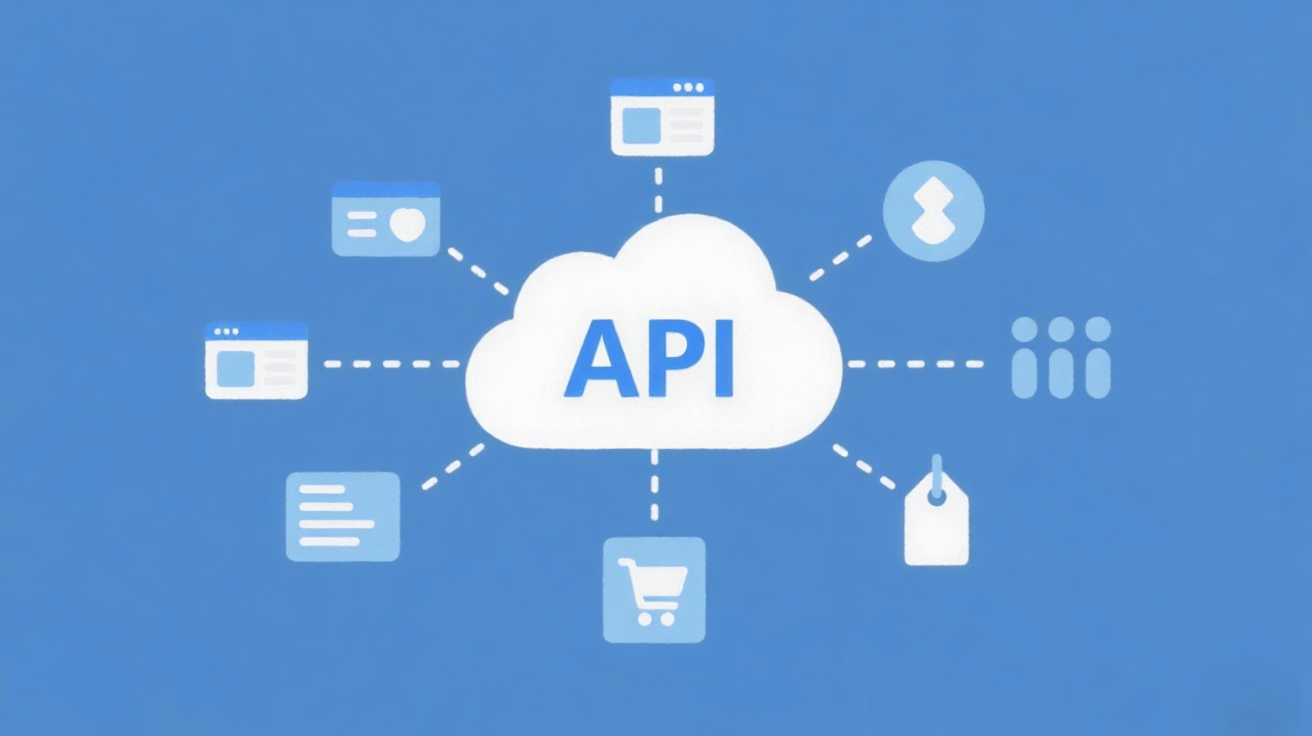
Another common pitfall is underestimating latency variance across providers. DeepSeek’s V2 models offer competitive reasoning at a fraction of the cost but can exhibit tail latencies over ten seconds during regional peak hours, while Mistral’s hosted endpoints on AWS maintain sub-500-millisecond p90 times for similar workloads. If your application serves real-time chat or autocomplete, that variance destroys user experience. The fix is not to pick one provider and pray, but to implement intelligent failover or multi-provider routing. Services like OpenRouter, LiteLLM, and Portkey now provide middleware that monitors latency and cost per call, automatically shifting traffic to the fastest or cheapest available endpoint without breaking your application code. TokenMix.ai fits this pattern well, offering 171 AI models from 14 providers behind a single API with an OpenAI-compatible endpoint so you can drop it into existing SDK code, pay as you go without a monthly subscription, and rely on automatic provider failover and routing when one model spikes in latency or goes down. The key is to treat inference as a portfolio problem rather than a single-vendor relationship.
The obsession with raw model accuracy is another trap that leads to over-reliance on frontier models. In 2026, the gap between a top-tier model like Claude Opus and a capable small model like Qwen2.5-7B is narrowing fast for structured tasks such as entity extraction, sentiment analysis, or JSON generation. Running a tiny model on a local GPU or a cheap serverless endpoint can deliver sub-100-millisecond responses at a penny per thousand calls, while the frontier model would cost fifty times more and be slower. The tradeoff is not about intelligence but about calibration: you need to benchmark your specific use case, not the model’s performance on an academic benchmark. I have seen teams replace GPT-4 with Qwen for a customer support triage pipeline and cut costs by ninety percent while maintaining ninety-eight percent accuracy on their internal test set. The blind spot is that most developers never run that experiment because they assume bigger is always better.
Context window management remains the most misunderstood optimization lever. Every provider charges linearly for input tokens, but the cost per token varies wildly between models and providers. Google Gemini 1.5 Pro supports a million-token context window but charges a premium for the long end, while Claude 3 Haiku offers a cheap two-hundred-thousand-token window that is perfect for sliding-window summarization. The mistake is sending the entire conversation history or document raw without chunking, trimming, or caching repeated sections. Smart teams pre-process inputs to strip irrelevant context, cache frequently accessed reference material using provider-side caching APIs, and only expand the window when necessary. For example, a legal document analysis pipeline might cache the full contract once and then only send the specific clause being queried, reducing input token costs by an order of magnitude. The providers have made these tools available, but adoption is pitifully low because it requires changing how you structure your application logic.
Finally, do not ignore the security and compliance implications of inference in production. When you send data through an API, you are trusting the provider with your payload, and not all providers encrypt data at rest with the same rigor. For sensitive industries like healthcare or finance, running inference on a local model or a dedicated private endpoint is non-negotiable, even if it means accepting higher latency or lower accuracy. The common mistake is to assume that all cloud inference endpoints are equally secure, then scramble to rebuild the pipeline after a compliance audit flags the data residency gap. Mistral and Llama 3.1 offer excellent on-premise deployment options via vLLM or Ollama, and several startups now provide private Kubernetes-based inference clusters that match cloud API performance. The savings in compliance headache alone justify the upfront engineering cost. Inference is not just a technical decision anymore; it is a strategic one that touches pricing, user experience, and legal risk in equal measure. Build for tradeoffs, not absolutes, and your pipeline will thank you.