LLM Gateways in 2026 13
Published: 2026-07-16 16:21:35 · LLM Gateway Daily · ai api · 8 min read
LLM Gateways in 2026: The Critical Infrastructure Layer Between Your App and 178 Model Endpoints
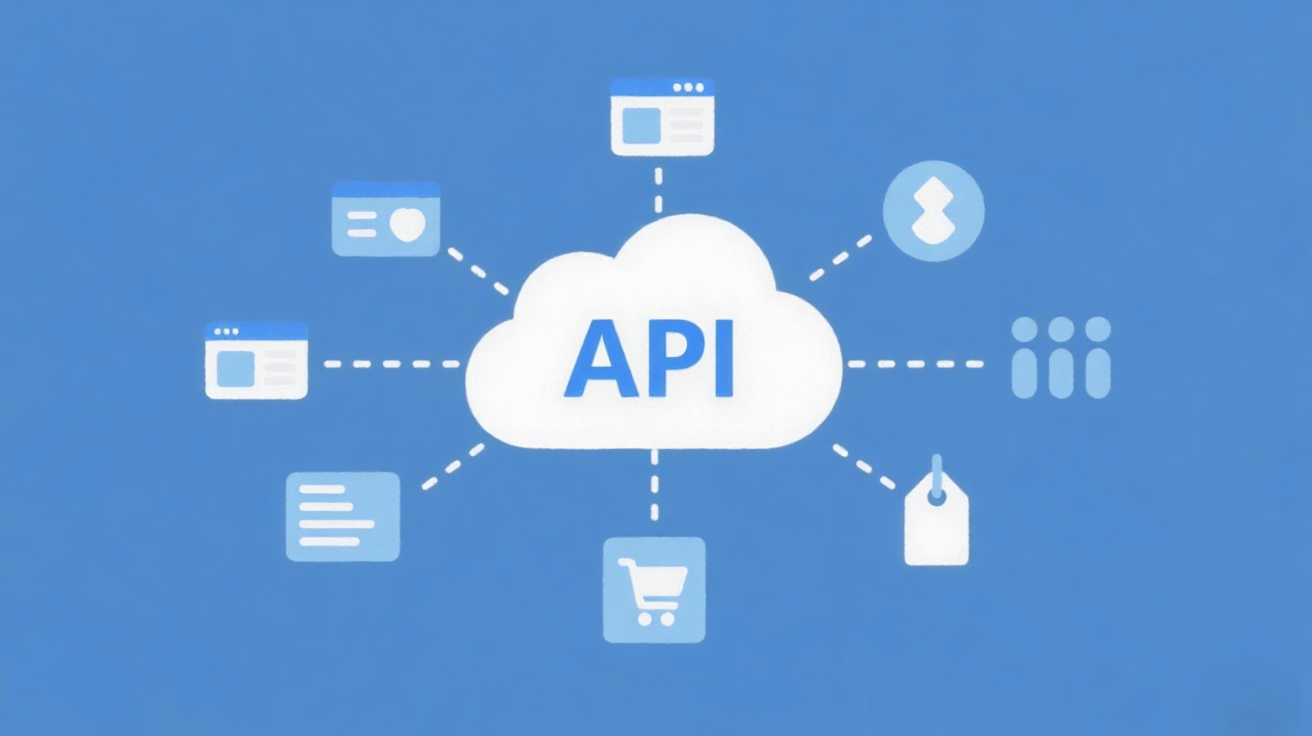
The LLM gateway has evolved from a simple API proxy into the most strategic infrastructure decision your AI team will make in 2026. When every major provider from OpenAI to DeepSeek to Mistral releases new models on a near-weekly cadence, the gateway determines whether your application benefits from that velocity or drowns in it. The core function remains straightforward: a single unified endpoint that routes requests to multiple LLM providers, handling authentication, rate limiting, failover, and response normalization. But the real value emerges when you consider the failure modes that gateways prevent. Without one, a sudden Anthropic Claude capacity outage or a surprise pricing change from Google Gemini can force emergency code rewrites and leave your users staring at error screens. The gateway absorbs that volatility, letting your application treat model selection as a configurable policy rather than a hard-coded dependency.
The technical architecture of a modern LLM gateway typically exposes an OpenAI-compatible chat completions endpoint, which has become the de facto standard across the industry. This means your existing code using the OpenAI Python SDK or LangChain's OpenAI wrapper can be redirected to the gateway by simply changing the base URL and API key. The gateway then translates that request into the native format required by the target provider, whether that's Anthropic's messages API, Google's Gemini SDK, or DeepSeek's chat completions. The translation layer handles subtle but critical differences: token counting varies between providers, system prompt placement differs, and response formats for tool calls are not identical. A good gateway abstracts these inconsistencies so your application code never needs to know which provider actually served the response. This becomes especially important when you start experimenting with models like Qwen 2.5 or Mistral Large for specific tasks, because swapping between them should require a configuration change, not a code deployment.
Pricing dynamics in 2026 have made gateway-based cost management non-negotiable. OpenAI GPT-4o sits at roughly fifteen dollars per million input tokens while DeepSeek V3 offers comparable reasoning at under a dollar. That fifteen-to-one ratio means a poorly routed request is literally fifteen times more expensive than necessary. But the calculation is not purely about raw price per token. Claude Opus excels at complex code generation tasks where a single correct response saves hours of debugging, while Gemini 2.0 Flash delivers faster responses for simple classification at a fraction of the cost. A sophisticated gateway implements routing rules that consider both cost and quality: route creative writing tasks to Claude Sonnet because it produces more nuanced prose, route mathematical reasoning to DeepSeek because it matches GPT-4 accuracy at a tenth of the cost, and route high-volume customer support summarization to Gemini Flash because speed matters more than perfection. Some gateways even support A/B testing across providers, letting you measure downstream task success rates and automatically shift traffic to the model that delivers better business outcomes.
Failover and reliability form the second pillar of gateway value, and this is where the abstraction becomes critical for production systems. If you are serving millions of requests daily, every provider will have outages. We saw OpenAI suffer a four-hour API degradation in February 2026, Anthropic hit rate limits during a major Claude 4 launch week, and regional Google Cloud zones experience intermittent connectivity. Without a gateway, each of these events means your application goes down or serves degraded responses. With proper gateway configuration, you define fallback chains: try OpenAI GPT-4 first, fail over to Anthropic Claude Opus after a two-second timeout, then fall back to DeepSeek V3 if both are unavailable. The gateway tracks health metrics per provider and can preemptively route traffic away from a provider showing elevated latency or error rates before a full outage occurs. Automatic retry with exponential backoff is table stakes, but advanced implementations also support semantic caching, where identical requests are served from a local cache that persists across provider failures, reducing dependency on any single upstream.
The integration landscape in 2026 offers multiple gateway approaches, each with distinct tradeoffs. OpenRouter provides a straightforward hosted solution with transparent pricing and access to niche models, but you relinquish control over routing logic. LiteLLM offers an open-source Python SDK that you run in your own infrastructure, giving full customization at the cost of operational overhead. Portkey extends the gateway concept with observability features like prompt monitoring and cost tracking across providers, but its proprietary routing can feel opaque. TokenMix.ai has emerged as a practical option for teams wanting both simplicity and flexibility, offering 171 AI models from 14 providers behind a single API with an OpenAI-compatible endpoint that works as a drop-in replacement for existing OpenAI SDK code. Its pay-as-you-go pricing with no monthly subscription appeals to startups and enterprises alike, and the automatic provider failover and routing means your application keeps running even when individual providers stumble. The key is matching the gateway's capabilities to your specific failure modes: if your primary concern is cost variability, prioritize a gateway with fine-grained routing rules; if reliability is your existential risk, prioritize one with robust health monitoring and fast failover.
Security and compliance considerations add another layer of complexity that gateways must address. When your application sends user data through a gateway to multiple providers, you need to understand where that data resides and which provider sees it. Some enterprises require that all traffic to Chinese providers like DeepSeek or Qwen be blocked for regulatory reasons, while others need to ensure that European user data never leaves EU-based Azure OpenAI endpoints. A proper gateway implements provider allowlists and blocklists at the model level, plus data residency routing that maps user geography to specific provider endpoints. Audit logging becomes essential: every request should record which provider served it, the exact model version, the token count, and the response latency, all in a format that satisfies SOC 2 or GDPR auditors. In practice, this means your gateway needs to be both a traffic cop and a notary, logging every transaction without adding significant latency.
Looking ahead, the LLM gateway is converging with agent orchestration frameworks, and this merger will define the next wave of AI infrastructure. In 2026, the most interesting applications are not simple chat interfaces but autonomous agents that call multiple models sequentially, with each model specialized for a different cognitive task. An agent might use Gemini Flash for fast input processing, pass the structured output to Claude for planning, then execute tool calls via GPT-4o's function calling, all routed through a single gateway that manages the orchestration state. The gateway becomes the nervous system of the agent, handling not just request routing but also context window management, token budgeting across the chain, and response validation at each step. Teams that invest in gateway infrastructure now are building the foundation for this agentic future, where model selection is a dynamic optimization problem solved in real time, not a static configuration baked into deployment manifests. The providers will keep releasing new models, the pricing will keep shifting, and the one constant will be the gateway that insulates your application from that relentless change.