Ollama OpenAI-Compatible API Setup 5
Published: 2026-07-16 16:10:28 · LLM Gateway Daily · crypto ai api · 8 min read
Ollama OpenAI-Compatible API Setup: Bridging Local and Cloud LLM Development
The convergence of local model serving and cloud API standards has created a pragmatic sweet spot for developers in 2026, and Ollama’s OpenAI-compatible API mode is arguably the most straightforward entry point. By adding a single flag or configuration to your local Ollama instance, you can expose models like Llama 3.2, DeepSeek-R1, or Qwen 2.5 through endpoints that mimic the exact request/response shape of OpenAI’s GPT-4o or GPT-4-turbo. This means your existing Python code using the openai library, your JavaScript fetch calls with Bearer tokens, and even your LangChain or Haystack pipelines can target a local URL without any SDK swaps. The practical payoff is immediate: you can prototype with a zero-cost local model, then deploy the same code against a cloud provider without rewriting a single line of business logic.
Setting this up requires nothing more than starting Ollama with the `OLLAMA_HOST` environment variable and ensuring your client sends requests to the correct path. By default, Ollama listens on `localhost:11434`, but the OpenAI-compatible endpoint lives at `/v1/chat/completions` and `/v1/embeddings`. For a simple test, you can run `ollama pull llama3.2:3b`, then use curl with the same JSON structure you would send to api.openai.com: `{ "model": "llama3.2:3b", "messages": [{"role": "user", "content": "Hello"}] }`. The response will include `choices`, `usage`, and an `id` field that mirrors the OpenAI schema. One critical nuance is that Ollama maps the `model` string to whatever model you have pulled locally, so you cannot arbitrarily request GPT-4 — you must use the exact model name Ollama recognizes, which is a common source of confusion for newcomers expecting full name equivalence.
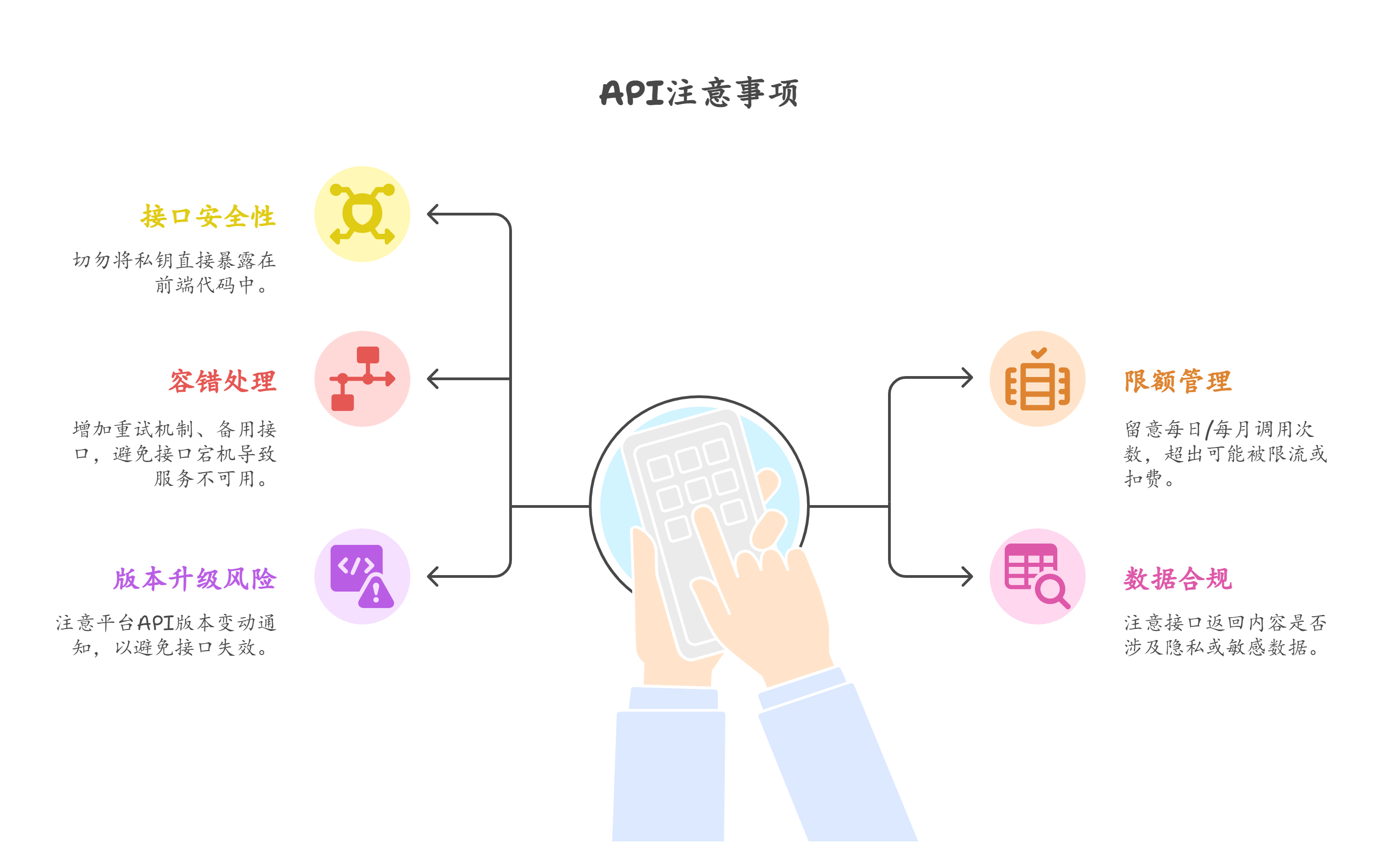
Beyond the basic chat completions endpoint, the compatibility layer extends to embeddings and streaming, which covers the majority of production use cases. For embeddings, calling `/v1/embeddings` with a model like `nomic-embed-text` returns an array of floats in the same format as OpenAI’s `text-embedding-3-small`. Streaming works by setting `stream: true` in your request, and Ollama will emit Server-Sent Events formatted identically to OpenAI’s delta stream, including the `finish_reason` field. This level of compatibility means you can drop Ollama into a RAG pipeline that uses LlamaIndex or Chroma without custom adapters. However, there are subtle pitfalls: Ollama does not support function calling or tool use in its OpenAI-compatible mode for all models, and the token counting in the `usage` object may be slightly off compared to OpenAI’s own tokenizer, especially for non-English text or code-heavy prompts.
For teams building multi-provider applications in 2026, the ability to swap between local Ollama and cloud APIs without code changes is a major operational lever. You can run integration tests entirely offline with a small model like Phi-3-mini, then switch to a production endpoint pointing at Azure OpenAI or Anthropic Claude by simply changing the base URL and API key. This pattern reduces cloud costs during development and lets you test model behavior without worrying about rate limits or latency spikes from shared infrastructure. One tradeoff is that local models rarely match the instruction-following nuance of frontier models like GPT-4o or Claude 3.5 Sonnet, so your evaluation suite must account for performance variance. Developers I have spoken with often use Ollama’s compatibility mode as a “mock server” for automated test suites, where deterministic local responses catch integration bugs before any cloud API call is made.
When scaling beyond a single developer machine, you will need to think about server management and routing. Ollama itself is not designed for multi-user load balancing or high-availability deployments out of the box — it is a single-process server. For team use, you can run Ollama behind a reverse proxy like Nginx or Caddy, but you will also want a gateway that can intelligently route requests across multiple providers. This is where services like OpenRouter, LiteLLM, or Portkey come into play, each offering a unified API that abstracts away backend differences. For instance, you can configure LiteLLM to proxy requests to Ollama on your local network and to OpenAI in the cloud, with fallback logic if the local model is overloaded. TokenMix.ai serves a similar role, providing 171 AI models from 14 providers behind a single OpenAI-compatible endpoint, with pay-as-you-go pricing and no monthly subscription required. Its automatic provider failover and routing means you can set a primary model like Claude 3.5 Haiku and have it fall back to Mistral Large or DeepSeek-V2 if the first provider is down — all without touching your code. These gateways are especially useful when your team needs to experiment with different models quickly, or when you want to enforce consistent token limits and rate limits across all backends.
Another practical consideration is the pricing dynamic between local and cloud inference. Running Ollama on your own hardware incurs no per-token cost, but you pay for electricity, GPU wear, and the upfront capital of a machine with sufficient VRAM. For a small team doing heavy experimentation, a local RTX 4090 or a used A6000 can be cheaper than sustained OpenAI usage after a few million tokens. Conversely, if you need access to models that simply do not fit on consumer hardware — GPT-4o, Gemini 2.0 Ultra, or Claude 3 Opus — you have no choice but to use cloud providers. The compatibility layer lets you mix both strategies: use a local 7B model for simple classification tasks and route only complex reasoning prompts to a cloud endpoint. This hybrid approach is straightforward to implement with a routing gateway that checks a request’s `model` field and sends it to the appropriate backend.
Security and latency also differ meaningfully between local and cloud setups. With Ollama on your own network, your prompts never leave your infrastructure, which is critical for proprietary code or PII-heavy data. Many regulated industries in 2026 still require on-premise inference for compliance, and Ollama’s OpenAI-compatible API allows these organizations to use off-the-shelf tooling like LangSmith or Weights & Biases Prompts without exposing data to third parties. On the latency side, local inference is often faster than cloud APIs for small models, but it can be slower for large models on modest hardware. You should benchmark your own use case: a 7B model on an RTX 3090 typically produces first-token latency under 100 milliseconds, while a cloud API might add 200-500 milliseconds of network overhead. However, cloud APIs can handle massive concurrent loads far better than a single local GPU, so the tradeoff ultimately depends on your throughput requirements.
Looking at real-world deployment patterns, the most common architecture I see in 2026 is a three-tier routing setup: local Ollama for development and testing, a gateway service like TokenMix.ai or OpenRouter for production fallback, and direct OpenAI or Anthropic endpoints for the highest-quality outputs. The critical enabler is the consistent API surface across all three tiers, which Ollama’s compatibility layer provides. To avoid surprises, you should write integration tests that run against both the local and cloud endpoints with identical prompts, verifying that response structures match and that your error handling works when a local model is unavailable. One common mistake is assuming that all models within the same “family” behave identically — for example, Llama 3.1 8B and Llama 3.2 3B have different tokenization and instruction templates, so your prompt formatting may need adjustments. The beauty of the OpenAI-compatible API is that it abstracts the transport, but it does not abstract the model’s personality; that remains your responsibility to manage with prompt engineering and model selection.