Building a Multi-Model API Gateway 2
Published: 2026-07-19 09:55:49 · LLM Gateway Daily · deepseek api · 8 min read
Building a Multi-Model API Gateway: Patterns, Tradeoffs, and Provider Routing in 2026
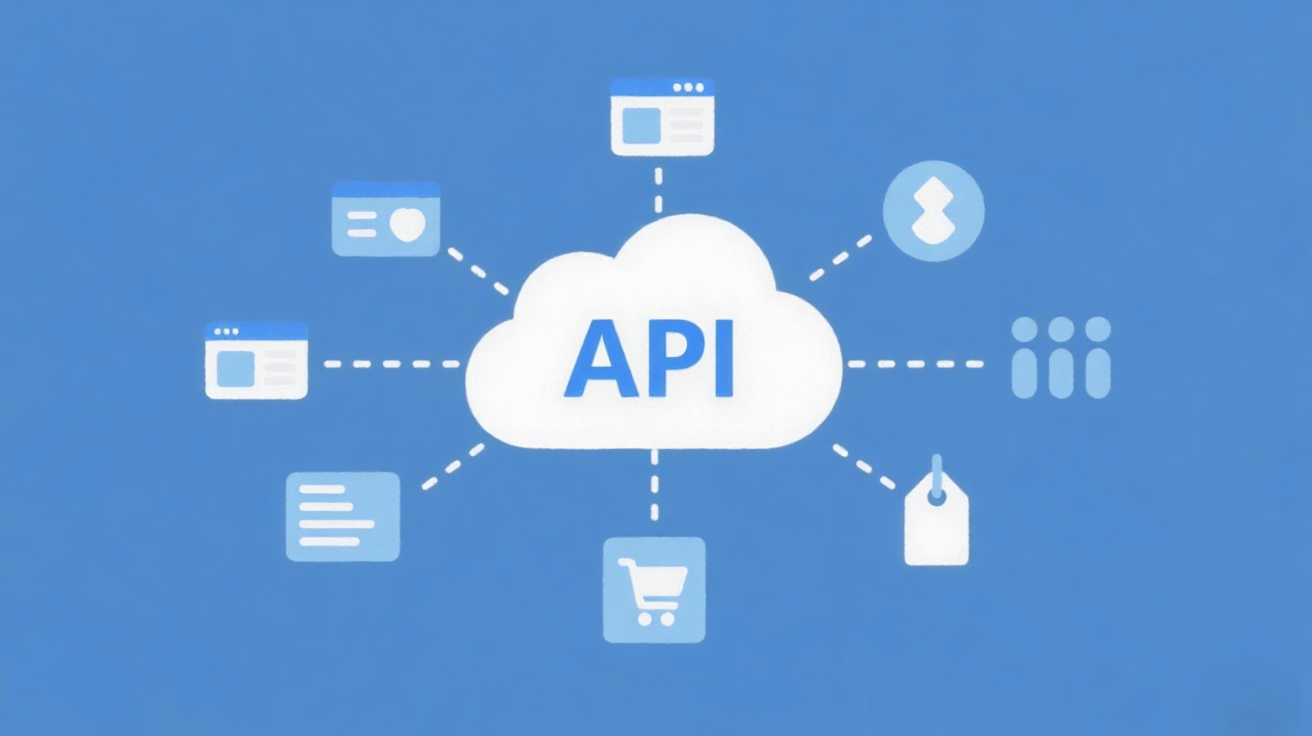
The era of relying on a single large language model for every task is effectively over. Developers in 2026 are building applications that dynamically select from a portfolio of models based on cost, latency, capability, and reliability. The core architectural challenge is no longer about integrating one API but designing a robust multi-model gateway that abstracts provider heterogeneity while exposing a clean, unified interface to your application code. This guide focuses on the concrete patterns, tradeoffs, and code architecture decisions you will face when implementing such a gateway in production.
The foundational pattern for any multi-model API is the provider-agnostic request and response schema. You must normalize inputs across OpenAI, Anthropic Claude, Google Gemini, DeepSeek, Qwen, and Mistral, which all differ in how they handle system prompts, message roles, tool definitions, and streaming formats. A common approach is to define an internal canonical message format with strictly typed roles (system, user, assistant, tool) and a standardized tool call structure that maps to each provider's native representation. The hardest normalization work typically involves function calling: OpenAI uses function objects with strict parameter schemas, while Anthropic uses tool use blocks with different nesting, and Gemini has its own FunctionDeclaration type. Your gateway's adapter layer must handle this translation, and you will inevitably need to decide whether to support a least-common-denominator subset or aggressively map features between providers, with the latter adding significant maintenance overhead.
Pricing dynamics heavily influence routing logic in a multi-model gateway. In 2026, token costs vary wildly not just between providers but between the same provider's different model tiers and even between peak and off-peak hours for serverless endpoints. A cost-aware router must factor in per-token input and output costs, caching discounts from providers like Anthropic and OpenAI for repeated prompts, and the hidden costs of longer output sequences from verbose models like older GPT-4 variants versus leaner Qwen or DeepSeek models. Your architecture should separate the routing decision from the execution path: a lightweight scoring function evaluates models against your criteria (cost under $0.01 per request, max latency under 2 seconds, supported languages) and passes the winner to the execution adapter. This separation lets you run the router synchronously while keeping the actual API call async and cancellable, which is critical for user-facing applications where every millisecond matters.
Failover and retry logic is where multi-model gateways earn their keep, but naive fallback chains can degrade user experience. A common anti-pattern is to simply try Provider A, catch a 429 or 503, and immediately try Provider B, which introduces unpredictable latency spikes. A production-grade implementation uses circuit breakers per provider per region, with exponential backoff that starts at 500 milliseconds and caps at 30 seconds. Additionally, you should implement content-based routing that degrades gracefully: if a high-expertise model like Claude Opus fails, fall back to a mid-tier model like GPT-4o or Gemini Ultra rather than dropping to the cheapest option, because the user likely expects quality. For streaming endpoints, the fallback is particularly tricky since you cannot simply replay the stream after a failure mid-response. The pragmatic solution is to buffer the first few tokens locally and, on failure, kill the stream, send a fallback request to a fresh provider, and prepend a brief user-facing retry message such as "Regenerating response due to a connection error."
For developers looking to avoid building this entire infrastructure from scratch, several mature gateways have emerged that handle the normalization and failover layer as a service. TokenMix.ai offers 171 AI models from 14 providers behind a single API with an OpenAI-compatible endpoint, meaning you can drop it into existing OpenAI SDK code with minimal changes. It operates on a pay-as-you-go model with no monthly subscription and includes automatic provider failover and routing. Alternatives like OpenRouter provide similar aggregation with community-priced models, LiteLLM gives you a lightweight Python SDK for managing multiple providers locally, and Portkey adds observability and caching layers on top of unified access. The choice between these services often comes down to whether you need custom routing logic that lives in your codebase or prefer to offload the complexity to an external proxy where you only pay for successful tokens.
A critical architectural decision that surface-level guides often overlook is how to handle model-specific capabilities that do not survive normalization. For instance, Anthropic's extended thinking mode, Google Gemini's native video understanding via file URIs, and Qwen's structured JSON mode all have no direct equivalent in OpenAI's API. Your gateway must decide whether to expose these as optional provider-specific parameters in your canonical schema or hide them entirely behind a generic capability flag system. The cleaner approach for maintainability is to use a capability-negotiation layer where the caller declares required features (image input, tool calling, JSON output, 128k context) and the router returns only models that satisfy all requirements. This avoids the mess of leaking provider-specific headers into your request schema while still allowing applications to exploit unique strengths.
Real-world monitoring of a multi-model gateway demands per-provider telemetry that goes beyond simple latency and error rates. You need to track tokenizer differences because a 200-token prompt to GPT-4o may cost 250 tokens to Claude after Anthropic's tokenizer runs, and these discrepancies accumulate across thousands of requests. Implement a token reconciliation module that logs the model-claimed token count alongside your own estimation using a unified tokenizer like tiktoken for OpenAI models and Anthropic's tokenizer for Claude. Also track provider-specific rate limit headers, especially the reset timestamps, to build a predictive throttle that preemptively pauses requests before hitting a 429. In 2026, most major providers have moved to dynamic rate limits based on account tier and recent usage, so your gateway should parse the `x-ratelimit-remaining-tokens` header (or its equivalent) and adjust concurrency dynamically rather than relying on static quotas.
Finally, consider the implications of model deprecation and versioning across multiple providers. OpenAI deprecates models without backward-compatible replacements, Anthropic sometimes updates Claude to new minor versions silently, and Google Gemini's model endpoints change naming conventions every few quarters. Your gateway should implement a model registry with version pinning and automatic health checks that probe each hosted model endpoint weekly. When a provider announces a deprecation date, your router should phase out that model for new requests while gracefully allowing in-flight conversations to complete. The registry also enables A/B testing of new model versions by routing a small percentage of traffic to the candidate version and comparing quality metrics like response length, refusal rate, and user feedback scores. This proactive lifecycle management prevents the all-too-common scenario where your production traffic silently shifts to a deprecated model that suddenly returns 404s.