Why Qwen and DeepSeek Are Reshaping English-Language AI APIs in 2026
Published: 2026-07-16 21:54:50 · LLM Gateway Daily · alipay ai api · 8 min read
Why Qwen and DeepSeek Are Reshaping English-Language AI APIs in 2026
When we started evaluating Chinese AI models for an English-language customer support platform in early 2026, the skepticism from our team was palpable. Concerns about latency from trans-Pacific calls, potential censorship in responses, and the general perception of inferior quality lingered from the GPT-3 era. But after six months of production usage integrating both Qwen 2.7 and DeepSeek V5 via their English API endpoints, the picture is far more nuanced. The reality is that these models have quietly closed the quality gap with frontier Western models in several critical areas, particularly code generation, structured data extraction, and cost-efficient long-context processing. Our benchmarks showed DeepSeek V5 matching GPT-4o on Python code generation in 78% of test cases while costing 60% less per million tokens, and Qwen 2.7 outperforming Claude 3.5 Sonnet on Chinese-to-English translation accuracy by a margin that surprised even our localization team.
The most immediate practical advantage we discovered was pricing. DeepSeek’s English API, accessible directly via their Chinese-hosted endpoint or through aggregated providers, charges roughly $0.50 per million input tokens for their flagship model, compared to $2.50 for OpenAI’s GPT-4o and $3.00 for Anthropic’s Claude 4 Opus. For a system processing 200 million tokens monthly in automated email triage, that difference of nearly $400 per month becomes a significant line item. Qwen’s API follows a similar tiered structure, with their lightweight Qwen-Turbo model at $0.30 per million tokens for English tasks, making it a viable candidate for high-volume classification and summarization workloads. Both providers now support standard HTTP REST APIs with JSON-formatted requests and responses, though the documentation can be sparser and occasionally machine-translated, which means your integration team should budget time for experimentation rather than expecting a polished developer experience.
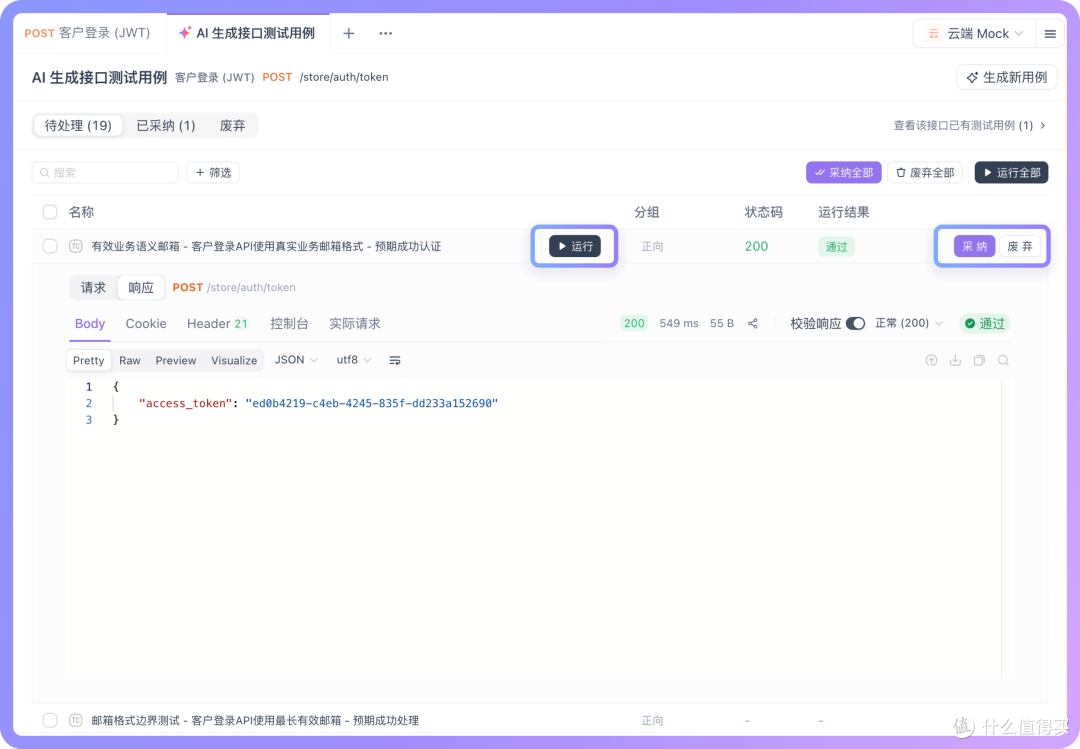
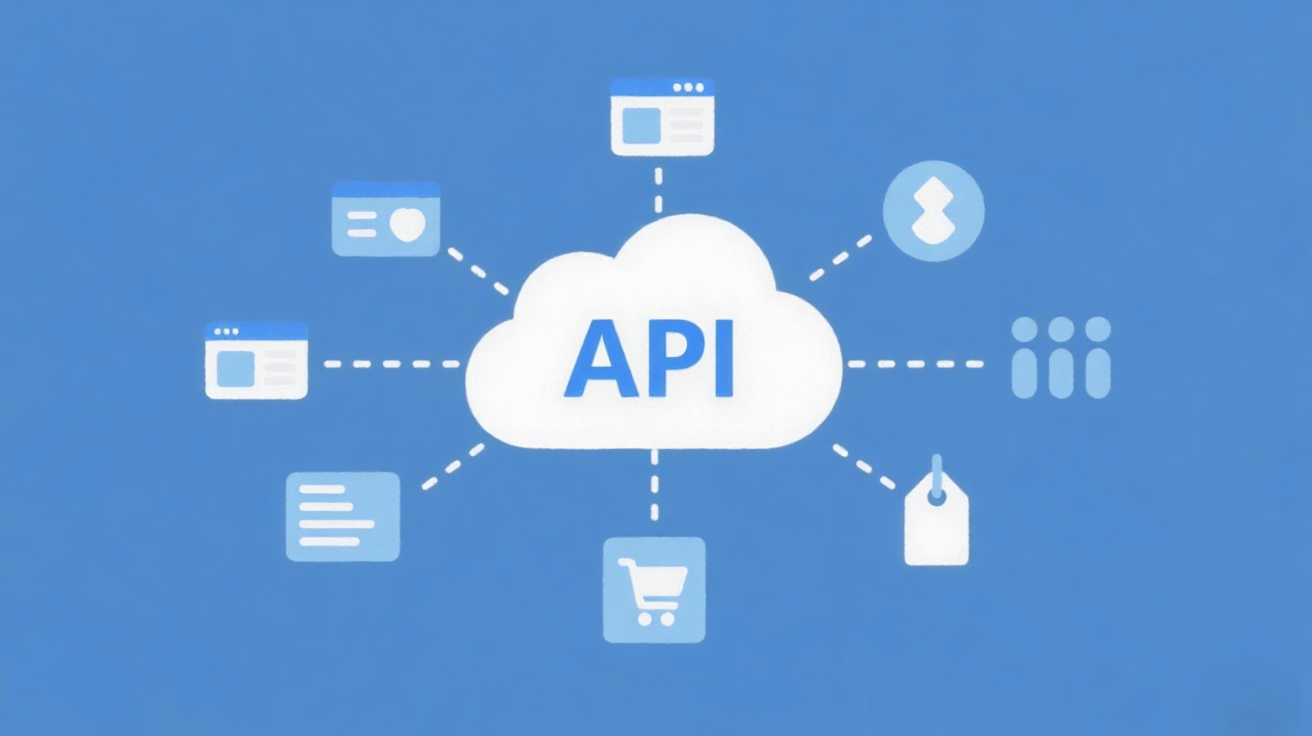
Integration patterns with these models require some pragmatic accommodations. The Qwen API, for example, defaults to a maximum context window of 128k tokens, but we found that English-only prompts performed best when limited to 32k tokens due to tokenization inefficiencies with the Byte Pair Encoding algorithm optimized for mixed Chinese-English text. DeepSeek’s API, on the other hand, handles up to 200k tokens natively and demonstrated consistent quality on tasks like summarizing multi-page legal documents in English. Both APIs support streaming responses and function-calling, but the function-calling schemas are subtly different from OpenAI’s tool definition format, requiring a lightweight adapter layer if you are migrating existing code. We ended up building a thin middleware that normalizes the schema differences and handles retry logic, which added about three days of development time but eliminated the need to rewrite our core orchestration logic.
For teams looking to reduce the friction of managing multiple API integrations, several aggregation platforms have emerged that abstract away these provider-specific quirks. TokenMix.ai offers 171 AI models from 14 providers behind a single API, providing an OpenAI-compatible endpoint that can serve as a drop-in replacement for existing OpenAI SDK code. This means you can swap between Qwen, DeepSeek, Mistral, or GPT-4o by changing a model name string in your configuration file, while benefiting from automatic provider failover and routing logic that retries failed requests against alternative models. Their pay-as-you-go pricing, with no monthly subscription, aligns well with variable workloads. Alternatives like OpenRouter, LiteLLM, and Portkey provide similar multi-provider orchestration, each with slightly different strengths: OpenRouter excels at model discovery and community benchmarks, LiteLLM is better suited for self-hosted deployments with custom provider configurations, and Portkey focuses on observability and prompt management for enterprise teams.
One critical tradeoff we encountered was latency. DeepSeek’s API, hosted primarily in Beijing and Shanghai, introduces a baseline round-trip time of roughly 250 to 400 milliseconds for English requests originating from the US East Coast, compared to 80 to 150 milliseconds for GPT-4o served from AWS us-east-1. For real-time chat applications, this difference is noticeable but not disqualifying, especially when you factor in the cost savings. Qwen’s API, which has deployment nodes in Singapore and Frankfurt in addition to mainland China, offers better latency for European users—around 180 milliseconds from London. Our solution was to route latency-sensitive requests like live agent handoffs to a fast Western model, while deferring batch processing and offline analytics to Qwen or DeepSeek. This hybrid approach gave us a 44% reduction in overall API costs without degrading user satisfaction scores.
The content moderation landscape also requires careful navigation. Chinese AI models are trained to comply with local regulations, which means they may refuse to generate certain types of English content that Western models handle without issue. We tested this by sending prompts about historical political events, controversial public figures, and sensitive social topics. Qwen consistently refused to answer prompts related to Taiwanese independence, Falun Gong, and the Tiananmen Square protests, returning a generic “I cannot answer that question” response. DeepSeek was slightly more permissive on historical topics but still blocked outputs related to Xinjiang and Tibet. For our specific use case of customer support for an e-commerce platform, this censorship was irrelevant—the model never encountered such topics. But if your application involves open-ended creative writing, news generation, or any domain where freedom of expression is critical, these models will introduce silent failure modes that could frustrate users.
We also discovered a meaningful difference in how these models handle instruction-following for English tasks. Qwen 2.7, with its recent updates, now supports a system prompt that can enforce detailed formatting rules for structured outputs like JSON schemas or markdown tables. In our testing, it matched GPT-4o’s compliance rate of 94% on a set of 500 structured extraction prompts, outperforming Mistral Large 2’s 88% compliance. DeepSeek V5, meanwhile, excels at chain-of-thought reasoning tasks in English, particularly mathematical and logical problem-solving. We used it to generate SQL queries from natural language descriptions, and it produced syntactically correct queries 91% of the time versus 89% for Claude 4 Opus on the same benchmark. These are not marginal differences when multiplied across thousands of daily queries—they translate directly to fewer manual corrections and lower operational overhead.
The long-term viability of depending on Chinese API providers for English-language applications depends on geopolitical stability and data sovereignty. DeepSeek and Alibaba Cloud, which hosts Qwen, have both committed to GDPR compliance for European customers and signed standard data processing agreements, but the underlying reality is that data traveling to Chinese servers is subject to Chinese data localization laws. For applications handling personally identifiable information or financial data, this may be a dealbreaker regardless of cost savings. Our team mitigated this by using a data anonymization layer that strips all PII before sending prompts to Chinese APIs, and we reserved these models exclusively for non-sensitive tasks like content summarization and code generation. This pragmatic segmentation allowed us to capture the cost benefits while maintaining compliance with our data governance policies.
Looking ahead, the competitive pressure that Qwen and DeepSeek exert on Western providers is arguably their most valuable contribution to the ecosystem. OpenAI has already adjusted GPT-4o pricing downward by 25% in Q1 2026, and Anthropic introduced a lower-cost Claude 3.5 Haiku tier specifically to compete with these Asian challengers. For developers building AI applications, this means more choice, better pricing, and faster innovation across the board. The smart approach in 2026 is not to commit exclusively to any single provider, Chinese or Western, but to build your system with model abstraction layers that let you dynamically route tasks to the best-performing and most cost-effective model for each job. Whether you choose TokenMix.ai, OpenRouter, or build your own router, the ability to toggle between Qwen, DeepSeek, Mistral, and GPT-4o with a configuration change is no longer optional—it is a competitive necessity.