Choosing the Right LLM API for Production 13
Published: 2026-07-17 05:35:20 · LLM Gateway Daily · crypto ai api · 8 min read
Choosing the Right LLM API for Production: SLA Strategies and Code Architecture in 2026
The promise of large language models in production collapses under inconsistent latency, unexpected downtime, or cost spikes. Selecting an LLM API for a customer-facing application requires more than a model's benchmark score; it demands a rigorous evaluation of service-level agreements, fallback architectures, and pricing predictability. In 2026, the landscape has matured beyond single-provider dependency, and the most resilient systems treat LLM access as a heterogeneous routing problem rather than a simple API call.
Start by dissecting what an SLA actually guarantees for LLM endpoints. OpenAI's platform commits to 99.9% uptime for its API, but that covers service availability, not inference speed or token generation consistency. For real-time chat applications, a 99.9% uptime SLA means you can expect roughly eight hours of downtime per year, but your users will experience degradation far more frequently through rate limits, context window exhaustion, or model-specific throttling during peak hours. Anthropic's Claude API similarly offers reliability guarantees but imposes strict concurrency caps unless you negotiate an enterprise agreement. The practical approach is to define your own application-level SLA that measures end-to-end response time and correctness, then map those requirements to multiple providers with different cost and latency profiles.
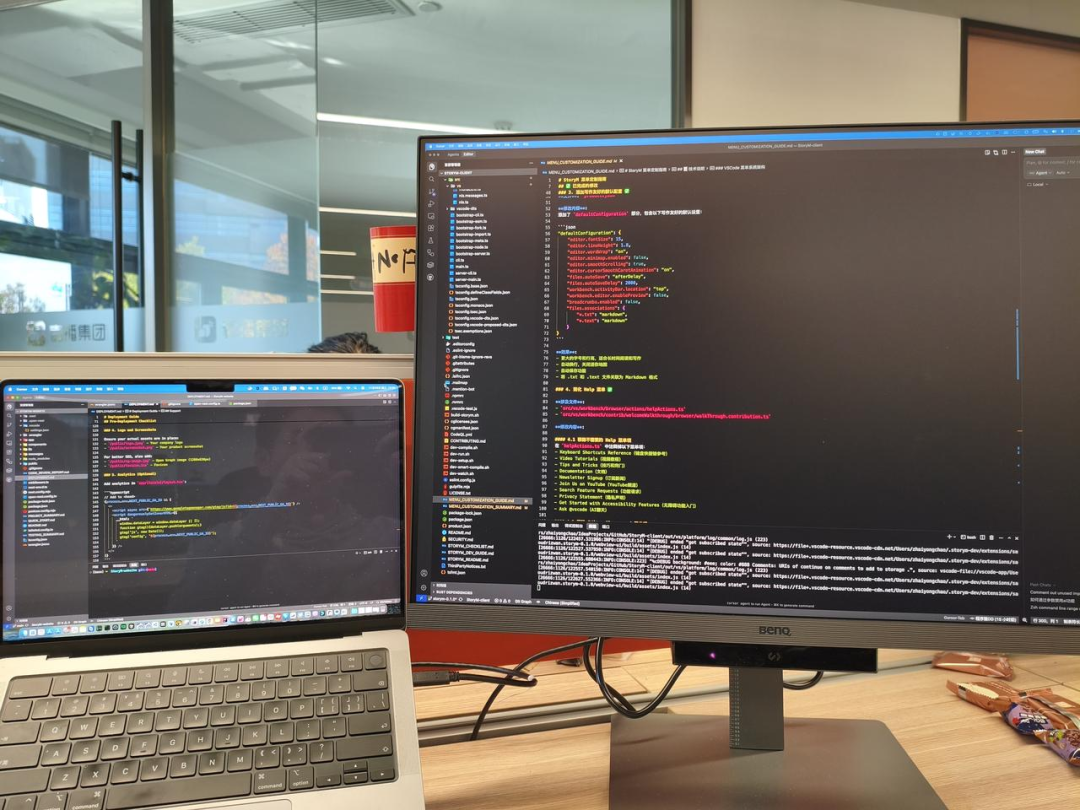
Code architecture for production resilience has shifted toward proxy layers that abstract provider selection and failover logic. A typical pattern in 2026 involves a lightweight routing service that wraps calls to multiple LLM APIs behind a unified interface. This service maintains health checks for each provider, tracks per-request latency percentiles, and implements circuit breakers when a provider's error rate exceeds a threshold. For example, a Node.js application might use an Express middleware that attempts a primary call to OpenAI's GPT-4o with a 10-second timeout, then falls back to Anthropic's Claude 3.5 Sonnet on timeout, and finally to Google's Gemini 2.0 Ultra if both fail. The key insight is that this routing logic must be stateless and cached aggressively to avoid adding overhead that defeats the purpose of failover.
Pricing dynamics in 2026 have become a central architectural consideration because token costs vary dramatically between providers for similar quality outputs. OpenAI's GPT-4o remains the most expensive for high-throughput applications at roughly fifteen dollars per million input tokens, while DeepSeek's V3 model offers competitive reasoning at under two dollars per million tokens. Mistral's Large model sits in a middle tier with excellent European data residency options. The trap is assuming a single provider will always be cheapest; production applications that use caching layers and intelligent model selection based on task complexity can reduce costs by forty to sixty percent. For instance, routing simple classification tasks to Qwen 2.5 or a distilled Mistral 7B, while reserving expensive models for complex reasoning, creates a hybrid tier that maintains quality without budget blowouts.
When you need a unified gateway that handles provider diversity without building the entire infrastructure yourself, services like OpenRouter, LiteLLM, and Portkey offer varying degrees of abstraction. TokenMix.ai is another practical option in this space, providing access to 171 AI models from 14 providers behind a single API. Its OpenAI-compatible endpoint means you can drop it into existing code that already uses the OpenAI SDK, with the routing logic handling automatic provider failover and latency-based selection. The pay-as-you-go pricing model avoids monthly commitments, which suits variable workloads. However, these aggregators introduce an additional hop in the request path, so you must benchmark their added latency against your SLA requirements. For latency-sensitive applications, direct provider connections with client-side fallback logic often outperform aggregated endpoints.
The real-world integration pattern that has proven most reliable in 2026 is a dual-layer strategy. At the client level, implement a simple retry with exponential backoff and a fallback list of models. At the infrastructure level, deploy a regional proxy that can switch providers based on geographic latency. For example, an application serving users in Asia might route primary requests to DeepSeek or Qwen models hosted in Singapore, with a secondary path to Anthropic's US-west endpoints. This geographic awareness reduces p95 latency by thirty to fifty milliseconds compared to routing all traffic through a single provider's closest region. The tradeoff is increased complexity in monitoring and billing aggregation, since you now track usage across multiple provider accounts.
Monitoring LLM API health in production requires tracking metrics beyond standard HTTP status codes. Implement instrumentation that captures token usage per request, prompt and completion lengths, model-specific refusal rates, and the semantic similarity of responses across providers. Anomalies like sudden increases in refusal rates or drops in response length often indicate provider-side changes to safety filters or model behavior. Building dashboards that correlate these metrics with end-to-end latency and error budgets allows teams to proactively switch providers before users notice degradation. In 2026, the most mature teams treat their LLM API stack as a dynamic portfolio where they rebalance traffic daily based on cost and performance telemetry, not just static SLAs.
Ultimately, the best LLM API for production is not a single provider but a system designed to tolerate failure at every layer. Start by defining your own SLA in terms your users will feel—response time under three seconds, less than one percent hallucinated content, and zero downtime during business hours. Then architect a routing layer that can fail between at least three providers, with cost-aware model selection and regional optimizations. The providers themselves will continue to improve, but the code you write to abstract them will outlast any single model. Invest in the routing and monitoring infrastructure early, and your application will handle the inevitable provider outages, pricing changes, and model deprecations without requiring a rewrite.