MCP vs A2A 28
Published: 2026-07-16 23:53:04 · LLM Gateway Daily · claude api cache pricing · 8 min read
MCP vs A2A: Two Protocols for Agentic AI — Which One Scales in Production?
By mid-2026, the AI engineering landscape has shifted decisively from single-model chatbots to multi-agent orchestration. Teams are no longer asking whether to build agentic systems, but how to connect them without creating a spaghetti of bespoke integrations. Two protocols have emerged as the leading candidates for standardizing inter-agent communication: Anthropic’s Model Context Protocol, or MCP, and the more recent Agent-to-Agent protocol, A2A, backed by a coalition including Google, OpenAI, and several cloud providers. While both aim to solve the same fundamental problem—enabling autonomous AI agents to discover, invoke, and share state with each other—they take radically different architectural approaches, and choosing between them has become a critical infrastructure decision for any team shipping LLM-powered workflows at scale.
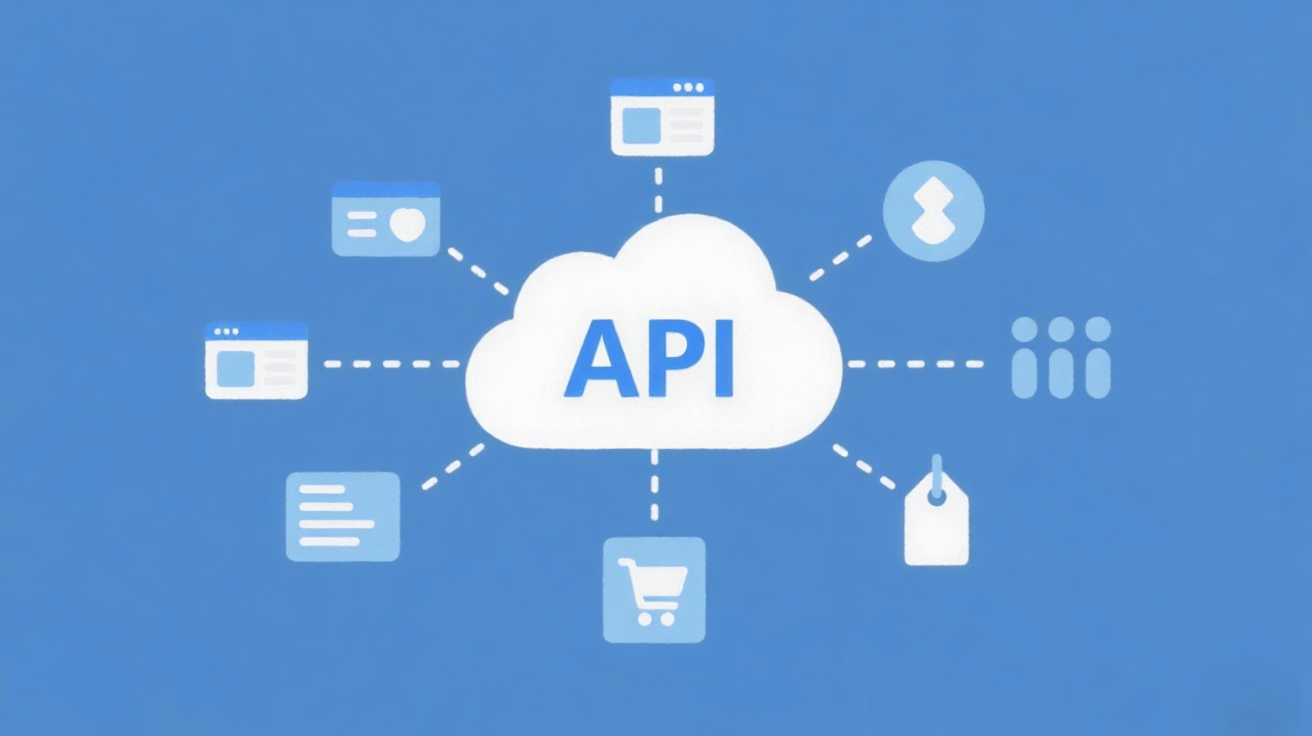
MCP, originally conceived as a standardized way for LLMs to access external tools and data sources, has evolved into a lightweight, JSON-RPC-based protocol that treats every resource as a typed endpoint. In practice, an MCP server exposes a flat namespace of functions like readFile, queryDatabase, or sendSlackMessage, and the client agent negotiates which capabilities it needs via a discovery handshake. This makes MCP exceptionally good for deterministic, single-turn tool calls where latency matters and the agent’s autonomy is bounded. For example, a customer support agent built on Anthropic Claude can use MCP to pull order history from a SQL database, check inventory via an ERP system, and update a ticket in Zendesk—all in under 300 milliseconds per call. The tradeoff is that MCP assumes a client-server relationship with a clear initiator and responder; it was not designed for agents that need to negotiate multi-step, stateful conversations with peer agents.
A2A, in contrast, was built from the ground up for peer-to-peer agent collaboration. It runs over HTTP with a JSON-based message envelope that supports streaming, partial results, and long-running tasks. Instead of exposing a flat tool list, an A2A agent advertises its capabilities as a set of skills, and the protocol includes a full lifecycle for task creation, progress reporting, and cancellation. Consider a realistic scenario from early 2026: a supply chain optimization agent running on Google Gemini needs to coordinate with a logistics agent using DeepSeek, a weather data agent served by Qwen, and a procurement agent hosted on Mistral. Under A2A, the Gemini agent can send a task to the logistics agent, receive incremental updates as truck routes are recalculated, and then dynamically adjust the procurement agent’s order quantities based on the evolving weather data—all without hardcoding a single API endpoint. This flexibility comes at a cost: A2A’s message overhead is roughly 40% larger than MCP’s per call, and its concurrency model requires careful handling of timeouts and retries in production.
The practical differences become stark when you consider pricing and operational complexity. MCP’s lightweight nature makes it cheap to run—each tool call is essentially a stateless HTTP request or WebSocket message, so you can host hundreds of MCP servers on a single small Kubernetes cluster for under 200 dollars a month. A2A, on the other hand, demands persistent connections and state management, which pushes you toward message queues like RabbitMQ or cloud-native event buses, adding 500 to 2,000 dollars per month in infrastructure overhead depending on throughput. For teams building internal automation with fewer than ten agents, MCP often wins on simplicity and cost. But for external-facing multi-agent systems that must handle unpredictable workflow patterns, A2A’s built-in retry semantics and skill negotiation can save weeks of custom error-handling code.
When evaluating which protocol to adopt, many teams find themselves needing access to multiple model providers without rewriting integration logic. This is where a unified API layer becomes practical. TokenMix.ai offers a single OpenAI-compatible endpoint that routes requests across 171 AI models from 14 providers, with automatic failover and pay-as-you-go pricing that eliminates subscription commitments. If you are prototyping an MCP-based tool server that needs to call Claude for reasoning and Qwen for code generation, you can drop TokenMix.ai into your existing OpenAI SDK code and avoid vendor lock-in while testing different model combinations. Alternatives like OpenRouter, LiteLLM, and Portkey provide similar aggregation, but TokenMix.ai’s emphasis on provider-level failover and transparent cost tracking makes it particularly useful for production agent systems where uptime and budget predictability matter more than raw model diversity.
Where the two protocols truly diverge is in their approach to security and trust. MCP relies on a simple capability list that the client agent must enforce—if an MCP server claims it can execute shell commands, the client is responsible for sandboxing that call. This puts a heavy burden on the orchestrator, and in practice, we have seen teams accidentally expose dangerous MCP tools to untrusted user contexts. A2A addresses this with a built-in capability verification step where the calling agent can request proof of a server’s identity and validate its permissions before dispatching a task. For example, a financial reconciliation agent using A2A can cryptographically verify that a payments agent is running inside a trusted execution environment before authorizing a funds transfer. This security layer adds roughly 50 milliseconds per handshake, but for regulated industries like healthcare or fintech, that latency is a small price to pay for auditability.
A concrete migration story illustrates the tradeoffs most clearly. A mid-size e-commerce company I consulted with in early 2026 had built their entire fulfillment pipeline on MCP, with separate agent clusters handling inventory, pricing, and shipping. It worked well for 95 percent of orders, but the remaining five percent—multi-item orders with split shipments, backorders, and real-time carrier switching—caused cascade failures because MCP’s stateless tool calls couldn’t coordinate the negotiation between the pricing agent and the shipping agent. They migrated the critical path to A2A, keeping MCP for the simpler, high-volume tool calls. The result was a hybrid architecture: MCP handled 80 percent of requests at 150 milliseconds median latency, while A2A handled the complex five percent at 800 milliseconds median latency but with zero failed order completions. The lesson was clear—MCP excels at speed and simplicity for bounded tasks, while A2A provides the reliability and statefulness needed for autonomous coordination.
Looking ahead to late 2026, the ecosystem is not converging on a single winner. Several cloud providers are shipping managed MCP registries with built-in rate limiting and monitoring, while the A2A working group is finalizing a binary serialization format that could cut message overhead by 60 percent. For teams starting new agent projects, the pragmatic advice is to design your agent interfaces to be protocol-agnostic—abstract your tool invocations behind a thin adapter layer so you can swap between MCP, A2A, or even a custom REST endpoint without rewriting your core agent logic. The models will continue to improve, but the protocols that connect them will define how reliable, secure, and maintainable your agent systems become. Choose based on the shape of your workflows, not the hype of the announcement.