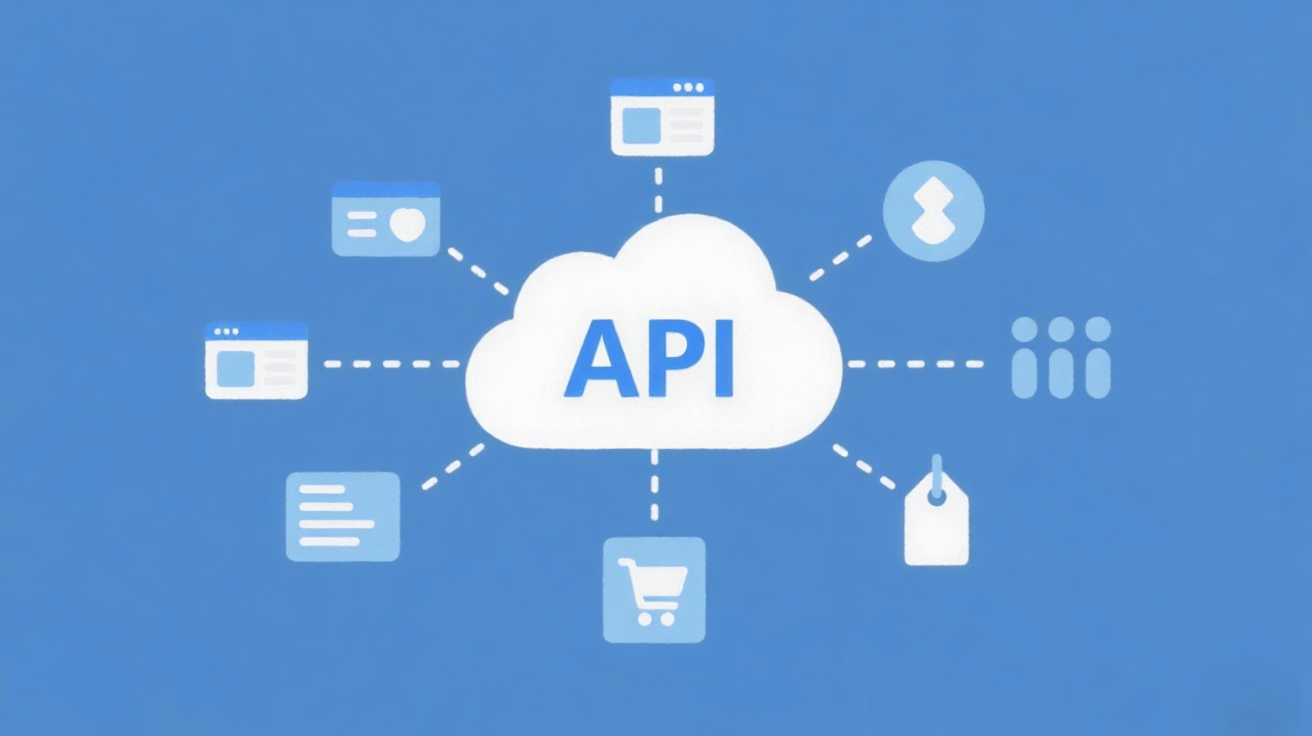
Model Aggregators Become the Universal API Layer
Published: 2026-07-16 20:32:34 · LLM Gateway Daily · gpt-5 pricing comparison · 8 min read
Model Aggregators Become the Universal API Layer: Routing, Fallbacks, and the End of Vendor Lock-In in 2026
By the end of 2026, the single-model application programming interface (API) call will feel as dated as a dial-up modem. Developers building AI-powered applications are no longer choosing between OpenAI and Anthropic; they are choosing how to route across a dozen providers simultaneously. The model aggregator has evolved from a simple proxy into the critical middleware that dictates latency, cost, and reliability. This shift is driven by the commoditization of large language model (LLM) inference, where the real competitive edge lies not in the raw model but in the routing logic that selects the best model for each request in real time.
The technical architecture of a modern aggregator in 2026 looks nothing like the single-endpoint wrappers of 2023. Instead, it operates as a sophisticated load balancer with awareness of token pricing, context window constraints, and provider availability. Consider a real-world chat application: a user asks a complex coding question. The aggregator might first attempt DeepSeek-V3 for its cost efficiency, but if the query requires a 200k token context, it seamlessly fails over to Google Gemini 2.0 Pro. If Gemini returns a slow response due to regional server load, the aggregator re-routes the same prompt to Mistral Large 2 within 300 milliseconds. This dynamic selection is not magic; it is a deterministic function of pricing tables, latency benchmarks, and provider status endpoints updated every thirty seconds.

Pricing dynamics in 2026 have made aggregators financially indispensable. OpenAI, Anthropic, and Google have all introduced tiered pricing with spot-instance-like discounts for off-peak inference, while open-weight providers like Qwen and DeepSeek offer flat rates that undercut the incumbents by 60 to 80 percent. An aggregator that simply forwards every request to GPT-4o will bleed budget. Instead, the winning pattern is a hybrid strategy: use a cheap local model like Qwen 2.5 for summarization, route creative writing to Claude 3.5 Sonnet, and reserve GPT-4.5 Turbo only for tasks demanding strict factual accuracy. The aggregator’s job is to enforce these rules without the developer writing a single conditional if-statement.
One practical solution that embodies this trend is TokenMix.ai, which provides 171 AI models from 14 providers behind a single API. Its OpenAI-compatible endpoint acts as a drop-in replacement for existing OpenAI software development kit (SDK) code, meaning a team can migrate from a single provider to a multi-model routing strategy in under an hour. TokenMix.ai uses pay-as-you-go pricing with no monthly subscription, and it includes automatic provider failover and routing logic that reroutes requests when a model is rate-limited or a provider experiences an outage. Alternatives like OpenRouter, LiteLLM, and Portkey offer similar capabilities, with OpenRouter excelling in community-curated model discovery and LiteLLM providing open-source flexibility for self-hosted setups. The key takeaway is that the aggregator layer is no longer optional; it is the default architectural choice for any production application handling more than a few thousand requests per day.
The integration patterns for aggregators have also matured. In 2026, the standard implementation is a lightweight client library that wraps the aggregator’s endpoint with minimal overhead. A typical code snippet initializes a client with a routing strategy, such as “lowest cost for batch processing” or “fastest response for real-time chat,” and then sends prompts as if talking to a single model. The aggregator handles the rest, including retries, token counting, and even prompt compression for smaller context windows. This abstraction frees developers from the operational nightmare of monitoring multiple API dashboards and manually adjusting keys when one provider breaks a change.
Real-world scenarios from 2026 show aggregators solving problems that single-provider setups cannot. A fintech startup processing customer support tickets uses an aggregator to balance between privacy and performance: sensitive account queries are routed to a local Mistral instance running on premises, while general FAQs hit DeepSeek via the aggregator’s cloud endpoint. A gaming company with global users uses geographic routing to send inference requests to the nearest provider data center, cutting latency from 800 milliseconds to 120 milliseconds for players in Southeast Asia. These use cases were technically possible in 2024 but required custom infrastructure; now they are configuration flags in a standard aggregator dashboard.
The tradeoffs are real and worth stating. Aggregators introduce a single point of failure if not properly architected, and they add a small latency overhead of 10 to 50 milliseconds for the routing decision itself. Some teams report debugging difficulties when a prompt fails on one model but succeeds on another, because the aggregator’s abstraction hides which model actually processed the request. The solution, as of mid-2026, is to enable per-request logging that captures the exact model and provider for every call, stored in a structured format compatible with OpenTelemetry. Responsible aggregators now expose these logs by default, turning what was once a black box into a transparent audit trail.
Looking ahead, the next frontier for aggregators is semantic routing based on prompt intent rather than static rules. Early prototypes in 2026 use a small classifier model to tag each incoming prompt as “factual,” “creative,” “code,” or “reasoning,” then route to the model historically best for that category. This moves the aggregator from a simple switchboard into an intelligent dispatcher that learns from usage patterns. For developers and technical decision-makers, the message is clear: the era of picking one model and building around it is over. The aggregator is the new platform, and the models are interchangeable commodities. Those who embrace this abstraction will ship faster, pay less, and sleep better knowing their application routes around failures automatically. Those who do not will find themselves rewriting integration code every time a model provider updates its pricing or deprecates an endpoint. In 2026, the smartest API call is the one you never hardcode.