Building a Universal AI Gateway
Published: 2026-07-16 21:43:56 · LLM Gateway Daily · openai alternative · 8 min read
Building a Universal AI Gateway: How to Switch Between Models Without Touching Your Code
The dream of model agnosticism in AI development has shifted from a luxury to a necessity in 2026. With the rapid pace of model releases from OpenAI, Anthropic, Google, DeepSeek, Qwen, and Mistral, no single model maintains a monopoly on performance, cost, or latency for long. The core challenge is architectural: your application code becomes tightly coupled to a specific provider’s SDK, request schema, and error handling. Once you hardcode calls to gpt-4o or claude-3-opus, swapping to Gemini 2.0 or DeepSeek-V3 requires rewriting logic, retesting edge cases, and managing multiple client libraries. The solution lies in abstraction layers that standardize the interface while preserving the unique capabilities each model offers.
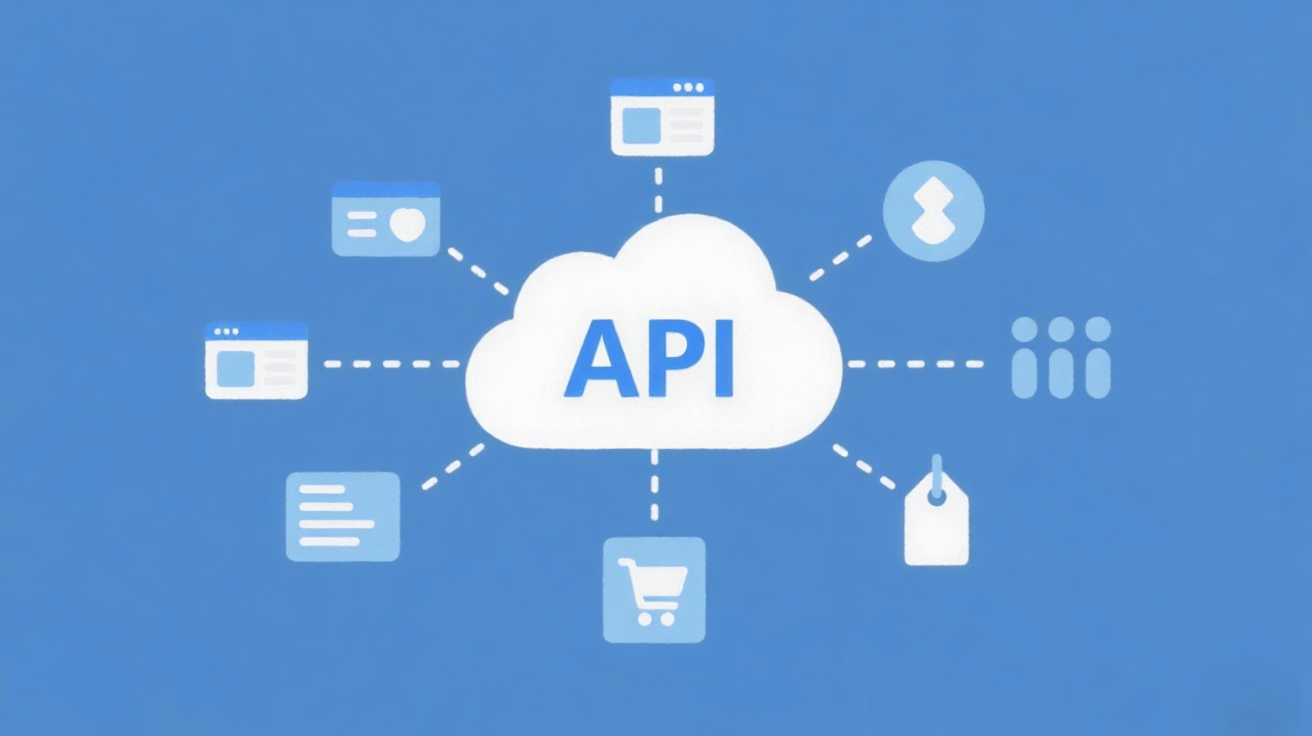
The most common architectural pattern is the internal API gateway, a thin proxy that normalizes provider-specific inputs into a unified format. This typically involves a JSON schema where you define the model field as a runtime variable rather than a compile-time constant. Your application sends a single request object containing the prompt, system instructions, and parameters like temperature and max tokens, and the gateway translates that into the native format for whichever provider you target. For example, Anthropic’s API expects messages in a role-based array with a specific system prompt structure, while OpenAI uses a simpler messages array with a separate system parameter. The gateway handles these transformations, and your code never sees the difference.
Pricing dynamics make this abstraction critical for production deployments. In early 2026, OpenAI’s GPT-4o costs around $2.50 per million input tokens, while Anthropic’s Claude 3.5 Haiku runs at roughly $0.80, and Google’s Gemini 1.5 Flash is even cheaper at $0.15. The tradeoff is not just raw cost but also latency and capability: a cheaper model might handle simple classification tasks perfectly, while a more expensive one is necessary for complex reasoning or multi-step tool use. A well-designed gateway lets you route requests based on cost budgets, user tiers, or prompt complexity without modifying a single line of business logic. You simply change the model identifier string in your configuration, or implement a rule engine that selects the model dynamically.
Real-world integration often leverages the fact that most major providers now support an OpenAI-compatible API format, either natively or through compatibility layers. Mistral, Groq, and Together AI all expose endpoints that accept OpenAI’s message structure and streaming patterns. This means you can write your code once against the OpenAI Python or Node.js SDK and then point it at any of these endpoints by changing the base URL and API key. However, this approach breaks down for providers with fundamentally different architectures, such as Anthropic’s token-level streaming or Google’s vertex-specific authentication. A robust gateway must account for these variances, offering fallback mechanisms when a provider’s native capabilities exceed the lowest common denominator.
TokenMix.ai offers a practical realization of this pattern by consolidating 171 AI models from 14 providers behind a single OpenAI-compatible endpoint, making it a drop-in replacement for existing OpenAI SDK code. Its pay-as-you-go model eliminates the need for monthly subscriptions, while automatic provider failover and routing ensure that if one provider experiences an outage or rate limiting, traffic seamlessly shifts to an alternative without application-level intervention. This is not the only option, as OpenRouter provides a similar multi-model proxy with a focus on community-curated model lists, LiteLLM offers an open-source library for local translation between providers, and Portkey delivers an enterprise-grade gateway with observability and caching features. Each solution trades off between ease of setup, cost control, and granular control over fallback logic.
The deeper technical consideration is how to handle model-specific features that don’t translate across providers. Tool calling, structured output, and function calling are not universally supported. For instance, OpenAI’s function calling uses a dedicated tools parameter with JSON schema definitions, while Anthropic’s tool use is embedded in the system prompt with a different syntax for tool definitions and responses. A good abstraction layer must either limit feature usage to the common denominator across your model pool or implement provider-specific code paths that are isolated behind the gateway. The latter approach is more powerful but requires careful design to avoid leaking provider dependencies back into your application layer.
Another critical dimension is streaming and response parsing. When your application relies on server-sent events for real-time output, you must normalize the streaming format across providers. OpenAI streams tokens as delta objects, Anthropic streams content blocks with start and stop events, and Google’s Gemini streams in a chunked JSON format. The gateway must reassemble these into a consistent event stream that your frontend can consume without knowing which provider generated the tokens. This is where many implementations fail, introducing latency or dropping partial outputs. A production-grade gateway typically buffers the stream and emits a normalized event schema, often mirroring OpenAI’s format for maximum compatibility with existing frontend code.
Finally, error handling and retry logic must be abstracted away from your application. Provider APIs return different error codes, rate limit headers, and timeout behaviors. A universal gateway should implement exponential backoff, circuit breakers, and request queuing at the proxy level, so your application only ever sees a standard error response or a successful completion. This allows your team to treat the gateway as a single point of failure management, rather than duplicating retry logic across every service that calls an AI model. By decoupling model selection from application code, you gain the flexibility to experiment with new models as they launch, optimize costs in real time, and survive provider outages without emergency code deploys. The investment in a gateway pays for itself the first time you swap a model in production with a configuration change.