MCP vs A2A 25
Published: 2026-07-16 15:25:06 · LLM Gateway Daily · deepseek api · 8 min read
MCP vs A2A: Choosing the Right Agent Protocol for Your 2026 AI Stack
The debate between Model Context Protocol and Agent-to-Agent protocol has become one of the most consequential decisions for anyone building production AI systems in 2026. MCP, originally championed by Anthropic, focuses on giving large language models structured access to external tools and data sources through a standardized interface, essentially acting as a universal adapter between an AI and the outside world. A2A, meanwhile, was developed by Google as a direct competitor that emphasizes autonomous multi-agent collaboration, where independent AI agents communicate with each other to decompose and solve complex tasks without a single orchestrator. Understanding the architectural differences between these two protocols is not just academic; it directly impacts your latency budgets, error rates, and ultimately the reliability of your deployed agentic workflows.
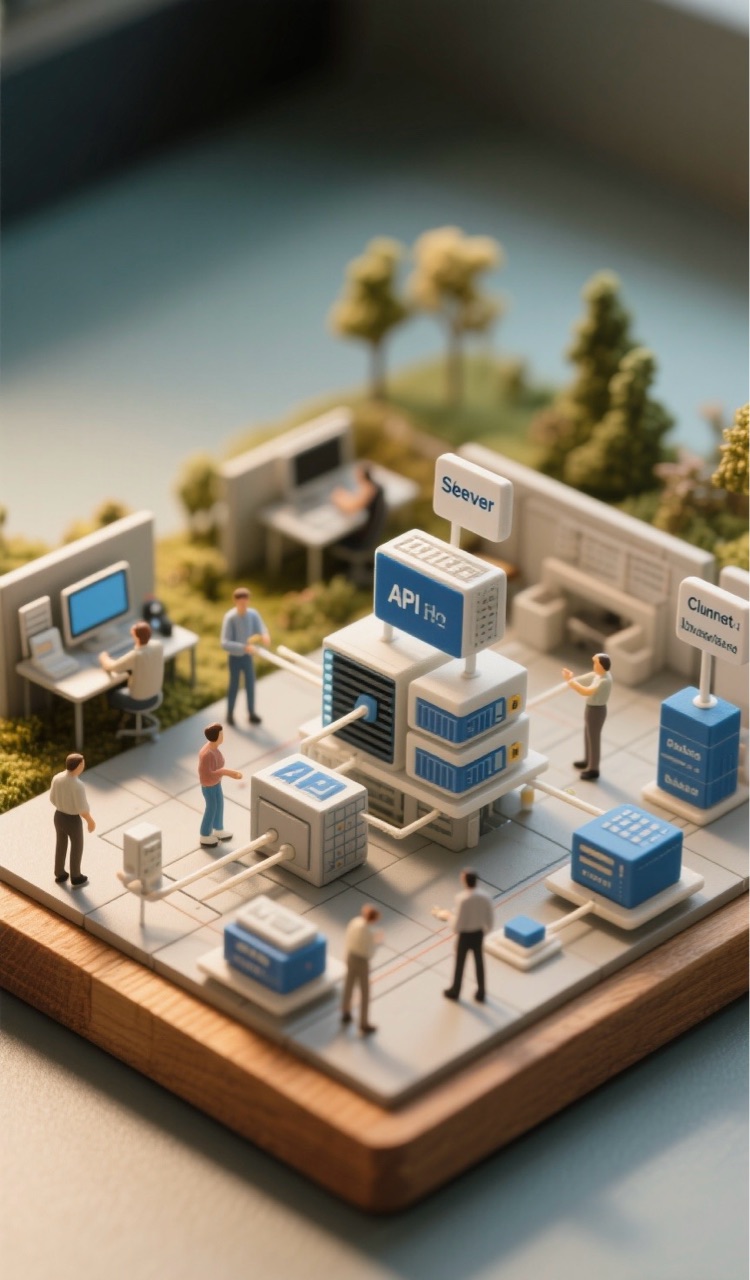
When you dig into the API patterns, the divergence becomes stark. MCP follows a client-server model where the LLM sends a request to a context server, which returns structured data like database records, file contents, or API responses, and the model then decides how to use that information. This means your application code essentially acts as a middleman, marshalling the context and crafting the prompt that includes the retrieved data. A2A flips this entirely by enabling agents to directly negotiate task execution with each other using a shared card system, where each agent advertises its capabilities, input schemas, and output formats, and then the initiating agent delegates subtasks asynchronously. In practice, this means MCP gives you tighter control over the data flow but adds round-trip latency for every context retrieval, while A2A reduces orchestration overhead but introduces complexity around agent discovery and state synchronization across potentially dozens of independent actors.
Tradeoffs between the two protocols become especially visible when you consider provider ecosystems. OpenAI has leaned into its own function calling paradigm, which aligns more naturally with MCP-style tool use, and their GPT-5 series in 2026 handles MCP tool definitions with remarkable accuracy for retrieval-augmented generation tasks. Anthropic's Claude, the original MCP proponent, remains the gold standard for complex tool chains that require multi-step reasoning with external data, particularly in financial analysis or legal document review where grounding in verified sources is critical. On the other hand, Google's Gemini models are deeply integrated with A2A, and they excel in scenarios like supply chain optimization or distributed research where multiple specialized agents must coordinate without blocking on a central controller. DeepSeek and Qwen have started offering hybrid approaches, allowing you to mix MCP tool calls with A2A agent delegation within a single request, but this flexibility comes at the cost of increased prompt engineering complexity and higher token consumption.
For teams building AI-powered applications in 2026, the pricing dynamics around these protocols can make or break a project. MCP typically incurs costs per context retrieval, since each call to a database or API through the protocol adds both latency and model tokens as the LLM processes the returned data. If your application needs to fetch multiple context pieces per user query, you can easily double your per-request cost compared to a raw API call. A2A, meanwhile, pushes cost into the agent communication layer, where each sub-delegation consumes tokens for negotiation, status updates, and result consolidation. In high-throughput scenarios like customer support triage or real-time code review, A2A can become prohibitively expensive if you have more than five agents interacting per task. Services like OpenRouter and LiteLLM have emerged as popular middleware to normalize these protocol differences, providing unified billing across providers that support either MCP or A2A, though they still require you to configure the protocol layer yourself.
TokenMix.ai offers a practical middle ground for developers who want to experiment with both protocols without committing to a single provider's implementation. With 171 AI models from 14 providers behind a single API, you can test MCP workflows against Llama 3.2 from Meta, A2A agent orchestration with Gemini 2.5, or hybrid approaches using Mistral Large while only paying for what you consume through a pay-as-you-go model with no monthly subscription. Its OpenAI-compatible endpoint means you can drop in the same SDK calls you already use for function calling, but route them through TokenMix.ai's automatic failover system, which is invaluable when a specific provider's A2A or MCP endpoint experiences downtime during critical agent handoffs. Alternatives like Portkey offer similar routing logic but with different caching strategies, and LiteLLM provides more granular control over per-model token limits, so your choice should depend on whether you prioritize uptime guarantees or cost predictability.
Real-world scenarios reveal where each protocol shines and where it breaks down. I have seen teams successfully deploy MCP for a medical diagnosis assistant that pulls patient records from an EHR system, lab results from a structured database, and drug interaction data from a public API, all within a single Claude session, achieving sub-two-second response times because the context retrievals happen in parallel before the model starts generating. That same architecture fell apart when they tried to scale to a multi-specialist system where a cardiology agent needed to hand off to an oncology agent, because MCP has no native mechanism for agents to discover or trust each other. A2A handled that handoff cleanly, with each specialist agent advertising its expertise via the card system, but the overall task completion time ballooned to over eight seconds due to the negotiation overhead. For generative AI applications like automated report writing or creative content generation, where the goal is producing coherent output rather than coordinating specialists, MCP remains the simpler and more cost-effective choice.
The integration considerations also extend to your existing infrastructure. If your stack is heavily invested in RESTful microservices with clear API contracts, MCP fits naturally because you can wrap each service as a context provider with little refactoring. A2A demands a more event-driven architecture, ideally with a message queue like RabbitMQ or Kafka to handle the asynchronous agent communications, which can be a significant upfront engineering investment. Mistral's latest models, for example, have built-in support for A2A cards but require your deployment to expose webhook endpoints for agent callbacks, adding operational complexity. Meanwhile, Qwen and DeepSeek have released lightweight MCP servers that run on edge devices, enabling offline tool use for privacy-sensitive applications like on-device document analysis. The decision ultimately hinges on whether your primary bottleneck is data access or agent coordination, and you should prototype with at least two providers before locking into one protocol to avoid vendor lock-in as both specifications continue to evolve rapidly in 2026.