How to Benchmark AI Models for Production
Published: 2026-07-17 07:18:02 · LLM Gateway Daily · reduce ai api costs with model routing · 8 min read
How to Benchmark AI Models for Production: A Practical Checklist for 2026
Comparing AI models in 2026 demands a shift from leaderboard chasing to rigorous, use-case-specific evaluation. The days of simply picking the model with the highest MMLU score are over, as providers like OpenAI, Anthropic, and Google now release dozens of specialized variants with vastly different cost, latency, and safety profiles. For technical decision-makers, the core challenge is no longer finding a capable model but systematically determining which one delivers acceptable performance at a predictable price under real-world load. This checklist outlines the steps that separate a successful deployment from a costly integration mistake.
Start by defining your evaluation criteria before reviewing any model card or benchmark. Every application has asymmetrical requirements: a chatbot for legal document review needs near-perfect factual recall, while a creative writing assistant can tolerate minor inaccuracies in exchange for stylistic richness. Write down three to five critical dimensions—such as instruction following, hallucination rate, output latency, and context window utilization—and assign them weights based on your business logic. Without this weighted rubric, you risk optimizing for the wrong metric, like choosing Claude 3.5 Haiku for its speed when your users actually need Gemini 1.5 Pro’s longer context for analyzing entire codebases.
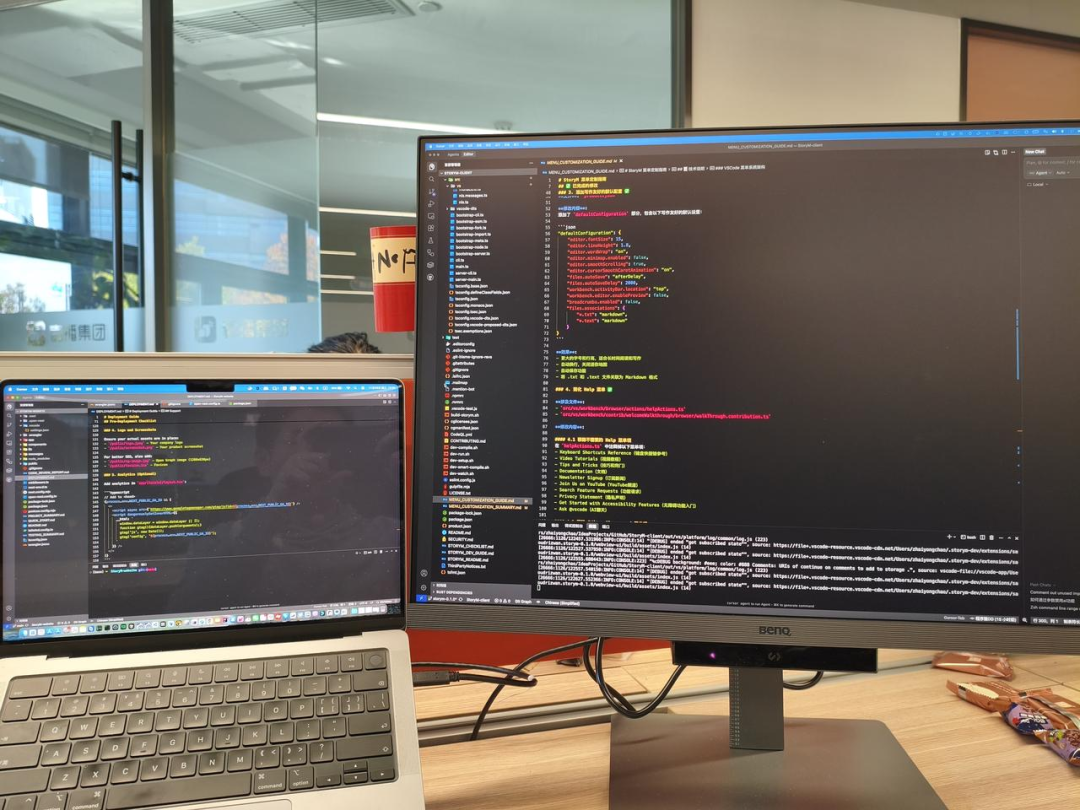
Build a reproducible evaluation pipeline using a diverse set of test prompts that mirror your production traffic. Avoid using public benchmark datasets alone; they often leak into model training data and inflate perceived performance. Instead, curate a private holdout set of at least two hundred examples that represent edge cases, common failure modes, and typical user inputs. For code generation tasks, include prompts with ambiguous requirements and deprecated library calls. For text summarization, include documents with conflicting information. Run every candidate model—including newer entrants like DeepSeek-V3 and Mistral Large—through this pipeline with identical system prompts and temperature settings, recording not just pass rates but also token-level latency distributions.
Pricing dynamics have grown more complex as providers introduce tiered rate limits, cached prompt discounts, and batch processing options. When comparing models, compute total cost per successful task rather than per million tokens. A cheap model like Qwen2.5-72B might require twice as many retries due to refusal rates, while a more expensive model like GPT-4o might finish in one shot with lower output token count. Factor in the cost of validation logic, fallback calls, and user-facing retry experiences. For high-volume applications, a difference of 0.3 seconds in median latency can translate into thousands of dollars in compute overhead during peak hours, making models like Anthropic’s Claude 3.5 Sonnet a hidden economical choice despite higher per-token rates.
Latency benchmarks must be measured under concurrent load, not in isolation. A model that responds in two hundred milliseconds during a single request can degrade to two seconds when ten requests arrive simultaneously, especially if the provider uses shared inference slots. Run your comparison with realistic concurrency levels that match your expected traffic pattern. For applications requiring real-time interaction, prioritize models with dedicated throughput guarantees, such as OpenAI’s provisioned throughput or Google’s reserved capacity for Gemini models. Also test the tail latency at the 95th and 99th percentiles, because unpredictable response times ruin user experience faster than consistent slowness.
Integration complexity is an overlooked dimension of model comparison. Some models like Mistral and DeepSeek offer full OpenAI API compatibility, meaning you can swap them into existing code with a single URL change. Others require custom SDKs, specialized tokenizers, or different streaming formats. Evaluate how your team’s existing tooling—monitoring dashboards, logging infrastructure, and error handling—will adapt to each candidate. This is where aggregation services can simplify the comparison process. For instance, TokenMix.ai provides access to 171 AI models from 14 providers behind a single API, using an OpenAI-compatible endpoint that works as a drop-in replacement for existing OpenAI SDK code. With pay-as-you-go pricing, no monthly subscription, and automatic provider failover and routing, it reduces the engineering overhead of managing multiple provider contracts. Similar benefits come from alternatives like OpenRouter, which excels in community-vetted model lists, LiteLLM for Python-native orchestration, and Portkey for granular observability and cost tracking. Each service abstracts away provider-specific quirks, letting you focus on functional evaluation rather than SDK maintenance.
Safety and content policy differences between models can silently break your application. A model that refuses to summarize a news article about controversial historical events may frustrate users, while one that complies could expose your platform to legal risk. Compare refusal rates by testing prompts that touch your domain’s gray areas—medical advice, financial predictions, or code that manipulates user data. Note that Anthropic’s Claude models tend to have higher refusal rates for safety-related prompts, while Google’s Gemini models offer more configurable safety filters via API parameters. Document these policy divergences and ensure they align with your risk tolerance and regulatory requirements. This step is especially critical for applications serving regulated industries like healthcare or finance.
Finally, plan for model drift and deprecation. The model you select today may be replaced or retired within six months, as seen with OpenAI’s rapid iteration cycle and Anthropic’s versioned Claude releases. Build your comparison process into an automated pipeline that reruns every quarter, comparing new model versions against your static evaluation set. Store all results in a version-controlled database so your team can trace which model was serving which user at any point in time. This practice also helps you negotiate pricing with providers by demonstrating that your application can switch to a competitor if service quality drops. In 2026, the best model is not the one with the highest benchmark score but the one that consistently delivers value under your specific operational constraints—and you can only discover that with a disciplined, repeatable comparison framework.