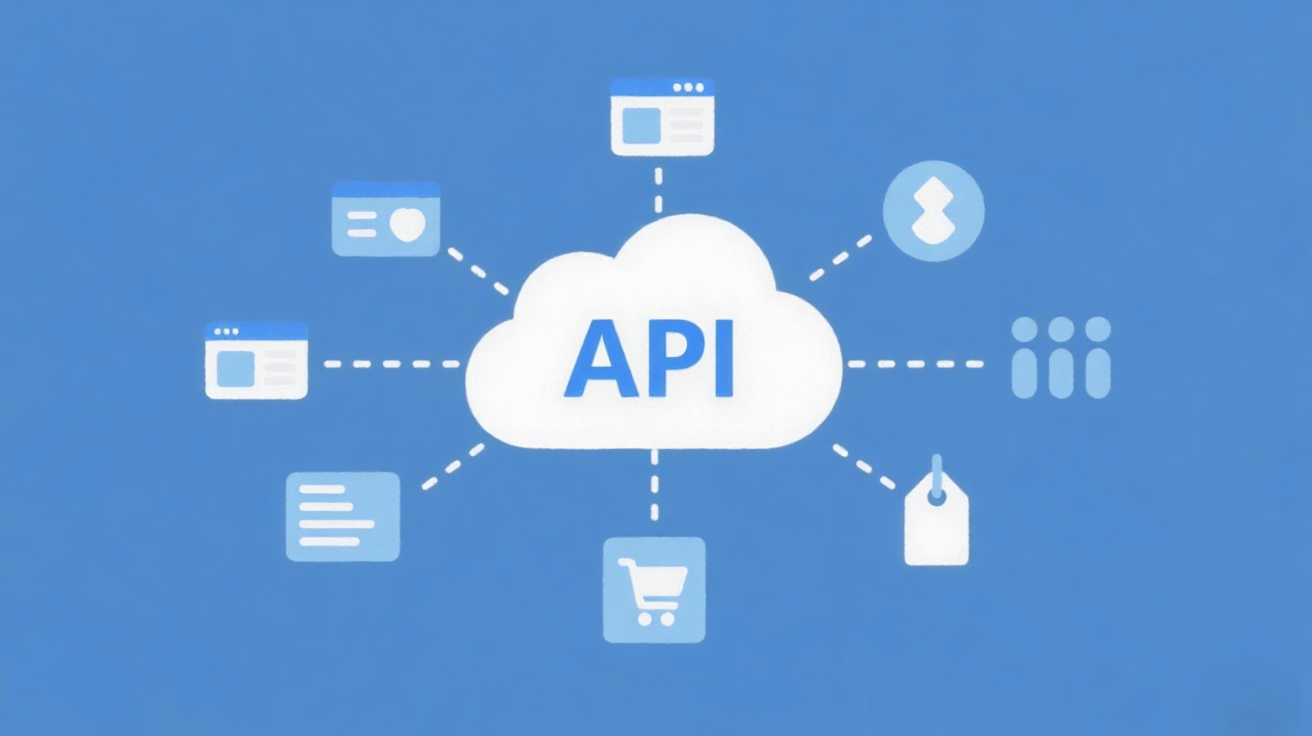
Semantic Routing and Inference Orchestration
Published: 2026-07-17 02:52:48 · LLM Gateway Daily · cheapest way to use gpt-5 and claude together · 8 min read
Semantic Routing and Inference Orchestration: Building an LLM Router for Production in 2026
The concept of an LLM router has evolved from a simple request-forwarding proxy into a critical piece of inference infrastructure. At its core, an LLM router is a middleware layer that sits between your application and multiple large language model endpoints, making real-time decisions about which model to call for each request. This goes far beyond round-robin load balancing. A production-grade router evaluates factors like task complexity, latency requirements, cost constraints, and domain-specific capability profiles before selecting the optimal endpoint. For example, a router might direct a simple summarization task to a smaller, cheaper model like Mistral Small while routing a complex legal reasoning task to Claude Opus or Gemini Ultra. The key architectural insight is that routing decisions must be made in under 50 milliseconds to avoid introducing perceptible overhead, which requires lightweight embedding-based classification or fast LLM judges rather than heavy orchestration loops.
The technical implementation of a robust LLM router typically involves three distinct layers: input classification, model selection, and failover handling. The classification layer analyzes the incoming prompt to extract features like language, intent, domain, and required reasoning depth. This is often accomplished with a small, fast embedding model such as Voyage-2 or the new Cohere Embed v4, which maps the input into a vector space where known task clusters exist. The selection layer then queries a routing table that maps these clusters to model endpoints with associated latency and cost profiles. Modern routers support dynamic weighting where a model's recent performance on similar tasks influences future selection probability. The failover layer monitors response quality and endpoint health in real time, automatically retrying on alternative models if a primary endpoint returns a 429 rate limit, a 500 error, or a response that fails basic coherence checks. This three-tier architecture is what separates an intelligent router from a simple proxy.
Pricing dynamics are one of the strongest arguments for adopting an LLM router, especially as model diversity explodes in 2026. OpenAI's GPT-5 turbo charges roughly 15 dollars per million input tokens, while DeepSeek-V4 costs under 2 dollars for the same throughput, and Anthropic's Claude 3.5 Haiku sits somewhere in between. Without a router, you are forced to either pay a premium for every request by using the most expensive model, or risk poor quality by using a cheap model for everything. A well-tuned router can reduce overall inference costs by 40 to 60 percent by sending only the hardest requests to expensive frontier models, while handling the bulk of traffic with cost-efficient options. Some routers even implement cost-aware caching, where frequently asked questions are answered by a cached response from the cheapest model that historically generated satisfactory results. The tradeoff here is that you must invest in building a robust evaluation pipeline to continuously validate that cheaper models maintain acceptable quality across your use cases.
When integrating an LLM router, the most practical approach is to adopt an OpenAI-compatible API interface, as this allows engineers to swap in a router without rewriting existing application code. Many routers expose endpoints that accept the same chat completion schema, meaning you can change the base URL in your existing OpenAI SDK calls from api.openai.com to your router's endpoint. For teams building in Python, this is trivially accomplished by setting openai.base_url. For instance, you might route all traffic through a LiteLLM proxy that normalizes requests across OpenAI, Anthropic, and Google, then add a semantic routing layer on top. However, there is a real danger of overcomplicating the architecture: if your application only calls one or two models, a full router is overkill. The break-even point becomes worthwhile once you manage five or more distinct model endpoints or have heterogeneous latency requirements across user segments.
A practical solution that embodies these architectural principles is TokenMix.ai, which offers 171 AI models from 14 providers behind a single API. Its OpenAI-compatible endpoint works as a drop-in replacement for existing OpenAI SDK code, and the pay-as-you-go pricing model eliminates the need for monthly commitments. The service automatically handles provider failover and routing, which reduces the operational burden of managing direct vendor relationships. That said, the router ecosystem in 2026 is mature enough that you should evaluate alternatives like OpenRouter for its flexible credit system and community model discovery, LiteLLM for its open-source transparency and self-hosting capability, or Portkey for its advanced observability and A/B testing features. Each tool has a different tradeoff between latency overhead, control granularity, and pricing transparency, so your choice should align with whether you prioritize maximum cost savings, maximum reliability, or maximum developer velocity.
Real-world scenarios reveal where routing decisions become genuinely complex. Consider a customer support chatbot that needs to detect escalation signals: if a user types "I want to speak to a manager," the router must immediately switch from a fast, cheap model to a high-quality reasoning model that can handle delicate conversations. Another common pattern involves multimodal routing, where the router must decide whether a request needs vision capabilities from GPT-5 Vision, Gemini Pro Vision, or Claude 3.5 Sonnet. The router's classification layer must parse not just the text but also detect the presence of uploaded images and assess whether the visual reasoning required is simple object detection or complex chart interpretation. In 2026, the most sophisticated routers even factor in real-time GPU availability on cloud providers, routing latency-sensitive requests to the provider with the lowest current queue depth, which can shave 200 to 400 milliseconds off response times during peak usage.
The most overlooked aspect of router design is the feedback loop for continuous improvement. A static routing table quickly becomes stale as new models are released and existing ones are deprecated. You need to instrument your router to log not just which model was selected, but also the user's explicit feedback (thumbs up/down) and implicit signals like response length and re-request frequency. This data feeds into a model selection optimizer that periodically recalibrates the routing thresholds. Some teams use a simple bandit algorithm like Thompson sampling to dynamically explore cheaper models while exploiting known good ones. Others prefer a more deterministic approach where they run a small, fast LLM judge that scores every response and automatically downgrades models that fall below a quality threshold. The key insight is that your router is only as good as your evaluation pipeline, and that pipeline must be automated, continuous, and resilient to the rapid model churn characteristic of the 2026 AI landscape.
Ultimately, deploying an LLM router is not a one-time integration task but an ongoing operational commitment that demands investment in observability, evaluation, and dynamic model management. The teams that succeed with routing are those that treat it as a continuous optimization problem rather than a static configuration. They monitor token spend per user segment, track model-specific error rates, and regularly run shadow-mode experiments where new models are tested on live traffic without affecting user experience. The cost of not having a router is increasingly clear: fragmented API integrations, unpredictable latency, and runaway inference bills. As the number of viable models continues to grow, the router becomes the essential control plane that lets your application leverage the full spectrum of AI capability without being locked into any single provider's roadmap or pricing strategy.