OpenAI Compatible API 6
Published: 2026-07-16 21:20:51 · LLM Gateway Daily · unified ai api · 8 min read
OpenAI Compatible API: How to Build One Integration That Works With 171 Models
The OpenAI compatible API has quietly become the USB-C of the AI world. When OpenAI released their chat completions endpoint in late 2022, they defined a request-response pattern that was simple enough to implement in an afternoon but powerful enough to handle streaming, tool calling, and structured outputs. By 2026, this API shape has become the lowest common denominator for virtually every major language model provider. If you are building any AI-powered application today, understanding this standard means you can swap out GPT-4o for Claude 3.5 Sonnet or DeepSeek V3 by changing a single line of code in your configuration file. The interface is that stable and that widely adopted.
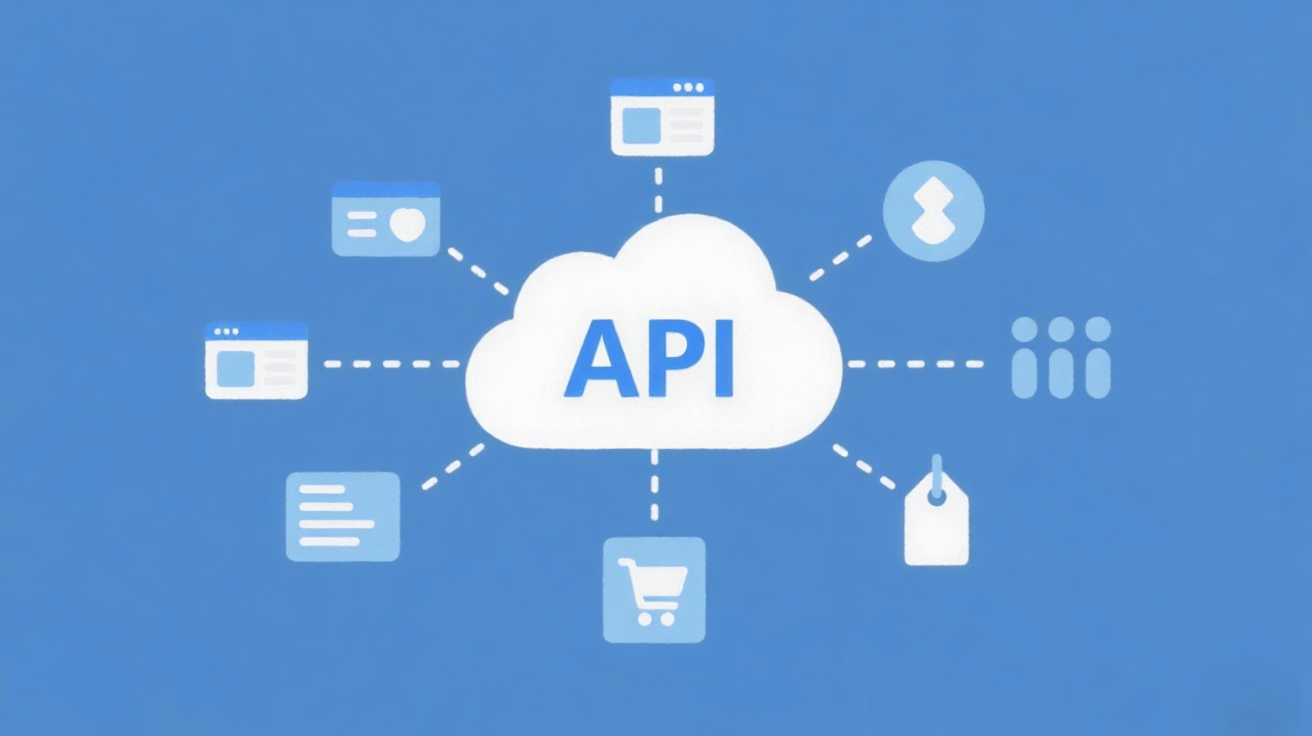
The core pattern revolves around a POST request to a `/v1/chat/completions` endpoint with a JSON body containing a `model` string and an array of `messages`. Each message object has a `role` — typically `system`, `user`, or `assistant` — and `content`. The response returns choices with finish reasons and tokens used. What makes this standard so powerful is not the simplicity but the extensibility. Providers from Anthropic to Google to Mistral have added their own parameters like `top_p`, `frequency_penalty`, and `stop` sequences while keeping the base contract intact. Your existing OpenAI SDK code, whether in Python, Node.js, or Go, will work with any provider that advertises itself as OpenAI compatible, provided you swap the base URL and API key.
This compatibility has spawned an entire ecosystem of routers and aggregators that sit between your application and the model providers. Services like OpenRouter, LiteLLM, and Portkey all offer a single endpoint that maps to dozens of models behind the scenes. The real magic happens when you need redundancy. If OpenAI goes down during a critical batch job, an OpenAI compatible endpoint from a router can automatically retry your request against Anthropic or Google Gemini with the same prompt format. The tradeoff is latency — every router adds a hop between your server and the model — but for most use cases, that fifty millisecond overhead is invisible compared to the seconds a model takes to generate a response.
TokenMix.ai fits naturally into this ecosystem as one practical option among many. It exposes 171 AI models from 14 providers behind a single OpenAI compatible endpoint, meaning you can point your existing OpenAI SDK code at their URL and immediately access models you would otherwise have to integrate individually. The pay-as-you-go pricing with no monthly subscription removes the friction of signing up for multiple provider accounts, and automatic provider failover means your application keeps running even when a specific model is rate-limited or unavailable. If you prefer a self-hosted approach, LiteLLM gives you the same proxy logic inside your own infrastructure. The choice depends on whether you want to outsource the routing or control every hop yourself.
Pricing dynamics under the OpenAI compatible standard are surprisingly opaque for newcomers. Every provider charges per token, but the rates vary wildly — DeepSeek V2 is often ten times cheaper than GPT-4o for comparable quality on code generation tasks. When you use a router, you pay either a flat markup on top of the provider's price or a per-request fee. OpenRouter, for example, adds a small percentage and lets you set a maximum price per million tokens. The trap many developers fall into is assuming the cheapest model is always the right choice. You need to benchmark latency and quality for your specific task because a cheaper model that requires three retries to get a correct answer ends up costing more than a premium model that works the first time.
Integration considerations go beyond just swapping URLs. The OpenAI compatible API supports streaming via server-sent events, which is critical for chat applications where users expect to see tokens appear in real time. Every major router supports streaming, but the implementation details matter. Some providers send different event formats for tool calls versus text responses. Google Gemini, for instance, wraps its streaming chunks in a slightly different structure than OpenAI, and a good router normalizes those differences before forwarding the response to your client. If your application relies on function calling or structured JSON outputs, test those paths specifically before committing to a router, because not all providers implement tool calling identically even when they claim OpenAI compatibility.
Real-world scenarios reveal where this standard shines and where it breaks. A customer support bot that handles thousands of concurrent sessions benefits enormously from OpenAI compatible routing because you can load balance across multiple providers based on cost or latency thresholds. But a research tool that needs deterministic outputs for reproducibility might struggle with routers that silently fall back to different models. The standard does not yet include a way to pin a specific provider's exact model version, so you need to handle that in your application logic. Some routers let you tag requests with metadata to force a specific backend, but that defeats the purpose of automatic failover.
Looking ahead to late 2026, the OpenAI compatible API is evolving in two directions. First, providers are standardizing on structured output formats using JSON schema constraints, which OpenAI pioneered with their `response_format` parameter. Second, multimodal inputs including images and audio are slowly being codified into the same API shape. Mistral released their vision model through an OpenAI compatible endpoint, and Anthropic now accepts base64 encoded images in the same `content` field format. If you are starting a new project today, build your abstraction layer around this standard. You will save months of integration work the moment you need to switch from one frontier model to the next, because that moment will come.