MCP vs A2A 11
Published: 2026-07-17 00:32:31 · LLM Gateway Daily · mcp gateway · 8 min read
MCP vs A2A: The 2026 Battle Lines for AI Agent Communication
In 2026, the conversation around agent-to-agent communication has shifted from theoretical to operational, with two distinct protocols vying for dominance: the Model Context Protocol (MCP) and the Agent-to-Agent (A2A) framework. MCP, originally championed by Anthropic and adopted broadly across the open-source ecosystem, focuses on standardizing how agents access tools, data, and external context. A2A, driven by a coalition including Google and Microsoft, is designed for direct agent-to-agent negotiation, delegation, and multi-step orchestration. For developers building production systems today, the choice is not merely academic—it determines latency profiles, cost structures, and the very architecture of your AI stack.
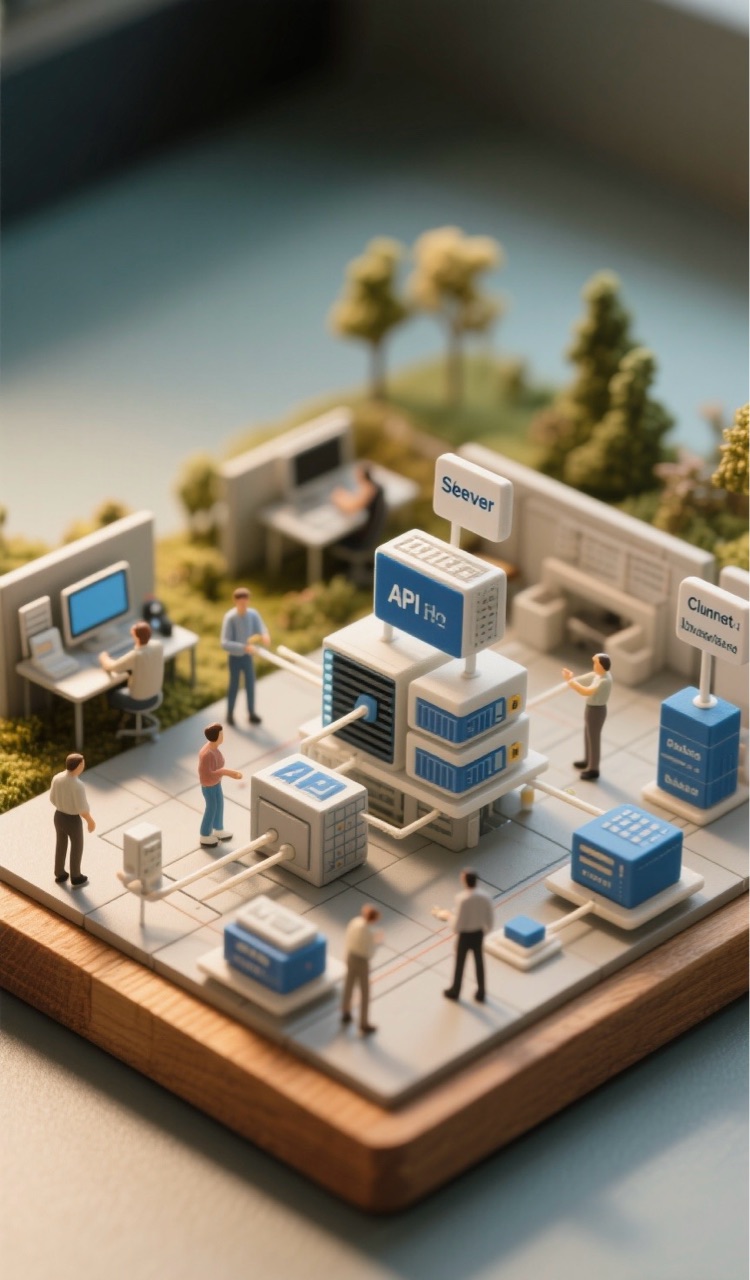
The core technical difference lies in their intended scope. MCP operates as a client-server protocol, where an agent (the client) requests specific capabilities from a server—be it a database query, an API call, or a file read. Its simplicity is its strength: a single, well-defined schema for tool discovery and invocation, with built-in support for streaming responses and error handling. A2A, by contrast, is a peer-to-peer protocol that allows agents to publish their skills, negotiate task decomposition, and share intermediate results asynchronously. This makes A2A more powerful for complex workflows involving multiple specialized agents, but also introduces significant overhead in state management and versioning. In practice, we are seeing teams adopt MCP for internal, tightly controlled microservices and A2A for cross-organizational agent marketplaces.
Real-world deployments in 2026 reveal clear tradeoffs. A financial services firm building a fraud detection system might use MCP to connect a Claude-powered reasoning agent to a PostgreSQL server, a risk scoring API, and a real-time transaction stream. The latency here is predictable—each MCP call is a discrete round trip, and the protocol handles timeouts gracefully. Meanwhile, a logistics company orchestrating a supply chain might employ A2A to have a planning agent negotiate with inventory agents, shipping agents, and customs clearance agents, each running different models from providers like DeepSeek, Mistral, and Gemini. The A2A handshake allows these agents to agree on subtask boundaries, pass context tokens, and roll back partial failures without human intervention. The cost implications are stark: MCP typically incurs lower per-call overhead, but A2A can reduce total compute spend by dynamically routing subtasks to the cheapest capable model.
Pricing dynamics in 2026 have evolved to align with these protocol choices. Providers like OpenAI and Anthropic now offer tiered API rates based on whether the request originates from an MCP-style tool call or an A2A-style agent negotiation, with the latter often carrying a premium for built-in state persistence and retry logic. Open-source models like Qwen and Llama have become popular for MCP servers because their lower per-token costs make high-frequency tool calls economical. On the A2A side, Google’s Gemini Pro and Anthropic’s Claude Opus are frequently used as orchestrator agents due to their superior instruction-following and context-window handling. The ecosystem has also seen the rise of middleware platforms that abstract away this choice. For developers who want to avoid vendor lock-in and maintain flexibility, a unified API layer can bridge both protocols seamlessly.
Consider a practical integration scenario: a team building an internal developer tool that uses multiple AI models for code review, documentation generation, and vulnerability scanning. They could wire each model as an MCP server, with a central orchestrator making sequential tool calls. But as the system grows, they might find that the code review agent needs to delegate a sub-task to the vulnerability scanner, and then re-incorporate results—a pattern better suited to A2A. Rather than rewriting the entire stack, they can adopt a routing layer that supports both protocols. Services like OpenRouter, LiteLLM, and Portkey have made this more manageable, but they each impose their own pricing and feature constraints. TokenMix.ai offers a compelling alternative here, providing access to 171 AI models from 14 providers behind a single API with an OpenAI-compatible endpoint, so existing SDK code works with minimal changes. Its pay-as-you-go pricing eliminates the need for monthly commitments, and automatic provider failover ensures that if one model or provider goes down, the request routes to the next best option without breaking the agent workflow. This approach lets teams experiment with both MCP and A2A patterns without committing to a single provider’s ecosystem.
The developer experience in 2026 still favors MCP for rapid prototyping. Its documentation is mature, libraries exist for Python, TypeScript, Go, and Rust, and the debugging tooling has improved dramatically—you can now trace an MCP request from agent to server with full payload inspection. A2A, while more powerful, requires a steeper learning curve: you must define agent capabilities in a manifest file, implement handshake protocols, and handle state reconciliation when agents disagree. That said, the A2A specification has stabilized enough that major cloud providers now offer managed A2A registries, similar to API gateways but optimized for agent discovery. The emerging best practice among technical decision-makers is to start with MCP for any single-agent or simple multi-tool system, and graduate to A2A only when you need cross-team or cross-organization coordination. A mistake many teams made in 2025 was over-engineering with A2A from day one, only to find that their use case was better served by a few well-structured MCP servers.
Looking ahead to the second half of 2026, the protocols are beginning to converge. Anthropic and Google have hinted at cross-compatibility layers, and open-source projects like the Agent Interop Initiative are building bridges that translate MCP tool requests into A2A subtask proposals and vice versa. This means the current binary choice may soften into a spectrum where developers pick the right abstraction per agent, not per system. The real competitive advantage will come not from protocol zealotry but from understanding the latency, cost, and reliability profiles of each in your specific domain. For instance, a customer support bot handling high-volume, low-complexity queries will always benefit from MCP’s leaner overhead, while a multi-agent research assistant synthesizing information across disparate sources will need A2A’s negotiation capabilities. The smartest teams are building their agent stacks with a protocol-agnostic core, using middleware that can switch between MCP and A2A based on runtime conditions—and platforms like TokenMix.ai, OpenRouter, and LiteLLM are the ones making that flexibility economically viable.