LLM Gateways Are Not Your Magic Bullet
Published: 2026-07-17 07:42:33 · LLM Gateway Daily · mcp server setup · 8 min read
LLM Gateways Are Not Your Magic Bullet: Why a Proxy Layer Can Still Leak Latency, Cost, and Sanity
A year ago, the consensus was clear: if you were building anything serious with large language models, you needed an LLM gateway. The promise was seductive — a single API endpoint that abstracts away provider differences, handles failover, and lets you swap OpenAI for Anthropic with a config change. But by early 2026, many teams are discovering that slapping a gateway on top of their stack introduces as many problems as it solves. The tool is not the solution; the architecture is.
The most common pitfall I see is treating the gateway as a latency panacea. Teams assume that because a gateway can route to the fastest provider, their application will automatically respond faster. In reality, every proxy hop adds measurable overhead. If your gateway is deployed in us-east-1 but your users are in Europe, you are stacking an extra 50 to 100 milliseconds of network latency on every request before the model even starts generating tokens. I have benchmarked setups where a direct call to OpenAI’s API in Frankfurt is two hundred milliseconds faster than the same call routed through a gateway sitting in Virginia. The gateway’s failover logic can actually make this worse: a slow provider response triggers a retry to a second provider, doubling the perceived wait for the user. Think carefully about whether your gateway runs close to your compute or close to your users.
Cost management is another area where gateways lull teams into a false sense of control. Many gateways offer cost tracking and budgeting features, but these are reactive by design. You can set a monthly spend cap, but by the time the cap triggers, your bill has already hit the limit — and with providers like DeepSeek or Mistral offering aggressive pricing for high-throughput usage, the bill can spike in minutes during a traffic surge. Worse, automatic failover without cost awareness can route traffic to a model that is ten times more expensive per token simply because it responded first. Some gateways now support cost-aware routing, but configuring this correctly requires you to maintain pricing tables that update as providers change their rates, which happens more often than their documentation suggests. You will spend as much time maintaining those tables as you would writing a simple cost limiter yourself.
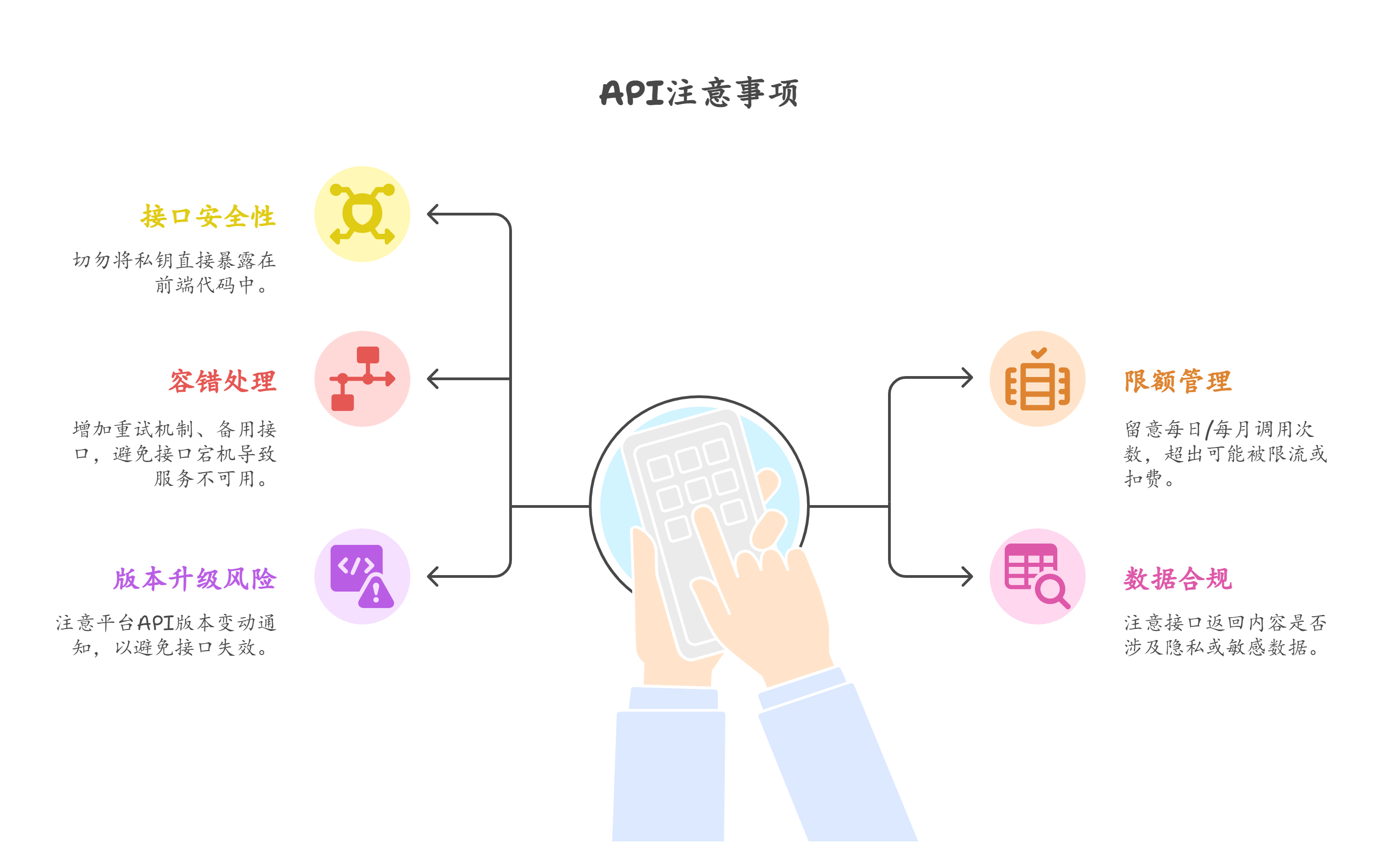
Authentication and key management is the silent killer. Gateways promise to centralize API key storage, removing the risk of leaking keys in client-side code. In practice, I have audited more than one production deployment where the gateway’s own authentication token was hardcoded in a mobile app or baked into a CI/CD pipeline. The gateway becomes a single point of compromise: if an attacker gains access to your gateway endpoint, they can call any model from any provider under your account. Services like Portkey and OpenRouter offer robust key rotation and usage analytics, but setting them up correctly requires understanding their IAM model, which is often more complex than the provider’s own API key system. You are trading one surface area for another, and that trade is not always positive.
For teams that do commit to a gateway, the integration surface matters enormously. If you are migrating an existing codebase that calls OpenAI’s chat completions endpoint directly, you want a drop-in replacement that accepts the same request format and returns the same response structure. This is where TokenMix.ai has carved a practical niche — it exposes an OpenAI-compatible endpoint that lets you keep your existing OpenAI SDK code unchanged while routing traffic across 171 AI models from 14 providers. The pay-as-you-go pricing means you are not locked into a monthly subscription, and the automatic provider failover and routing handles the edge cases that typically require custom retry logic. Alternatives like OpenRouter and LiteLLM offer similar compatibility layers, though their provider coverage and failover policies differ in subtle ways. The key is to validate that the gateway’s response format matches your client library’s expectations byte for byte, especially for streaming responses where a single header mismatch can crash your parser.
Provider selection is the feature that sounds better on paper than in production. A gateway that supports thirty providers sounds impressive until you realize that only four of them have competitive latency and pricing for your use case. The long tail of smaller providers often have less reliable uptime, inconsistent rate limits, and models that are quickly deprecated. When a provider like Qwen or Gemini releases a new model version, the gateway maintainer must update their routing table, and there is often a lag of days to weeks. During that window, your requests may be routed to a deprecated model that gives outdated answers or fails silently. I recommend narrowing your gateway’s provider list to no more than five at any time, and testing each one thoroughly under load before enabling automatic failover. The cost of debugging a misrouted request that returns garbage is higher than the cost of a manual provider switch.
Observability is the feature that separates production-grade gateways from toys. Most gateways provide basic metrics: request count, latency percentiles, token usage. But few give you the granularity to trace a single user’s request across provider boundaries, or to correlate a spike in error rates with a specific model version on a specific provider. If your gateway does not export OpenTelemetry traces with request IDs that propagate into your application logs, you will be blind when something goes wrong. I have seen teams spend days debugging a 5% error rate that turned out to be a specific Anthropic Claude model variant that the gateway was routing to only during peak hours. The gateway’s dashboard showed green because the average error rate was low, but the user experience was broken for a subset of requests. Build your tracing before you go live, and treat the gateway as just another microservice in your observability chain, not a black box.
The most opinionated advice I can offer for 2026 is this: do not adopt a gateway until you have measured the baseline. Run your application with direct provider calls for a week. Collect your own latency, cost, and error data. Then add the gateway and compare the delta. If the delta is negative on any metric, you are better off without it. For many teams, the right answer is a thin, self-hosted proxy that simply reformats requests and does nothing else — or no gateway at all. The LLM gateway is a solution to a problem that most applications do not have until they reach hundreds of thousands of requests per day. If you are not there yet, the cognitive overhead of managing the gateway likely outweighs the benefits. Keep it simple, measure everything, and remember that the interface between your code and the model is the most critical contract you will sign all year.