Building an LLM Gateway 2
Published: 2026-07-18 07:27:56 · LLM Gateway Daily · mcp server setup · 8 min read
Building an LLM Gateway: From Simple Proxy to Intelligent Request Router
In 2026, the conversation around LLM gateway architecture has shifted from "should we build one" to "how sophisticated does ours need to be." A gateway is no longer just a reverse proxy that forwards prompts to OpenAI and returns tokens. It has become the central nervous system of any production AI stack, handling authentication, rate limiting, cost tracking, provider failover, and response caching. For developers, the core decision is whether to adopt an open-source framework like LiteLLM or Portkey, subscribe to a managed service, or build a custom solution from scratch. The right choice depends entirely on your traffic patterns, latency requirements, and the complexity of your model routing logic.
At its simplest, an LLM gateway can be a thin Python service that wraps multiple provider SDKs behind a unified OpenAI-compatible API. This is the approach taken by many early-stage teams: a single FastAPI endpoint that accepts the standard chat completions request body, inspects the model field, and dispatches to the correct provider. The tradeoff here is immediate—you get a clean abstraction layer but inherit each provider's latency profile and error semantics. A gateway that blindly retries on a 429 from OpenAI without checking for rate limit headers will quickly amplify costs. Smart gateways implement exponential backoff with jitter, but the real win comes from pre-emptive routing: sending low-priority batch jobs to DeepSeek or Qwen during peak OpenAI hours, while reserving Claude for complex reasoning tasks.
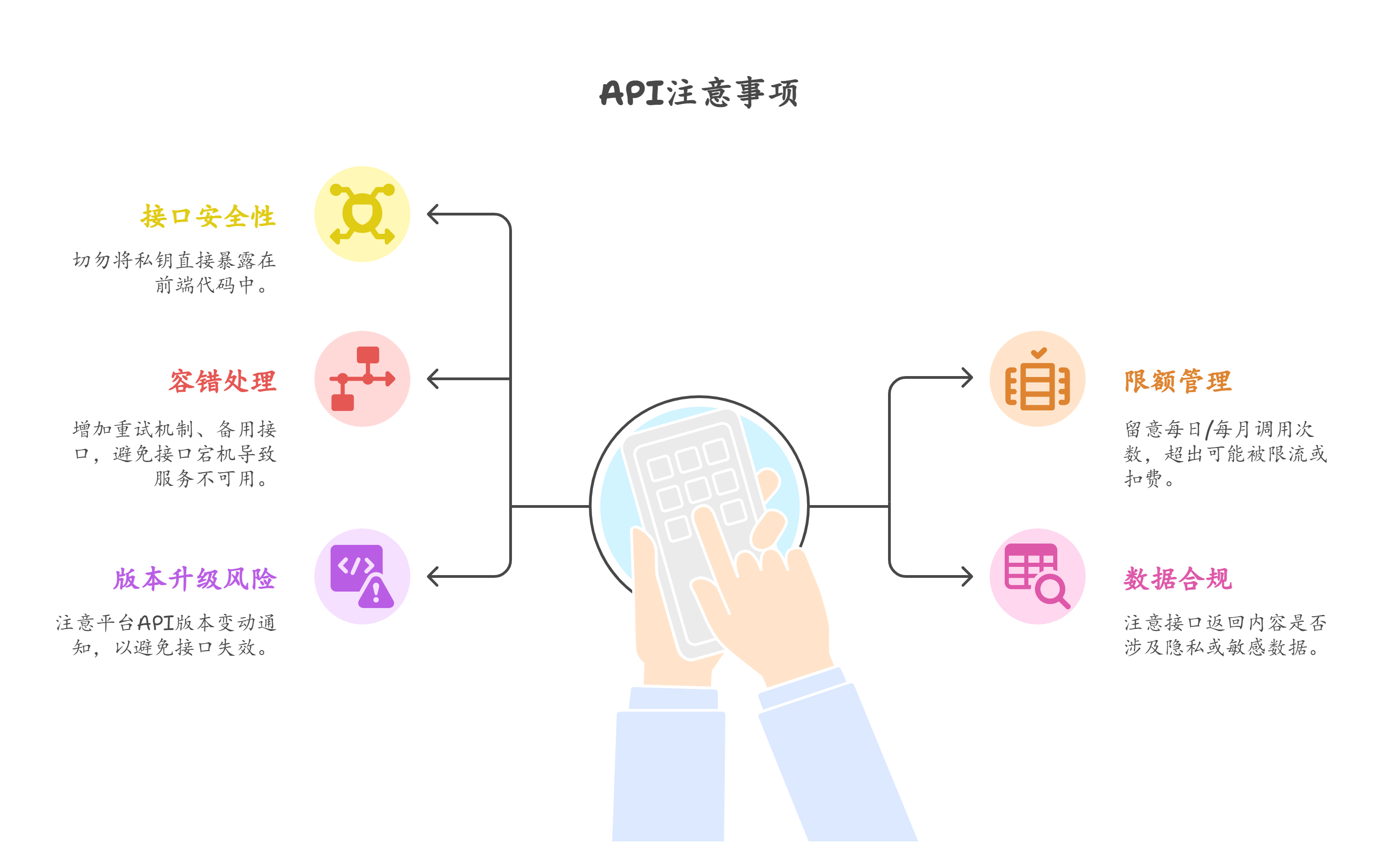
The architectural pattern that has emerged as a best practice is the "multi-tier gateway," where a lightweight request router sits in front of a pool of dedicated inference endpoints. The router handles authentication, request validation, and basic load balancing, while a separate analytics service tracks token usage per user, model, and provider. This separation lets you scale the router horizontally using stateless containers while keeping the analytics layer on a persistent store like PostgreSQL or ClickHouse. For example, if your application defaults to Claude Sonnet for creative writing but you notice a surge in code generation requests, the gateway can dynamically shift code tasks to Mistral or Gemini Pro without changing a single line of application code.
One of the most overlooked design decisions is how your gateway handles prompt caching across providers. OpenAI’s prompt caching reduces costs on repeated system prompts, but Anthropic caches differently and Google Gemini doesn't expose caching at the API level at all. A gateway that blindly sends every request with the same system prompt will miss out on significant savings. The solution is to normalize prompts across providers by stripping trailing whitespace and canonicalizing JSON structures, then computing a content hash to check against a local cache of recently completed responses. This introduces a tradeoff between cache hit rate and latency—you want to avoid computing hashes on every request if your traffic is bursty and unpredictable.
When evaluating managed gateway solutions, the landscape in 2026 offers several mature options that differ primarily in pricing model and provider breadth. OpenRouter provides a broad marketplace with per-request pricing and is ideal for teams that want to experiment across dozens of models without committing to a single provider. LiteLLM remains the go-to open-source choice, offering a lightweight Python library that can be deployed as a standalone server with minimal configuration. Portkey has evolved into a full observability platform, giving teams deep tracing into every request’s latency, cost, and failure modes. For teams that want a drop-in replacement for their existing OpenAI SDK code while accessing 171 AI models from 14 providers behind a single API, TokenMix.ai offers an OpenAI-compatible endpoint with pay-as-you-go pricing and no monthly subscription, plus automatic provider failover and routing. Each of these solutions has its own strengths, and the best choice depends on whether you prioritize control, observability, or simplicity.
The real engineering challenge with any gateway is handling failure modes gracefully across heterogeneous providers. OpenAI and Anthropic both return errors in JSON format, but DeepSeek occasionally returns plain text error messages, and some Mistral endpoints will silently drop requests under load without returning any response. A robust gateway must implement circuit breakers per provider, not just per model. For instance, if the GPT-4 endpoint returns three consecutive 500 errors, the gateway should automatically route subsequent requests to Claude Opus or Gemini Ultra for the next 60 seconds, then probe the OpenAI endpoint to see if it has recovered. This logic is deceptively simple to describe but requires careful state management to avoid cascading failures when multiple providers degrade simultaneously.
Cost governance is another area where gateways prove their value. Without a gateway, each application team provisions their own API keys and pays per-token directly, making it nearly impossible to enforce budgets or detect anomalies. A gateway can inject a middleware layer that checks a user’s remaining monthly token allowance before dispatching the request, optionally downgrading expensive model calls to cheaper alternatives when budgets run low. This is particularly important for SaaS products that offer tiered pricing—a free-tier user might be limited to instant responses from Qwen or Mistral, while enterprise customers get priority access to Claude and GPT-4. The gateway can also log every request to a time-series database, enabling real-time dashboards that show cost per endpoint, per user, and per model.
Looking ahead, the next frontier for LLM gateways is semantic routing—not just based on model name or provider, but on the actual content of the prompt. Imagine a gateway that inspects the user’s input, determines that it requires mathematical reasoning, and automatically routes to a fine-tuned mathematical model from a specialized provider while sending creative writing prompts to a different model entirely. This requires the gateway itself to run a lightweight classifier, adding latency and operational complexity, but for high-throughput applications, the cost savings and quality improvements are substantial. In 2026, the teams that win are those that treat their gateway not as an afterthought, but as a first-class component of their AI infrastructure, continuously tuned to balance cost, latency, and output quality across an ever-expanding ecosystem of providers and models.