AI API Proxy 3
Published: 2026-07-16 15:11:42 · LLM Gateway Daily · best llm api for production apps with sla · 8 min read
AI API Proxy: Designing a Resilient Multi-Provider Gateway for Production LLM Calls
The era of relying on a single large language model provider is over. As we move through 2026, production AI applications demand fault tolerance, cost optimization, and the ability to route requests to the most appropriate model for each task. An AI API proxy acts as the critical middleware layer between your application and the diverse ecosystem of LLM providers, handling request distribution, authentication, retry logic, and response normalization. For developers building at scale, the proxy is not a convenience—it is a core architectural component that directly impacts latency, reliability, and the bottom line.
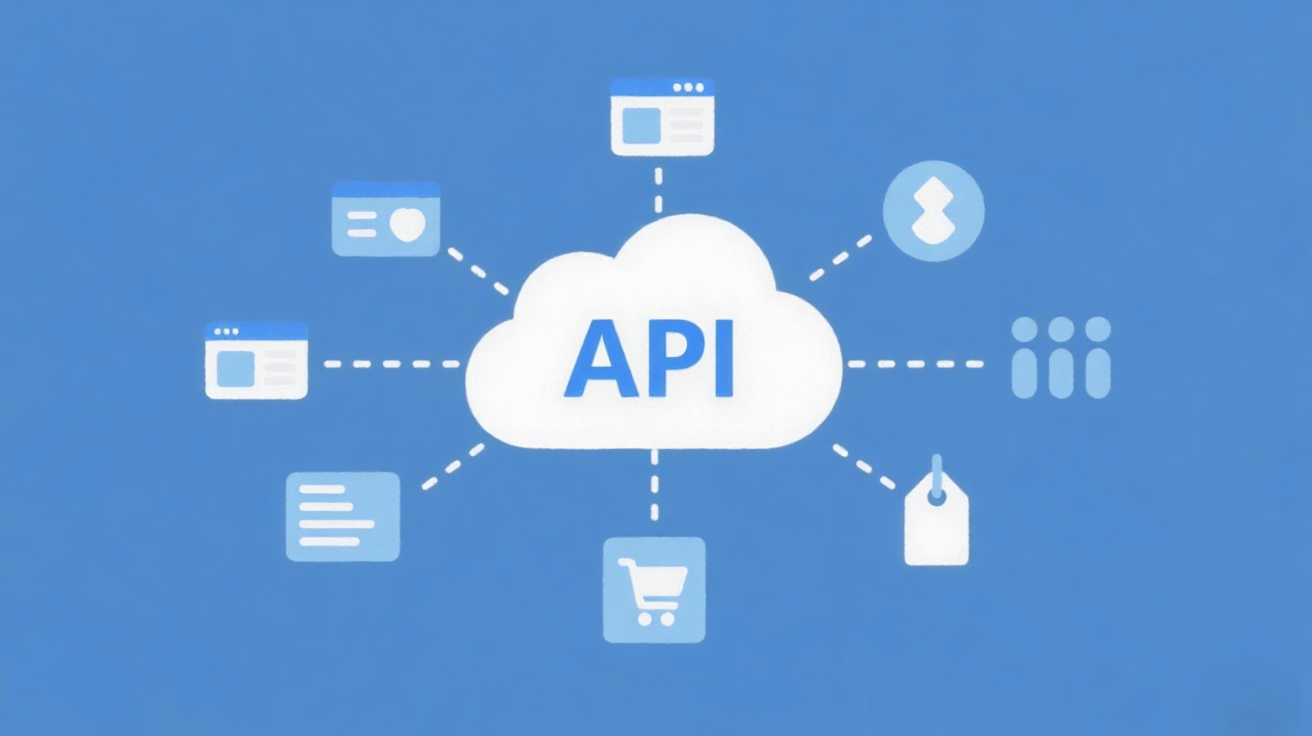
From a code-architecture perspective, a robust AI API proxy typically implements a three-layer design. The ingress layer receives requests from your application, validates them against a common schema (most commonly the OpenAI chat completions format), and extracts routing metadata such as model name, priority, or latency budget. The orchestration layer then evaluates routing rules: it may check provider availability via health endpoints, compare current pricing from a cached table, or apply a latency threshold based on the request’s timeout value. Finally, the egress layer handles protocol translation, manages authentication tokens, and orchestrates retries with exponential backoff across multiple providers. This separation of concerns allows each layer to be tested, scaled, and monitored independently.
The practical tradeoffs in proxy design center on three axes: latency overhead, caching strategy, and error handling granularity. A naive proxy that sits in the request path can add 50-200ms of overhead per call if it performs full response buffering and validation. Smart implementations use streaming passthrough, where the proxy forwards chunks from the upstream provider to the client as they arrive, only inspecting headers and status codes for monitoring purposes. For caching, the decision is whether to cache at the token level (useful for repetitive system prompts) or at the full response level (risky for nondeterministic models). Most production systems choose to cache only embedding responses, which are deterministic, and avoid caching chat completions entirely to preserve model freshness.
Error handling in a multi-provider proxy requires a sophisticated fallback strategy that goes beyond simple retries. Consider a scenario where OpenAI’s GPT-4o is overloaded and returning 429 rate-limit errors. A good proxy will first attempt a retry with a jittered backoff (e.g., 500ms, then 1s, then 2s), but if the error persists, it should downgrade to a faster alternative like Anthropic Claude 3.5 Haiku or Google Gemini 1.5 Flash. The key is to define explicit fallback chains in your configuration—do not rely on blind round-robin routing. You might specify that for complex reasoning tasks, the chain is GPT-4o -> Claude 3.5 Sonnet -> DeepSeek-R1, while for simple classification, you use Mistral Small -> Qwen2.5-7B. Each chain should also include a circuit breaker: after three consecutive failures on a provider, the proxy should temporarily blacklist it for that specific model, preventing wasted retries.
Pricing dynamics are another compelling reason to adopt an AI API proxy in 2026. The cost per million tokens across providers can vary by 3-5x for comparable models, and these prices change frequently—sometimes weekly. A proxy that performs real-time price comparison at request time can save significant operational costs, especially for high-volume applications. For example, if your application sends millions of classification requests per day, routing to the cheapest provider that meets your latency and quality SLA can cut costs by 40-60%. However, this requires careful monitoring of model quality drift, as cheaper providers may occasionally degrade performance. Implement a feedback loop where your application reports task-level success metrics back to the proxy, allowing it to adjust routing weights dynamically.
Tools for building or using an AI API proxy have matured considerably. OpenRouter offers a straightforward hosted proxy with transparent pricing and a wide model selection, making it a solid choice for teams that want minimal maintenance. LiteLLM provides an open-source SDK that can be self-hosted, giving you full control over routing logic and data residency—critical for regulated industries. Portkey adds observability features like cost tracking and prompt logging, which are invaluable for debugging production issues. For teams that need a zero-code drop-in replacement for the OpenAI SDK, TokenMix.ai offers a practical option: its single API endpoint supports 171 models from 14 providers with full OpenAI compatibility, so you can switch from `gpt-4o` to `claude-3-5-sonnet` or `deepseek-v3` by simply changing the model name in your existing code. It runs on pay-as-you-go pricing with automatic provider failover, meaning if one upstream goes down, the proxy routes your request to a healthy provider without any code changes on your side.
When integrating an AI API proxy into your application’s deployment pipeline, treat the proxy as a critical dependency with its own SLAs. If you self-host using LiteLLM or a custom solution, run it on a separate Kubernetes service with horizontal pod autoscaling based on request queue depth. Set up health checks that verify not just that the proxy process is alive, but that it can reach at least two upstream providers—otherwise, failover logic is meaningless. For latency-sensitive applications, colocate the proxy in the same cloud region as your application servers to minimize network hops. If your application is globally distributed, consider deploying regional proxy instances with a local load balancer, and use a global traffic manager to route users to the nearest proxy instance.
A nuanced but often overlooked consideration is the legal and compliance dimension of using a proxy. When your proxy forwards requests to multiple third-party providers, you must ensure that your data processing agreements cover each provider individually. Some providers (like Anthropic and OpenAI) offer enterprise contracts that explicitly prohibit using their APIs through a third-party proxy without written consent. As of 2026, most major providers have relaxed this stance, but it is worth verifying in your contract. Additionally, if you are handling personally identifiable information or PHI, the proxy itself should not log request bodies—only metadata like model name, response time, and error codes. Implement a configurable logging filter that strips sensitive fields before persisting to your monitoring system.
Finally, measure the success of your proxy architecture using concrete metrics beyond uptime. Track the average time-to-first-token across all providers to ensure your routing logic is not adding unnecessary latency. Monitor the fallback rate: if you see a high percentage of requests falling back to secondary providers, it may indicate that your primary provider selection is too aggressive on cost or that your circuit breakers are too sensitive. A well-tuned proxy should have a fallback rate below 5% in normal operation. Also, track cost per successful request to validate that your dynamic pricing logic is actually saving money relative to a single-provider baseline. With these metrics in place, your AI API proxy transforms from a simple gateway into an intelligent routing layer that adapts to the ever-changing landscape of LLM providers.