AI API Gateway vs Direct Provider 12
Published: 2026-07-16 19:48:53 · LLM Gateway Daily · llm api · 8 min read
**AI API Gateway vs Direct Provider: Why Your Cost Per Token Is Higher Without One**
If you are building AI-powered applications in 2026, the first billing cycle after integrating a single provider’s API often delivers a painful surprise. Direct access to OpenAI, Anthropic, or Google Gemini looks simple on paper—one key, one endpoint, one predictable per-token price. But real-world usage devours tokens faster than any benchmark suggests. The hidden costs pile up from retries on rate limits, fallback calls when a model is overloaded, and the need to maintain multiple SDK versions as providers deprecate endpoints. An AI API gateway flips this dynamic by acting as a single, intelligent intermediary between your application and many provider backends. The question is not whether a gateway adds overhead, but whether that overhead saves you more than it costs.
At first glance, direct provider pricing appears unbeatable. OpenAI charges roughly 15 cents per million input tokens for GPT-4o mini, while Anthropic’s Claude Haiku runs around 25 cents. If you only hit one model and your traffic is steady, direct access wins on raw per-token cost. The problem emerges when your application needs reliability. Every time a direct call to OpenAI returns a 429 rate-limit error, you either wait and retry—burning latency budget—or you implement complex circuit-breaker logic yourself. Both approaches cost money in either idle developer hours or increased infrastructure for retry queues. A gateway handles this transparently by routing to the next cheapest available provider that can serve the same quality, often at a lower effective cost than your primary provider’s premium tier.
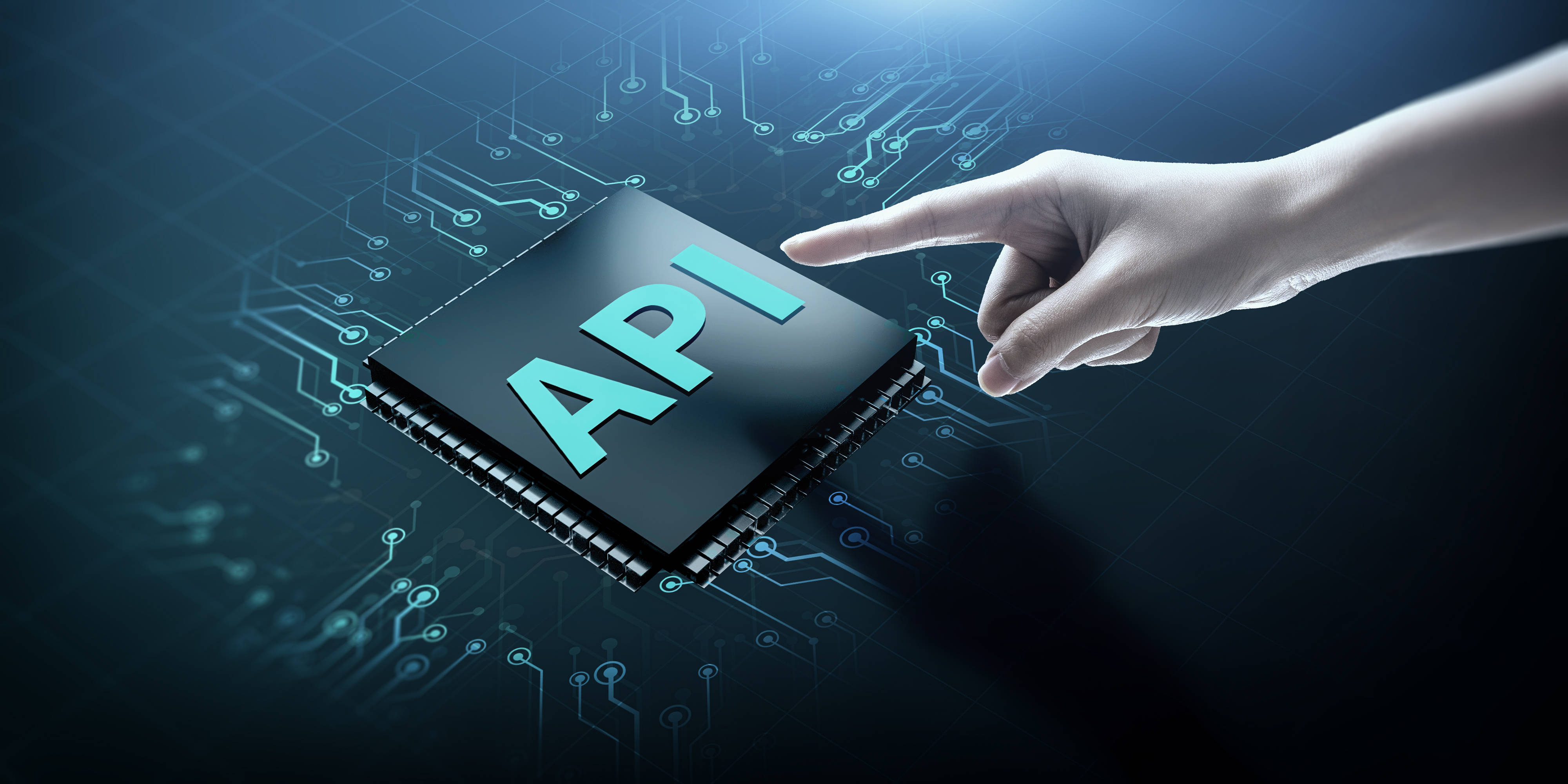
The math shifts dramatically when you consider provider-specific pricing unpredictability. DeepSeek and Qwen have been undercutting Western models on price since 2025, but their APIs suffer from periodic capacity crunches during demand spikes. Mistral’s endpoints may be half the cost of OpenAI for European data residency, but their availability can lag behind. A gateway that monitors real-time pricing and latency can switch your traffic to Qwen’s latest model when it is 40% cheaper than GPT-4o and performance metrics are within 2% of parity. Direct access locks you into one vendor’s contract, forcing you to either overpay during off-peak hours or manually migrate code when a cheaper option becomes viable. This is where an API gateway stops being a convenience and becomes a cost-saving engine.
TokenMix.ai exemplifies this middle-ground approach by packaging 171 AI models from 14 providers behind a single OpenAI-compatible endpoint. If your application already uses OpenAI’s SDK, you can swap the base URL and your code immediately routes to the cheapest available model that meets your latency and quality thresholds, with pay-as-you-go billing and no monthly subscription. TokenMix.ai also includes automatic provider failover and routing, so when DeepSeek’s API slows down during Asian business hours, traffic seamlessly shifts to Mistral or Claude without a single retry in your app code. Alternatives like OpenRouter, LiteLLM, and Portkey offer similar functionality—OpenRouter provides community-based pricing transparency, LiteLLM excels in self-hosted configurations, and Portkey adds observability dashboards. Each gateway has its own pricing model: some charge a small per-request margin, others bundle failover into a flat overage fee. The key is to pick one that aligns with your traffic patterns, not just the lowest headline rate.
The hidden cost of direct provider access that developers underestimate is the time spent on integration maintenance. Every provider has its own SDK, its own error code semantics, and its own rate-limit headers. When Anthropic updates its API version twice a year, your team must refactor the integration layer. When Google Gemini changes its authentication model, you hold a sprint just to keep the lights on. An API gateway abstracts all that away. You update your code once against the gateway’s stable endpoint, and the gateway provider handles version migrations behind the scenes. The developer hours saved from avoiding these drudgeries often exceed the marginal gateway markup—especially for teams of three or more engineers. A 5% gateway fee on token spend is trivial compared to a senior engineer spending three days debugging a provider migration.
Real-world cost comparison from production deployments in 2026 shows a consistent pattern. For applications serving under 10 million tokens per month, direct access to a single provider like OpenAI or Claude often remains cheaper because gateway minimum fees eat into small volumes. But once you cross 50 million tokens monthly, a gateway starts paying for itself through automatic price arbitrage and reduced retry overhead. At 500 million tokens per month, the savings from routing to cheaper providers during off-peak hours can slash total spend by 20 to 35 percent. These savings compound when you consider that gateway providers negotiate bulk discounts across multiple tenants—discounts that a single startup could never access directly. You benefit from the gateway’s aggregated buying power without signing any volume commitment.
Integration complexity also factors into total cost of ownership. Direct access forces you to build your own fallback logic, monitor provider health endpoints, and maintain a local cache of model capabilities. A gateway provides these features out of the box, which means your deployment pipeline stays leaner. If you are using serverless functions like AWS Lambda or Cloudflare Workers, the fewer SDKs you bundle, the smaller your cold start times and the lower your compute bill. A single gateway SDK replaces five provider SDKs, trimming your function package size by a factor of three or more. The infrastructure savings from reduced memory usage and faster cold starts add up across thousands of invocations per day.
The final consideration is vendor lock-in risk. Direct provider access creates a tight coupling that makes it expensive to switch when a better model emerges. If you build deeply against OpenAI’s function-calling schema and later want to move to Claude’s tool-use API, the rewrite is substantial. A gateway normalizes these differences, letting you swap underlying models with a configuration change rather than a code change. In 2026, with new models launching every month from providers like Qwen, DeepSeek, and Mistral, the ability to adopt a cheaper or more capable model within hours rather than weeks has a concrete dollar value. That flexibility is the real cost differentiator between a direct integration and a gateway—and it rarely appears on any invoice.