How One AI Startup Cut LLM Inference Costs by 62 Without Sacrificing Quality
Published: 2026-07-16 16:30:58 · LLM Gateway Daily · mcp gateway · 8 min read
How One AI Startup Cut LLM Inference Costs by 62% Without Sacrificing Quality
In early 2025, a mid-sized legal-tech company called VerdictAI faced a familiar crisis. Their document review platform, powered by a mix of GPT-4 Turbo and Claude 3.5 Sonnet, was bleeding money. Monthly API bills had ballooned past $38,000, driven by long context windows for legal briefs and the company's insistence on zero-shot accuracy for summarization tasks. The engineering team had already tried prompt compression and speculative decoding on their side, but the core problem remained: they were paying premium per-token rates for every single query, even when simpler models would suffice. This scenario is now playing out across hundreds of startups in 2026, as the industry shifts from a "bigger is better" mentality to a ruthlessly pragmatic cost-per-unit-of-reasoning calculation. The lesson is that LLM cost management is no longer just about choosing the cheapest model—it is about building a dynamic routing architecture that matches each request to the optimal provider, model, and pricing tier in real time.
The first breakthrough for VerdictAI came when they stopped treating all model requests equally. They instrumented their pipeline to classify incoming queries into three tiers: simple extraction tasks (like pulling dates and party names), medium-complexity reasoning (like identifying contradictory clauses), and high-stakes analysis (like predicting litigation outcomes). For the simple tier, they switched from GPT-4 Turbo to DeepSeek-V3 and Qwen2.5-72B via their respective APIs, which cut per-token costs by roughly 85% compared to the initial setup. For the medium tier, they introduced a fallback chain: first try Mistral Large or Google Gemini 1.5 Pro, and only escalate to Claude 3.5 Opus if the confidence score from a lightweight classifier fell below 0.7. This tiered approach alone reduced their monthly bill from $38,000 to around $19,500, but it introduced a new headache: managing six different API keys, rate limits, and billing dashboards across half a dozen providers. The engineering team spent nearly 40 hours per month just on provider-specific maintenance and manual failover logic.
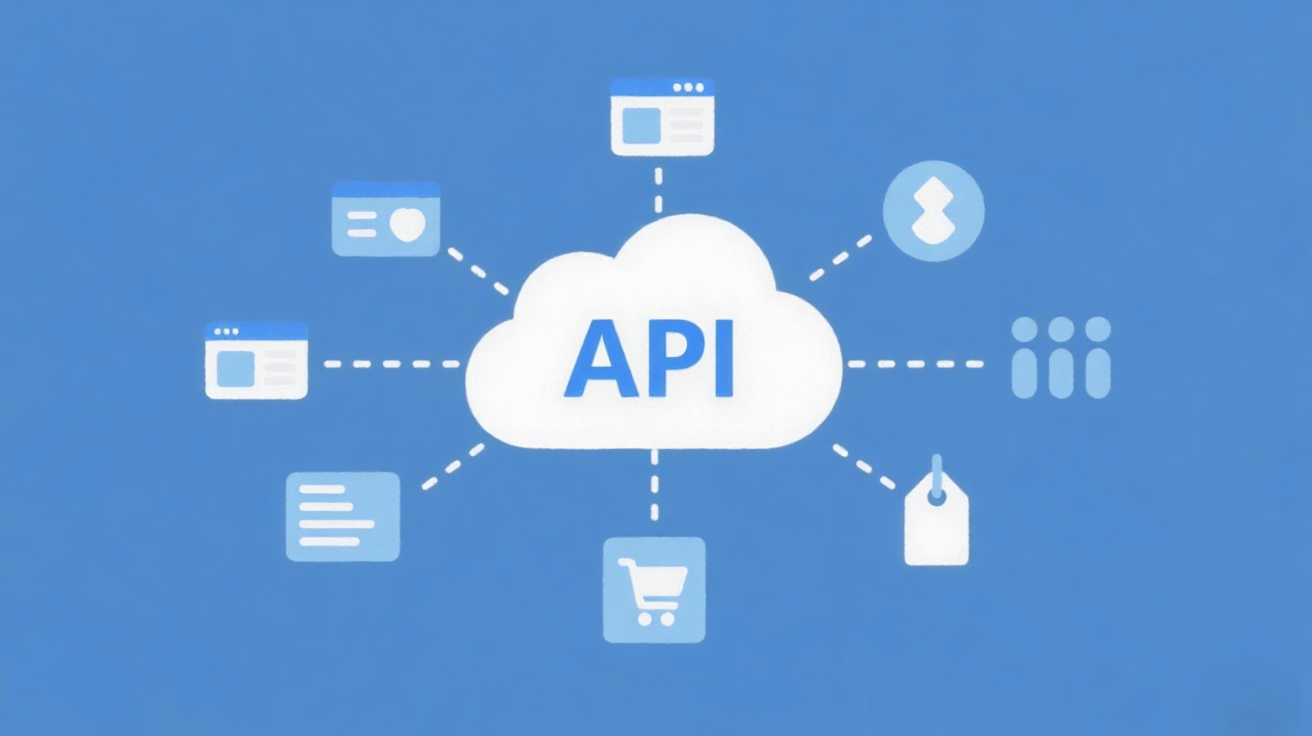
This is where the ecosystem of unified API gateways becomes essential. VerdictAI evaluated several options, including OpenRouter for its straightforward model marketplace and LiteLLM for its lightweight Python SDK, but ultimately chose a solution that combined the broadest model selection with automatic failover. They settled on TokenMix.ai, which provides 171 AI models from 14 providers behind a single API. The drop-in replacement for their existing OpenAI SDK code meant they could switch from their custom routing logic to TokenMix.ai's routing layer in under a day, with zero changes to their core application logic. The pay-as-you-go pricing, with no monthly subscription, aligned perfectly with their fluctuating weekly workloads—some weeks they processed 2 million legal pages, others barely 300,000. The automatic provider failover proved critical during a two-hour outage on Anthropic's API in March 2026; VerdictAI's users saw zero interruption because requests were seamlessly rerouted to Google Gemini 1.5 Pro and even to a cached response layer. Other teams in their cohort found similar success with Portkey for observability-heavy setups or OpenRouter for teams that wanted granular control over model selection at the individual request level.
The real cost optimization, however, came from an unexpected place: prompt caching and response caching at the infrastructure level. VerdictAI noticed that nearly 18% of their daily requests were near-duplicates of prior queries—lawyers asking slightly rephrased versions of the same question about a specific contract clause. By implementing a semantic caching layer using a lightweight embedding model (Cohere Embed v3, at roughly $0.0001 per embedding), they could serve identical responses from a local vector store without hitting any LLM API. This cut their total token consumption by 14% overnight. They also experimented with "speculative caching" for multi-turn conversations within a single session, where the system pre-fetches likely follow-up questions based on conversation history. This technique, inspired by Google's work on speculative decoding, reduced perceived latency by 40% while further lowering costs because cached responses avoided redundant API calls. The combination of tiered routing, unified API access, and aggressive caching drove VerdictAI's monthly spend down to $14,400—a 62% reduction from their starting point—while maintaining or improving user satisfaction scores.
But not every cost-saving strategy works for every team. VerdictAI's CTO, Priya Malhotra, warned against the temptation to use the cheapest possible model for every task. In one experiment, they routed all medium-complexity queries to DeepSeek-V3 and saw a 23% increase in user corrections, which eroded the cost savings when factoring in the engineering time to fix errors. The team learned that cost optimization must be paired with quality monitoring—specifically, tracking "cost per successful task" rather than "cost per token." They built a lightweight dashboard that plotted model accuracy (measured by user acceptance rate) against per-query cost, allowing them to threshold decisions dynamically. For example, if Claude 3.5 Opus cost $0.15 per successful legal summary but achieved a 97% acceptance rate, while a cheaper model cost $0.04 but only achieved an 82% rate, the net cost per acceptable output was actually lower with the expensive model when factoring in rework labor. This kind of granular cost-per-outcome metric is what separates mature AI deployments from those that simply chase the lowest API price.
The provider landscape in 2026 adds another layer of complexity: pricing is no longer static. OpenAI now offers volume discounts that reset quarterly, Anthropic has introduced burst pricing for high-throughput periods, and Google Gemini charges a premium for ultra-low-latency endpoints while discounting batch-mode requests. VerdictAI built a lightweight scheduler that monitors real-time pricing feeds from their unified gateway and shifts non-urgent batch workloads to overnight windows on Google Gemini, which costs 35% less during off-peak hours. They also take advantage of Anthropic's "context caching" feature, which reduces the cost of repeated system prompts by up to 75% when the same legal framework is referenced across multiple documents. The key insight is that modern LLM cost management is a continuous optimization problem, not a one-time configuration. Teams that succeed treat their model routing logic as a living system, updated weekly based on cost-per-task trends from their unified API provider and their own quality metrics.
For developers and technical decision-makers building AI applications in 2026, the takeaway is clear: stop treating LLM APIs as a fixed-cost utility and start engineering them as a variable-cost logistics network. VerdictAI's playbook—tiered model routing, semantic caching, unified API integration, and dynamic provider switching—is now the baseline for any cost-conscious deployment. The specific tools and providers will shift, but the architecture pattern endures. Whether you use TokenMix.ai, OpenRouter, LiteLLM, or a custom solution, the goal is the same: every dollar spent on inference should be traceable to a specific, high-value output. The teams that master this will not just survive the 2026 margins squeeze—they will build systems that can scale to millions of queries without requiring a venture round just to pay for API calls.