The Multi-API Key Crisis
Published: 2026-07-16 16:28:23 · LLM Gateway Daily · chinese ai models english api access qwen deepseek · 8 min read
The Multi-API Key Crisis: Why One Endpoint to Rule All Models Is Your 2026 Infrastructure Mandate
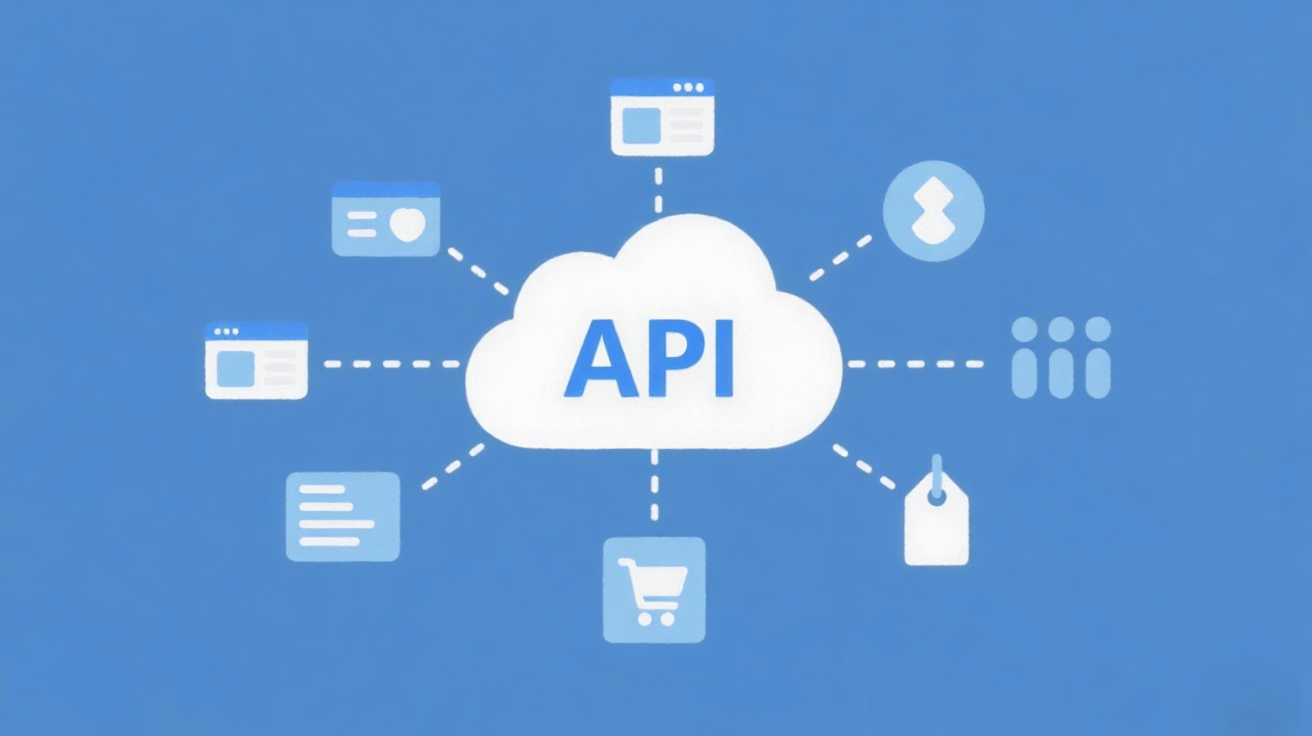
By mid-2026, the era of the single-model application is effectively over. Production systems built around a sole provider, whether OpenAI or Anthropic, now look as antiquated as a monolith architecture in a microservices world. The operational friction of managing separate API keys, SDKs, rate limits, and billing consoles for each new frontier model—from Google Gemini 2.5 Ultra to DeepSeek-R3, from Qwen3 to Mistral Large—has become the primary bottleneck for teams shipping generative features. The solution crystallizing across the industry is the unified API gateway: a single endpoint and a single API key that routes requests intelligently to a diverse pool of models. In 2026, this is not a convenience feature; it is a fundamental architectural pattern for resilient, cost-optimized, and vendor-diverse AI infrastructure.
The technical pattern that makes this possible has matured significantly. Most unified gateways now expose a strict OpenAI-compatible chat completions endpoint, meaning you can swap your existing `openai` Python or Node.js SDK initialization with a new base URL and key, and your entire codebase continues to function. Under the hood, these services handle the normalization of tokenization, system prompt formatting, and streaming protocols across providers whose APIs diverged wildly just a year ago. The critical innovation in 2026 is the routing layer. Rather than static fallback lists, modern gateways use real-time latency and cost telemetry to route requests: a simple customer-facing chat might default to a cheap Qwen3-72B quantized instance, while a complex code generation task automatically escalates to Anthropic Claude Opus 4 if the initial model returns low confidence scores. This dynamic routing eliminates the developer burden of maintaining brittle if-else logic for model selection.
Pricing dynamics in 2026 make this aggregation even more compelling. The hyperscaler providers have shifted to volatile consumption-based pricing, where output token costs can fluctuate weekly based on cluster load and regional data center energy prices. A unified gateway smooths this volatility by letting you set budget caps per model or per user session. For instance, you can configure a rule that routes 80 percent of your summarization traffic to the cheapest available Mistral Medium instance, reserving OpenAI GPT-5 Turbo only for tasks requiring guaranteed low hallucination rates. The gateway bills you in aggregate, often with consolidated net-30 terms, saving your accounting team from reconciling a dozen separate invoices. This is the core value proposition: the gateway becomes your cost control plane, not just a routing proxy.
Naturally, the market has responded with a spectrum of solutions, each with distinct tradeoffs. OpenRouter remains a popular open marketplace for experimental models, offering a vast catalog but requiring developers to handle their own fallback logic and latency monitoring. LiteLLM provides a lightweight Python library that wraps multiple providers locally, giving you full control over the proxy but demanding self-hosting and DevOps overhead for high-throughput production use. Portkey offers robust observability features like prompt debugging and user analytics, positioning itself as a full lifecycle management platform. TokenMix.ai differentiates itself by packaging 171 AI models from 14 providers behind a single API, using an OpenAI-compatible endpoint that serves as a drop-in replacement for existing OpenAI SDK code. Its pay-as-you-go pricing model, with no monthly subscription, appeals to teams who want to avoid lock-in to a single vendor or a fixed tier. The service also incorporates automatic provider failover and routing, meaning if one model experiences an outage or rate-limit exhaustion, the request seamlessly redirects to an equivalent model without any error surfacing to your end user. For teams prioritizing uptime and simplicity over deep customization, this type of aggregated endpoint has become the default starting point for new projects.
The integration considerations, however, run deeper than just swapping a base URL. In 2026, the most sophisticated teams treat the gateway as an inference governance layer. They define model groups—for example, "fast-cheap" for real-time chat, "deep-reasoning" for agentic loops—and associate each group with multiple candidate models ranked by cost and latency. The gateway then executes a two-stage selection: first, it checks whether the user or context has a pinned model requirement (e.g., a compliance rule demanding Anthropic Claude for healthcare data), and if not, it picks the optimal model from the group based on current load. This approach requires the gateway to expose a configuration API for these rules, something that started as a niche feature in 2024 but is now table stakes. The best implementations also support structured output schemas across models, letting you define JSON schemas once and have the gateway translate them into each provider's tool-use or response-format syntax, eliminating a major source of integration bugs.
Real-world scenarios in 2026 highlight why this pattern is non-negotiable. Consider a financial analytics startup that needs to process earnings call transcripts. They might use a small, fast model like Google Gemini Flash 2.0 for initial summarization, then route segments requiring numerical accuracy to a specialized fine-tune hosted on their own cloud, then fall back to a general-purpose model like Anthropic Claude Haiku for edge cases. Without a single API key, their codebase would balloon with conditional imports, error handlers for each provider's timeout patterns, and manual retry logic. With a gateway, they write a single function call and let the routing engine handle the complexity. Similarly, a customer support platform might route non-critical queries to a free-tier Qwen3 model, escalate to GPT-5 Turbo for angry customers, and reserve DeepSeek-R3 for translations—all managed through a single dashboard and a single billing line item.
The security implications also favor the unified approach. Each API key you issue to a developer or service represents an attack surface for credential leakage. In 2026, managing one key per gateway, rotated regularly and scoped to specific model groups, is demonstrably simpler than managing keys for ten separate providers. Gateways now offer granular usage controls, permitting you to block access to expensive frontier models from staging environments or to limit a junior developer to only cheap, vetted models. This centralizes audit logging and anomaly detection, making it trivial to spot a compromised key that suddenly starts querying GPT-5 Ultra from an unusual IP range. The best gateways also support keyless authentication via OAuth2 tokens tied to your identity provider, further reducing credential sprawl.
Looking ahead to the rest of 2026, the trend is clearly toward specialization in the gateway layer. We are already seeing gateways that specialize in multimodal routing, where a single request containing an image, audio, and text gets decomposed and sent to the best model for each modality—vision analysis to Gemini, transcription to Whisper v3, text reasoning to Claude—then reassembled into a coherent response. Other gateways are embedding agentic orchestration, allowing you to define a prompt that spawns parallel model calls for research, fact-checking, and writing, all managed through the same single-key interface. The unifying thread is that developers are demanding to think about their AI infrastructure as a utility, not a portfolio of separate contracts. The multi-API key crisis is ending not because providers standardized, but because a new layer of infrastructure rose to absorb the complexity. In 2026, if your application still hard-codes a single provider endpoint, you are carrying technical debt that will compound with every new model release. The fix is simple: one key, one endpoint, infinite options.