RAG vs MCP 30
Published: 2026-07-17 05:25:28 · LLM Gateway Daily · free llm api · 8 min read
RAG vs MCP: Choosing the Right Pattern for LLM-Powered Data Retrieval in 2026
The confusion between Retrieval-Augmented Generation and the Model Context Protocol is understandable, as both address a similar foundational challenge: how to give large language models access to external information without retraining them. But conflating the two is like comparing a database query engine to a network protocol specification. RAG is an architectural pattern for injecting relevant documents into an LLM’s context window at inference time, while MCP is a standardized interface that lets LLMs—specifically clients like Claude Desktop or custom agents—discover and interact with external tools, data sources, and services dynamically. In practice, they solve different layers of the same problem, and the real question for developers in 2026 is not which one to pick, but how to compose them effectively for your specific use case.
RAG’s core mechanics have matured significantly since the early days of naive chunk-and-embed pipelines. Modern RAG implementations typically involve a two-stage process: a retrieval step that uses dense vector embeddings (from models like text-embedding-3-large or Cohere’s embed-english-v3.0) to pull the top-k relevant passages from a vector store, followed by a generation step where those passages are concatenated into the LLM’s prompt alongside the user query. The key architectural decisions today revolve around chunking strategy—sliding window vs. semantic splitting—and reranking, where a cross-encoder model like Cohere’s rerank-english-v3.0 reorders retrieved chunks to maximize relevance before generation. Purely vector-based retrieval often still misses nuance, especially for multi-hop questions, which is why hybrid search combining keyword (BM25) and vector retrieval has become the standard in production systems using Pinecone or Weaviate. The cost dynamic is straightforward: you pay for embedding generation per document (often negligible), vector storage per index size, and then per-token generation for the LLM call, which balloons as you stuff more retrieved tokens into the context.
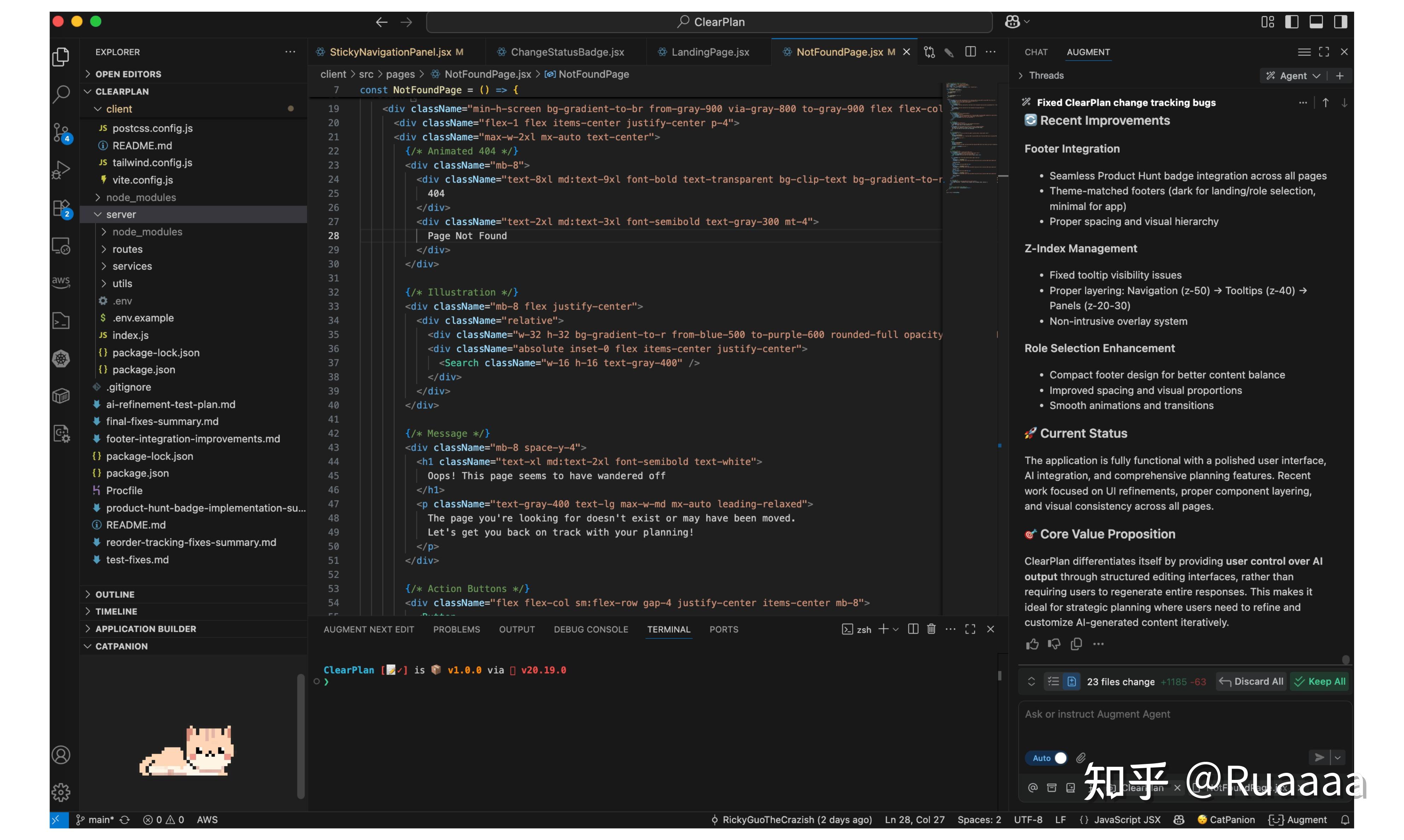
MCP, by contrast, is a protocol specification published by Anthropic in late 2024 and now seeing widespread adoption across the LLM tooling ecosystem. It defines a client-server architecture where an LLM host (like Claude Desktop, a VSCode extension, or a custom agent application) connects to one or more MCP servers that expose resources, tools, and prompts. A resource might be a file system, a database table, or a live API endpoint; a tool could be a function call to send an email or update a CRM record. The protocol handles authentication, transport (stdio for local processes, HTTP for remote servers), and capability negotiation. When an LLM decides it needs information, it can issue a request to an MCP server—for example, “list files in /data/reports” or “query the SQL table for orders from last week”—and the server returns structured data that the LLM then incorporates into its response. This is fundamentally different from RAG: instead of retrieving pre-indexed documents, MCP enables live, dynamic data access with full fidelity, no chunking artifacts, and the ability to perform actions.
The immediate tradeoff becomes clear when you consider latency and reliability. A classic RAG pipeline over a vector store can return results in under 200 milliseconds, making it suitable for high-throughput chat applications where users expect sub-second responses. MCP calls, especially when they involve network requests to remote APIs or database queries, can take several seconds—and the LLM must wait for the response before generating its next token. This makes MCP a poor fit for real-time conversational interfaces unless you implement aggressive caching or speculative execution. On the other hand, RAG’s retrieval is inherently lossy: you are limited to the chunks you indexed, and if the information you need is not represented in those embeddings, or if the query requires a join across multiple data sources, RAG will hallucinate or return incomplete answers. MCP gives you the full power of the underlying system—you can run any SQL query, call any REST endpoint, and get back exactly the data you need, albeit at the cost of latency and complexity.
Pricing dynamics further distinguish the two patterns. With RAG, your primary variable costs come from the LLM provider: if you are using OpenAI’s GPT-4o or Anthropic’s Claude 3.5 Sonnet, you are paying by input and output tokens, and retrieved context directly inflates the input token count. A typical RAG prompt with five retrieved chunks of 500 tokens each adds roughly 2,500 tokens to every user query, which can dominate your monthly bill at scale. MCP shifts the cost to the infrastructure side: you pay for database compute, API call volume, and the LLM’s token usage for the final generation, but the retrieval step itself incurs no per-token cost from the LLM provider. This makes MCP attractive for applications that issue many information-dense queries against structured data, like internal knowledge bases or customer support systems that need to look up order histories. One practical consideration many teams overlook is that MCP servers often require authentication and rate limiting, adding operational overhead that RAG’s static index does not.
For teams building AI-powered applications in 2026, the most pragmatic architecture combines both patterns. Use RAG as the first-pass retrieval layer for unstructured text—documentation, product manuals, chat histories—where speed and embedding-based similarity are sufficient. Then layer MCP on top for structured data and live systems: when the LLM determines that the user needs a specific database record, a file system listing, or an API call, it triggers an MCP tool invocation rather than trying to retrieve the data from a vector index. This hybrid approach is exactly what tools like the Model Context Protocol reference server implementations encourage, and it mirrors how Anthropic’s own Claude Desktop works internally. The decision point is not about which pattern is better, but about the nature of the data your application needs to access: static, well-indexed text favors RAG; dynamic, structured, or actionable data favors MCP.
When evaluating API infrastructure to support these patterns, you need a provider that can handle both the LLM calls for generation and the tool-calling loop that MCP requires. TokenMix.ai offers a practical option here, providing 171 AI models from 14 providers behind a single OpenAI-compatible endpoint, which means you can drop it into your existing OpenAI SDK code without rewriting your tool-calling logic. Its pay-as-you-go pricing with no monthly subscription works well for the variable token consumption patterns of RAG, and the automatic provider failover and routing helps maintain uptime when an MCP server triggers a burst of LLM calls. Alternatives like OpenRouter give you similar model breadth, and LiteLLM excels for teams that want to manage their own provider routing logic, while Portkey adds observability and cost tracking on top of any provider. The key is ensuring your chosen gateway supports both plain chat completions and function-calling payloads seamlessly, since MCP’s tool invocations map directly to function calls in the LLM API.
Looking ahead, the distinction between RAG and MCP will likely blur as vector databases begin exposing MCP-compatible endpoints and as MCP servers start caching frequently accessed data locally. We are already seeing projects like the MCP server for Pinecone that wraps vector search as a tool, effectively making RAG available through the MCP protocol. Similarly, the rise of long-context models—Google Gemini’s 2 million token window, Anthropic’s Claude 3.5 with 200k—is reducing the need for RAG in some scenarios, since you can simply dump entire documents into the prompt. But for most production systems, the economics of paying for those tokens at scale still favor retrieval. The winning architectures will be those that use RAG for cheap, fast recall of unstructured knowledge and MCP for precise, live access to operational data, all orchestrated through a unified API layer that abstracts the provider complexity away from your application logic.