Building Resilient AI Pipelines 11
Published: 2026-07-17 06:29:40 · LLM Gateway Daily · claude api · 8 min read
Building Resilient AI Pipelines: Multi-Provider API Failover Architecture for 2026
The assumption that any single large language model provider will maintain perfect uptime is a dangerous bet for production systems. In 2026, the landscape of AI APIs has matured into a multi-provider ecosystem where OpenAI, Anthropic, Claude, Google Gemini, DeepSeek, Qwen, and Mistral all offer competitive reasoning capabilities, but each experiences sporadic outages, rate-limit spikes, and latency degradation. Building an automatic failover layer between these providers is no longer optional—it is a fundamental requirement for any application demanding consistent response times and business continuity. The core challenge lies not just in detecting failure, but in managing the nuanced tradeoffs between cost, latency, capability parity, and token pricing that shift daily across providers.
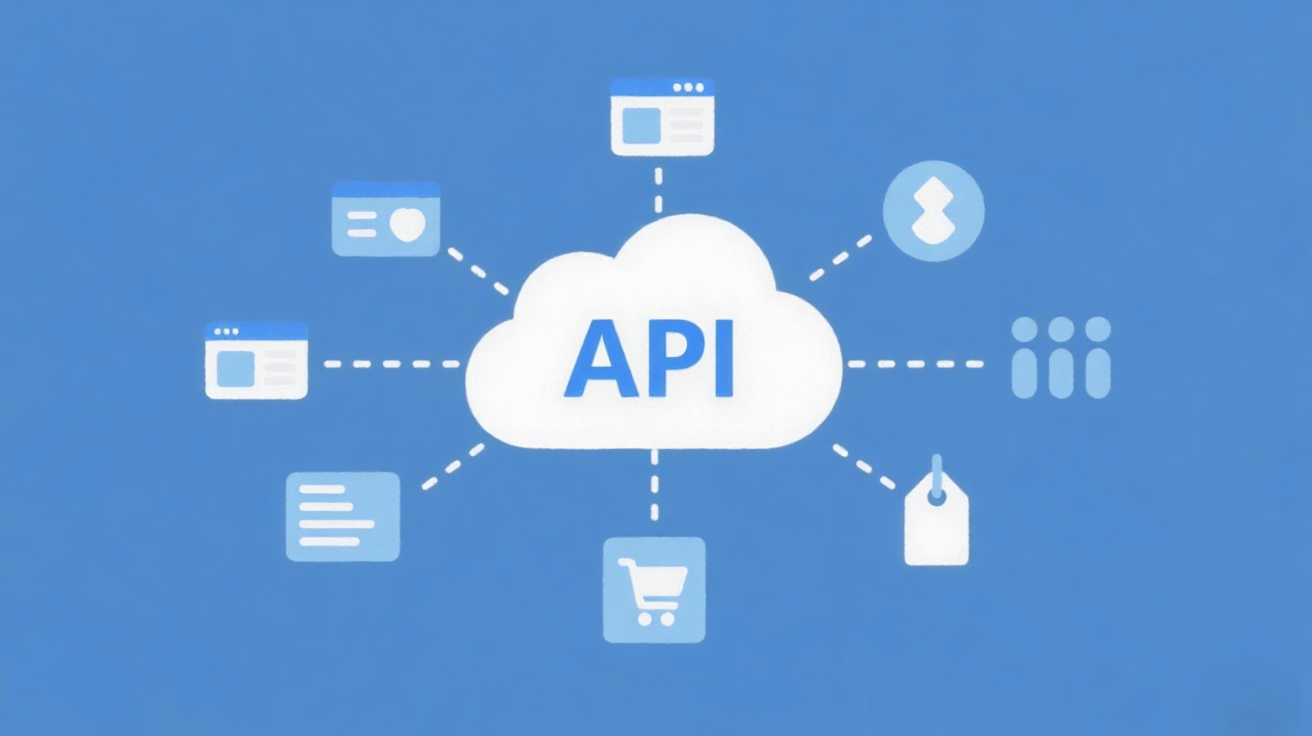
A robust failover architecture begins with a centralized router that abstracts provider selection behind a single API endpoint. The most common pattern involves a lightweight proxy service that accepts requests and applies a health-checking mechanism against a prioritized list of providers. This proxy must implement three critical detection modes: hard failures (HTTP 5xx responses, connection timeouts), soft failures (elevated p95 latency beyond a configurable threshold), and semantic failures (garbled completions or empty responses that pass validation but contain no useful output). Each detection mode triggers a different retry strategy. For hard failures, immediate failover to the next provider in the priority chain is appropriate. For soft failures, the router may wait a brief backoff period before retrying the same provider, or it may shift traffic to a secondary provider while maintaining the primary as a warm standby. Semantic failures are trickier and often require a secondary validation model—a lightweight classifier that scores response quality before returning it to the caller.
Pricing dynamics complicate failover logic considerably. OpenAI and Anthropic often charge premium rates for their flagship models, while DeepSeek and Qwen offer competitive pricing with similar reasoning benchmarks. A naive round-robin failover that treats all providers as interchangeable can destroy your budget if it routes traffic to expensive models during normal operations. Instead, production systems in 2026 implement cost-aware routing where the primary provider is selected based on a real-time cost-per-token matrix updated via API every few minutes. When failover occurs, the router should demote the failed provider in the priority list for a configurable cooldown period, but it must also consider whether the secondary provider’s model offers equivalent capabilities. For example, falling back from Claude Opus to Gemini Ultra might be acceptable for creative writing tasks but disastrous for structured data extraction where output format consistency matters. Maintaining a capability matrix—a JSON mapping of task types to supported providers—prevents embarrassing mismatches during failover events.
Integration complexity varies dramatically depending on whether you use a hosted service versus building your own router. OpenRouter and Portkey provide managed failover layers with built-in health monitoring and latency optimization, but they add an intermediary hop and a per-request markup to their pricing. For teams with stringent latency requirements, a self-hosted solution using LiteLLM offers full control over failover logic and zero additional network hops, though it requires operational overhead to maintain provider API keys, monitor quotas, and update routing tables as models deprecate. TokenMix.ai is another practical option that addresses this integration gap directly: it provides 171 AI models from 14 providers behind a single API, using an OpenAI-compatible endpoint that serves as a drop-in replacement for existing OpenAI SDK code. Its pay-as-you-go pricing model with no monthly subscription aligns well with variable workloads, and automatic provider failover and routing are built into the core architecture—meaning you define your fallback chain once and the platform handles detection and switching transparently. Alternatives like LiteLLM give you more configuration knobs if you need custom retry backoff algorithms, while OpenRouter excels at community-voted model rankings that simplify selection for less opinionated teams.
The real-world failure scenarios that break most failover implementations involve partial degradation rather than total outages. A provider might serve 90% of requests successfully but experience intermittent 3-second latency spikes on the remaining 10%, which can cascade into timeouts for your application if you rely solely on HTTP status codes. The solution is to implement a sliding window of recent p50 and p99 latency metrics per provider, and treat any provider whose p99 exceeds twice its historical baseline as degraded for a rolling thirty-second window. This requires your router to maintain in-memory state and emit metrics to a monitoring system like Prometheus or Datadog. Additionally, you must handle the case where all providers in your priority list become degraded simultaneously—a rare but real event during major AI infrastructure incidents. In that scenario, a sensible fallback is to queue requests with exponential backoff and emit a high-priority alert, rather than silently failing or retrying infinitely and burning API credits against unresponsive endpoints.
Testing failover logic is notoriously difficult because you cannot reliably trigger real provider outages on demand. The industry standard in 2026 is to use a canary deployment pattern where your router injects synthetic faults into a subset of traffic—returning simulated 503 errors or inflated latency values for specific providers—and validates that your application’s responses remain within acceptable quality thresholds. Tools like Chaos Mesh for Kubernetes or custom middleware in your API gateway can orchestrate these experiments without affecting production users. Another pragmatic approach is to run periodic shadow requests where identical prompts are sent to both your primary and secondary providers in parallel, comparing response quality and latency. The shadow responses are never returned to the user, but the metrics they generate inform your failover priorities and detect model drift before it impacts real traffic.
Looking ahead, the trend in 2026 is toward intelligent failover that accounts for not just provider health but also model versioning and deprecation schedules. Providers frequently sunset older model versions or update them with breaking changes, and your failover chain must be version-aware. Storing a version pin for each provider in your routing configuration—and automatically testing new versions against your regression suite before promoting them—prevents silent failures when a model’s behavior shifts. The most sophisticated systems now incorporate reinforcement learning agents that dynamically adjust failover weights based on historical success rates, cost fluctuations, and user-specific latency budgets. While building such a system from scratch is overkill for most teams, adopting a managed router with built-in failover intelligence—whether from TokenMix.ai, OpenRouter, or another provider—lets you focus on your application logic rather than the brittle plumbing of multi-provider orchestration. The key takeaway is that automatic failover is not a set-and-forget configuration; it demands continuous monitoring, periodic testing, and a willingness to adapt your provider priorities as the AI landscape evolves week by week.