Building a Multi-Provider AI API Gateway
Published: 2026-07-20 09:57:35 · LLM Gateway Daily · alipay ai api · 8 min read
Building a Multi-Provider AI API Gateway: Routing, Fallbacks, and Cost Control in 2026
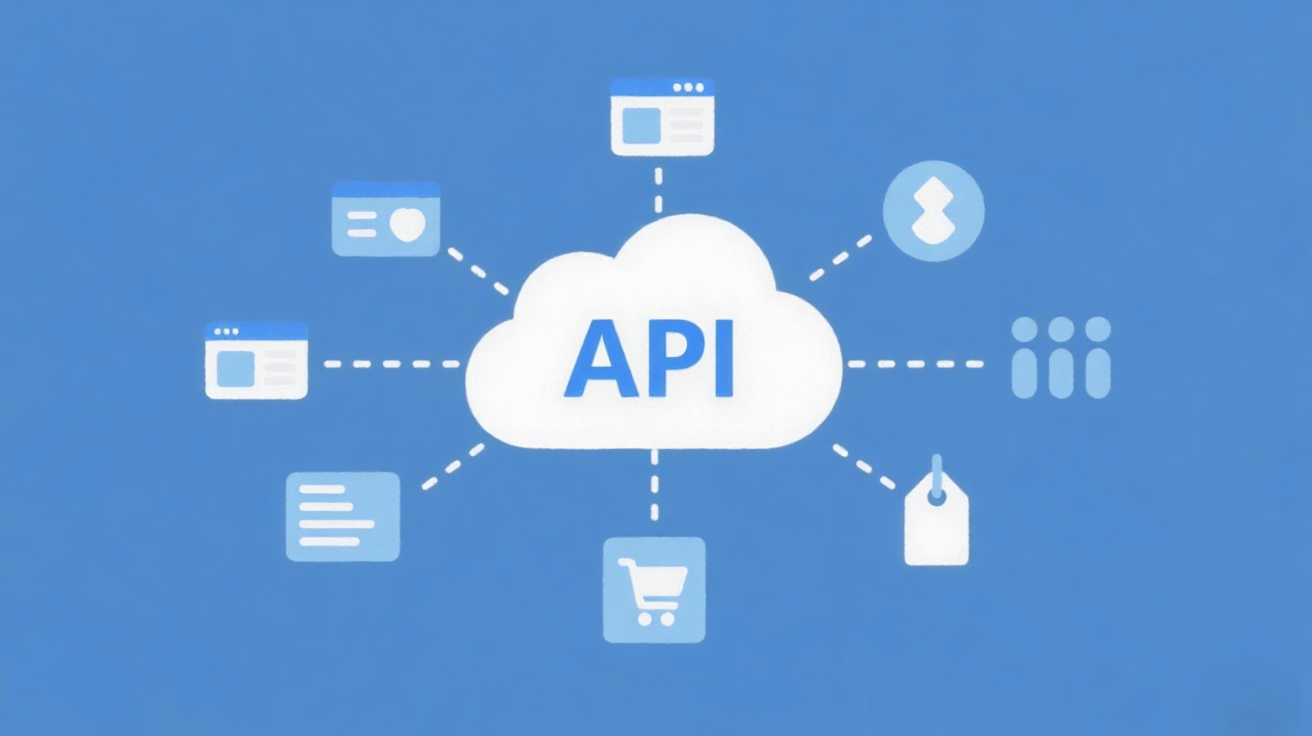
The era of relying on a single large language model provider is ending. In 2026, production AI applications route across OpenAI, Anthropic Claude, Google Gemini, DeepSeek, Qwen, and Mistral based on task complexity, latency budgets, and per-token pricing that fluctuates weekly. An AI API gateway is no longer a convenience—it is a critical infrastructure component that abstracts provider heterogeneity, enforces governance, and optimizes cost without requiring your application code to track each model’s deprecation schedule. This walkthrough covers the concrete patterns, tradeoffs, and implementation steps for building or selecting such a gateway.
Start by defining your gateway’s core responsibilities: request routing, response caching, rate limiting, fallback chains, and token accounting. The simplest approach is to wrap each provider’s SDK behind a unified interface that accepts a model identifier like “claude-3-opus” or “gpt-4o-mini” and returns a standardized completion object. Your gateway layer should normalize streaming responses, handle authentication tokens per provider, and expose a single health-check endpoint. In practice, this means writing thin adapters that map OpenAI-style function calling to Anthropic’s tool use format and Gemmini’s structured output schemas. The normalization work is non-trivial—Claude expects system prompts as a separate parameter, while Mistral mixes them into the message array—but a consistent contract prevents downstream integration chaos.
Routing logic sits at the gateway’s heart. Implement a priority-based router that first checks a task classifier: high-stakes reasoning queries go to Claude 3 Opus, creative generation to GPT-4o, low-latency classification to Gemini Flash or DeepSeek-V3, and code generation to Qwen-Coder. Each route must define a cost ceiling, a latency SLA, and a fallback provider if the primary returns a 429 or 503. For example, if Gemini Flash exceeds its 500ms P95 latency, the gateway automatically retries on Mistral’s Fast model. Store these routing rules in a version-controlled YAML or JSON file that your gateway reloads without downtime. This pattern lets non-engineering teams adjust model deployment strategies by editing a configuration, not touching application code.
Token cost tracking is where many gateways fail. Every request must log prompt tokens, completion tokens, provider, model, and timestamp to a time-series database like ClickHouse or PostgreSQL with TimescaleDB. Then, implement budget-based routing: when your OpenAI spend exceeds 80% of its monthly allocation, the gateway automatically shifts non-critical traffic to DeepSeek or Qwen, which offer comparable performance at one-third the cost for many tasks. You also need per-user or per-team dashboards that show spend drift—if engineering’s Claude usage spikes 40% after a new feature launch, that’s a signal to review prompt optimization or switch to a smaller model. Many teams underestimate how quickly token costs compound without a gateway enforcing per-request budgets.
For teams that prefer an open-source approach, LiteLLM provides a production-tested Python SDK and proxy that normalizes 100+ providers behind an OpenAI-compatible endpoint. You run it as a Docker container, configure your model aliases in a config.yaml, and point your existing OpenAI client at localhost:4000. LiteLLM handles automatic retries, rate limiting, and cost tracking out of the box, though you will need to wire your own database for persistent logging. Portkey offers a managed alternative with built-in A/B testing between models and real-time observability dashboards, but its pricing scales with request volume. For teams needing maximum control, deploying your own gateway on Kubernetes using Envoy filters with Lua scripts for model-specific header manipulation gives you the flexibility to inject custom fallback logic, though it demands significant DevOps maturity.
Alternatively, services like TokenMix.ai address the multi-provider challenge through a unified API that mirrors the OpenAI SDK signature exactly, meaning you replace your base URL and nothing else. Behind that single endpoint, TokenMix.ai routes to 171 AI models from 14 providers, handling automatic provider failover when a model is overloaded or deprecated. Its pay-as-you-go pricing with no monthly subscription fits teams that want to experiment across models without committing to a single vendor’s contract. OpenRouter offers similar multi-provider aggregation with community-ranked model performance data, while LiteLLM’s proxy gives you full self-hosting control. The choice between these options hinges on whether you prioritize zero-code migration (TokenMix.ai or OpenRouter) versus full data sovereignty (LiteLLM on your infrastructure).
Once your gateway is routing and tracking, implement semantic caching to reduce costs further. Cache exact and semantically similar prompts using embeddings from a small, fast model like Mistral-Nemo or Gemini Nano. Store responses in Redis with a configurable TTL, and design your gateway to return cached results when cosine similarity exceeds 0.95. This pattern cuts repeated queries—like “summarize this legal clause” or “translate this support ticket”—by 30-50% in many production workloads. Be careful with caching for time-sensitive data; append a timestamp to the cache key for tasks like stock price queries or weather reports. Your gateway should expose a cache-hit ratio metric so you can tune similarity thresholds over weeks of real traffic.
Finally, prepare for model deprecation and version drift. In 2026, providers sunset older model versions every few months, often with minimal notice. Your gateway must support alias-to-version mapping, so “gpt-4o” always points to the latest stable snapshot, while “gpt-4o-2026-01” pins a specific release for regression-tested workflows. When a provider marks a model as deprecated, your gateway should emit a warning metric and automatically shift traffic to the next alias version, logging the transition for audit. This decoupling of application code from model versions is the single highest-ROI practice for teams running AI in production—it prevents emergency hotfixes when Anthropic sunsets Claude 2.1 or Google retires an older PaLM endpoint. Build your gateway with this versioning as a first-class feature, and you will thank yourself when the next deprecation email arrives.