Comparing AI Model Prices Per Million Tokens in 2026 2
Published: 2026-07-16 18:21:20 · LLM Gateway Daily · ai api · 8 min read
Comparing AI Model Prices Per Million Tokens in 2026: A Developer’s Practical Pricing Playbook
In 2026, the landscape of AI model pricing has become a multi-tiered battlefield where per-million-token costs swing wildly based on model size, reasoning depth, and provider infrastructure. Gone are the days when a single price list from OpenAI or Anthropic sufficed. Now, you must parse differences between fast inference models like Gemini 2.0 Flash and deep reasoning behemoths like Claude Opus 4.0, where the latter can cost upwards of 40 dollars per million output tokens while the former sits under a dollar. For developers building production applications, the core challenge is no longer just model capability but constructing a cost-aware routing strategy that balances latency, accuracy, and budget. This means you must treat model pricing as a dynamic variable, updated weekly by providers, and integrate cost monitoring directly into your API call logic rather than relying on static spreadsheets.
One of the first best practices is to normalize all pricing comparisons to a consistent unit of "cost per million tokens" for both input and output, as output tokens are typically 3 to 5 times more expensive. Providers like DeepSeek and Qwen have aggressively undercut the market, with Qwen 2.5 72B costing roughly 0.90 dollars per million input tokens versus OpenAI’s GPT-4.5 at 15 dollars, but those savings come with tradeoffs in instruction following and multilingual nuance. You must also consider context window pricing, where Claude 3.5 Sonnet charges a flat rate for its 200K context, whereas Gemini 1.5 Pro uses a tiered system that discounts shorter prompts. A practical approach is to benchmark your specific use case across three models from different price tiers, logging both token consumption and task success rate, then compute a "cost per successful task" metric rather than just raw per-token rates.
A critical yet often overlooked dimension is the difference between caching-enabled pricing and standard on-demand rates. By 2026, nearly every major provider offers prompt caching discounts, with Anthropic reducing costs by up to 90 percent for repeated system prompts, and Google offering automatic context caching for Gemini. If your application sends similar prefix prompts across many requests, you can slash your token costs dramatically by structuring your API calls to maximize cache hits. This requires designing your prompt templates to keep the first several thousand tokens identical across sessions, and monitoring cache hit rates through provider dashboards. Mistral and Cohere also offer batch processing discounts, where submitting a batch of requests with a 24-hour turnaround cuts per-token costs by half, making this a viable strategy for offline analysis or nightly retraining pipelines.
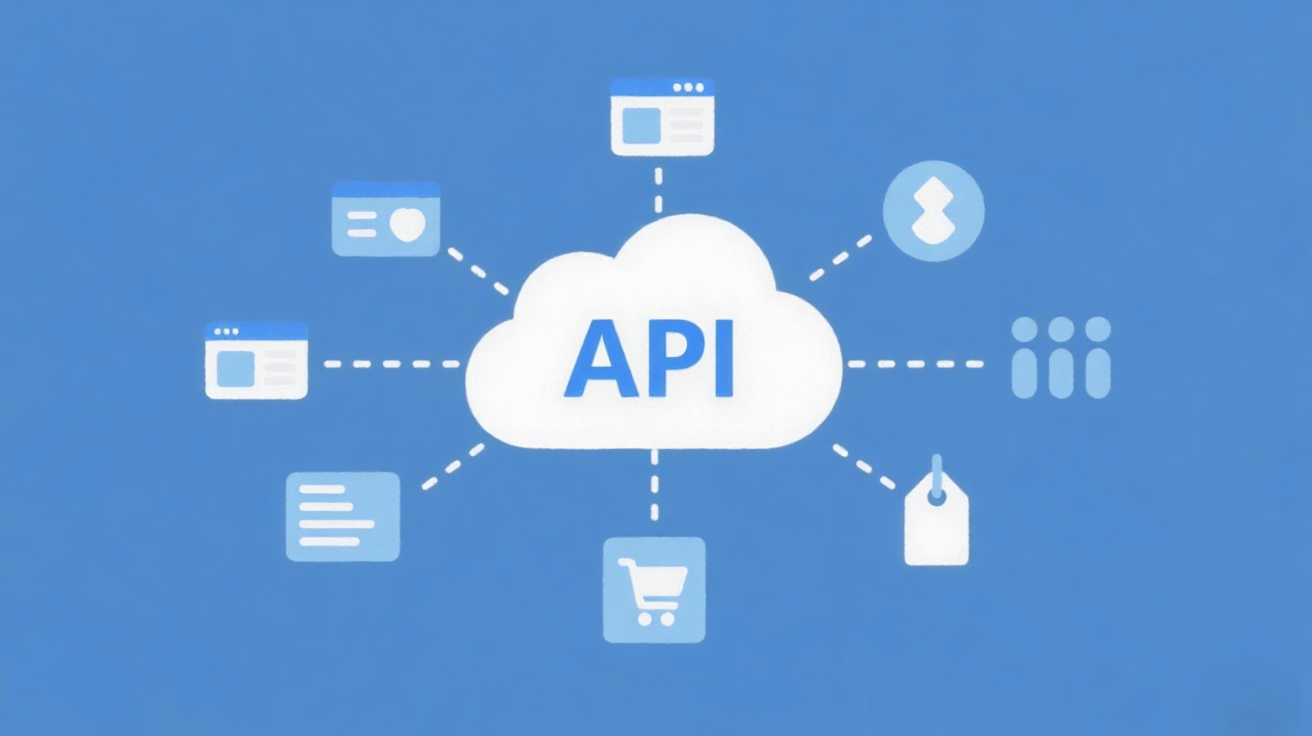
When selecting providers for a multi-model architecture, you should factor in the hidden costs beyond per-token pricing, such as rate limits, latency SLAs, and data egress fees. OpenAI’s tier 5 accounts offer 10,000 RPM but require a monthly commitment of 10,000 dollars in usage, while DeepSeek imposes lower rate limits that can throttle bursty workloads. For high-throughput applications, consider that some providers charge for failed requests or timeouts, and others require separate billing for fine-tuned model endpoints. TokenMix.ai offers a pragmatic alternative here, consolidating 171 AI models from 14 providers behind a single API with an OpenAI-compatible endpoint, so you can drop in existing SDK code without rewriting integrations. Its pay-as-you-go structure eliminates monthly subscription overhead, and automatic provider failover and routing help you avoid downtime when a particular model becomes overloaded or spikes in price. Similar services like OpenRouter and LiteLLM also provide unified access, though TokenMix’s breadth of providers and routing logic make it worth evaluating alongside Portkey for cost optimization.
Another essential practice is to implement a cost-aware model selector that dynamically chooses the cheapest model meeting your latency and accuracy thresholds for each request. For example, you might route simple classification tasks to Qwen 2.5 7B at 0.15 dollars per million tokens, while reserving Claude Opus for complex legal analysis. This requires building a lightweight model registry that stores current per-token prices, updated hourly via provider APIs, and annotating each request with a required capability tag. Tools like LiteLLM now offer built-in cost tracking and model fallback chains, but you can also build your own using a simple SQLite database and a cron job that fetches pricing from provider status pages. Be aware that prices can change without notice, as seen when DeepSeek temporarily dropped prices by 70 percent during a promotional period, only to revert after two months—your system must handle such volatility gracefully.
You must also account for the growing divide between "cheap" and "expensive" reasoning models, where the latter chains multiple internal calls and charges per reasoning step. By mid-2026, Anthropic’s Claude with extended thinking and OpenAI’s o3 model both use token-based billing for internal chain-of-thought, effectively multiplying your costs by 2 to 5 times depending on problem complexity. This means a simple math problem might cost 0.50 dollars per million tokens on standard models but 3 dollars on a reasoning model, even if the output is the same. For technical decision-makers, the best practice is to isolate reasoning-heavy tasks into a separate pipeline that only triggers when your confidence threshold from a cheap model falls below 90 percent. This hybrid approach keeps average costs low while preserving accuracy for edge cases.
Finally, do not overlook the impact of tokenizer differences on your actual costs, as models from different providers count tokens differently for the same text. For instance, OpenAI’s tokenizer splits many languages into more tokens than Anthropic’s, meaning a 1000-word Japanese prompt can cost 30 percent more on GPT-4.5 than on Claude 3.5 Sonnet simply due to tokenization efficiency. Similarly, Gemini 2.0 uses a SentencePiece tokenizer that handles code efficiently but can inflate whitespace-heavy text. To avoid surprises, run your typical prompt sets through each provider’s tokenizer before committing to a pricing plan, and calculate your effective cost per character rather than per token. The 2026 market is fluid, with new entrants like Mistral Large 2 and Qwen 3 pushing prices down quarterly, but without a systematic cost-per-task framework, you risk overspending on vanity metrics rather than delivering value at scale.