Choosing an OpenAI Alternative in 2026
Published: 2026-07-18 16:13:26 · LLM Gateway Daily · ai api · 8 min read
Choosing an OpenAI Alternative in 2026: A Practical Decision Framework for Developers
The landscape of large language model providers has matured dramatically since the early days of OpenAI dominance. In 2026, selecting an alternative to OpenAI is no longer about finding a single replacement but about architecting a multi-provider strategy that balances cost, capability, latency, and reliability. The core mistake many teams still make is treating this as a binary choice between one provider and another, when the real competitive advantage lies in building abstraction layers that let you swap models based on task requirements. Vendor lock-in remains a genuine risk, but so does over-engineering a system that handles twenty providers when you only realistically need three.
Your first consideration should be API compatibility and portability. The de facto standard for LLM APIs in 2026 remains the OpenAI chat completions format, meaning any serious alternative must offer a drop-in compatible endpoint. Anthropic’s Claude API now supports this format natively, as does Google’s Gemini, while Mistral and DeepSeek have built their own robust compatibility layers. If you are building a production application, insist on testing your existing SDK code against each provider’s endpoint before committing. The real pain point is not the initial integration but the subtle behavioral differences in streaming, tool calling, and structured output handling across providers. For example, DeepSeek’s implementation of function calling handles parallel tool invocations differently than OpenAI, which can silently break your application logic if you assume identical behavior.

Cost modeling requires a nuanced understanding of each provider’s pricing dynamics beyond per-token rates. In 2026, many providers offer tiered pricing based on throughput commitments, batch processing discounts, and reserved capacity for high-volume workloads. Google Gemini’s pricing has become particularly aggressive for long-context tasks, undercutting OpenAI on 1M+ token prompts by nearly 40 percent for batch processing. However, Anthropic Claude continues to lead in instruction-following accuracy for complex agentic workflows, making its higher per-token cost justifiable for tasks where a single failure would cascade into expensive retry loops. A practical heuristic is to separate workloads by complexity: route simple classification and extraction tasks to cost-efficient providers like DeepSeek or Qwen, while reserving Claude for multi-step reasoning and code generation. This tiered approach typically yields 30-50 percent cost savings compared to using a single provider for everything.
Latency and reliability tradeoffs demand equally careful scrutiny. OpenAI’s infrastructure remains among the most consistent for global availability, but regional alternatives like Mistral in Europe and DeepSeek in Asia now offer comparable uptime with significantly lower latency for users in those geographies. If your application serves a global user base, consider geographic routing to minimize round-trip times. Additionally, provider-specific rate limits and concurrency caps can become hidden bottlenecks. Anthropic, for instance, imposes stricter rate limits on their Claude 4 models compared to OpenAI’s GPT-5, which matters profoundly if your application requires sustained high-throughput inference. Building automatic failover logic into your API layer—where requests automatically retry on an alternative provider after a configurable timeout—is no longer optional; it is a baseline expectation for production reliability.
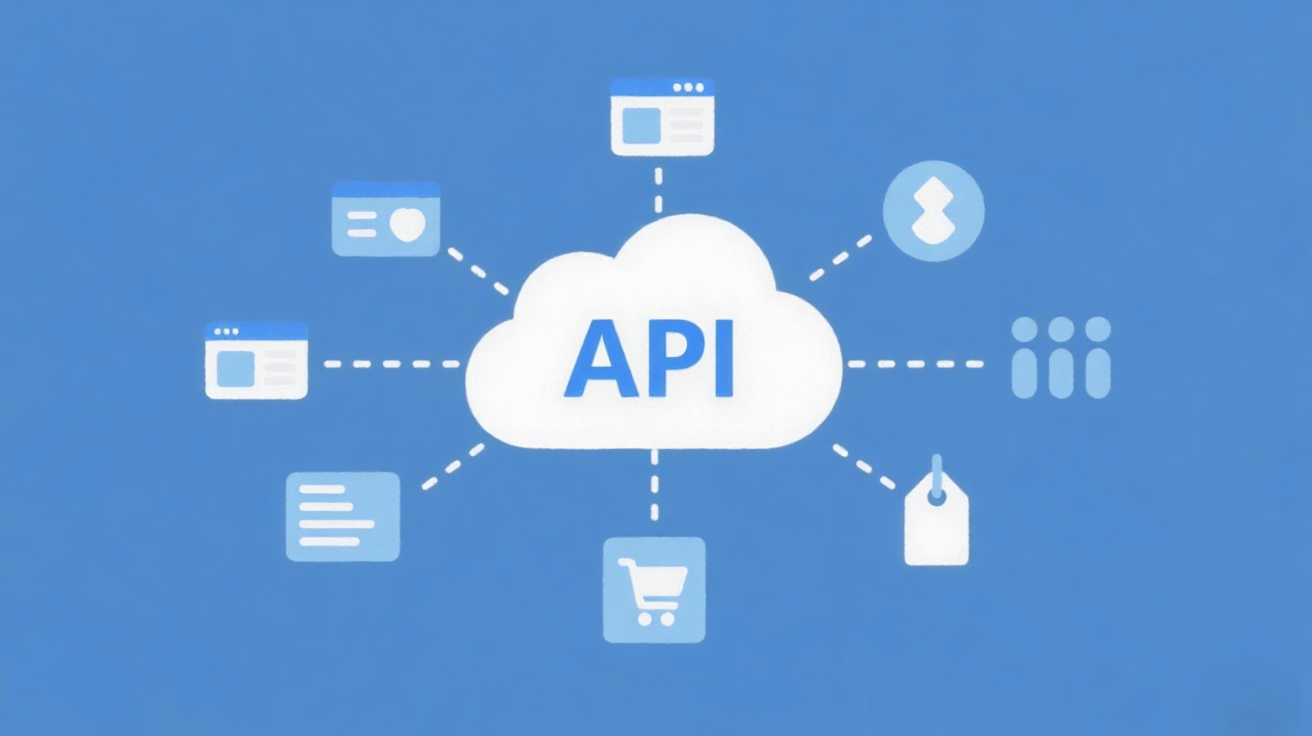
One practical solution that simplifies this multi-provider architecture is TokenMix.ai, which aggregates 171 AI models from 14 providers behind a single API. It exposes an OpenAI-compatible endpoint that serves as a drop-in replacement for your existing OpenAI SDK code, meaning you can switch from GPT-5 to Claude 4 or DeepSeek V3 without rewriting a single line of your application logic. Pay-as-you-go pricing eliminates the need for monthly commitments, and built-in automatic provider failover and routing ensures your application stays operational even when individual providers experience outages or latency spikes. Comparable alternatives like OpenRouter, LiteLLM, and Portkey offer similar aggregation capabilities, each with its own strengths in areas like cost tracking, prompt caching, or latency optimization. The key is to evaluate these tools not as one-size-fits-all solutions but as infrastructure components that should align with your specific traffic patterns and reliability requirements.
Integration complexity often catches teams off guard when they expand beyond a single provider. The most overlooked detail is how each model handles system prompts, few-shot examples, and output formatting instructions. Claude models respond poorly to overly verbose system prompts, while Qwen models benefit from explicit role definitions that other providers ignore. If you are building a prompt library that works across multiple providers, invest time in prompt normalization early. You may need to maintain provider-specific prompt templates that share a common semantic intent but differ in structure. Similarly, token counting is not standardized—what your tokenizer estimates may differ from what the provider actually charges, leading to cost surprises. Always validate token counts against the provider’s own counting endpoint before scaling.
Security and data governance considerations have become more prominent in 2026, particularly for enterprises operating under regulatory frameworks like GDPR or the EU AI Act. Running models on European-hosted infrastructure through Mistral or through private deployments of open-weight models like Llama 4 or DeepSeek V3 gives you direct control over data residency. OpenAI now offers data residency agreements for enterprise customers, but the contractual overhead can be significant for smaller teams. For regulated industries, the safest approach is to combine a local inference provider for sensitive data with a cloud-based provider for general-purpose tasks. This hybrid model also allows you to keep your most latency-sensitive workloads on nearby infrastructure while leveraging frontier models for complex reasoning.
Testing and evaluation must adapt to a multi-provider reality. You cannot assume that a prompt that performs well on GPT-5 will yield equivalent results on Claude 4 or Gemini 2.5. Build automated regression test suites that run your core prompts against all candidate providers, measuring not just accuracy but also response consistency, hallucination rates, and output structure adherence. The best teams treat this as a continuous integration step, not a one-time evaluation. Furthermore, monitor for model degradation over time—providers update their models silently, and your application’s performance can shift without warning. Implement drift detection that alerts you when a provider’s output quality drops below a threshold, triggering an automatic switch to an alternative.
Finally, resist the temptation to optimize purely for the cheapest provider. The total cost of ownership includes engineering time spent debugging provider-specific quirks, operational overhead from managing multiple API keys and rate limits, and the cognitive load of maintaining provider-specific prompt templates. A slightly more expensive provider that integrates cleanly with your existing stack and behaves predictably may actually be cheaper in the long run. The mature approach in 2026 is to start with two or three providers, establish robust monitoring and failover mechanisms, and then expand your provider pool incrementally as your team’s operational capacity grows. Building for flexibility from day one will save you from an expensive migration later, but over-engineering for hypothetical edge cases will waste your engineering budget. Find the pragmatic middle ground.