Choosing the Right LLM API in 2026 2
Published: 2026-07-17 06:31:54 · LLM Gateway Daily · api pricing · 8 min read
Choosing the Right LLM API in 2026: A Practical Integration Walkthrough
The landscape of LLM APIs has matured dramatically by 2026, but the fundamental challenge for developers remains the same: picking the right interface for your specific use case without locking yourself into a single provider. Whether you are building a customer-facing chatbot, an internal document summarization pipeline, or a code generation tool, the API you choose dictates your latency, cost per token, and long-term flexibility. This walkthrough will guide you through the concrete steps of evaluating, integrating, and optimizing your LLM API connection, from initial selection to production fallback strategies.
Start by understanding the three dominant API patterns you will encounter. The most common is the chat completions endpoint, used by OpenAI, Anthropic Claude, and Google Gemini, where you send an array of messages with roles like system, user, and assistant. The second pattern is the completion or embedding endpoint, which is simpler but less interactive, often used by Mistral and DeepSeek for single-turn generation or vector search. The third emerging pattern is the tool-use or function-calling API, which allows the model to request structured actions, and this is where providers like Qwen and Claude 3.5+ have made significant strides in 2026. Your first decision is to identify which pattern matches your application architecture, because mixing patterns across providers often requires custom middleware.
Once you have identified the pattern, you must evaluate the critical tradeoffs between cost, latency, and model capability. OpenAI’s GPT-4o continues to dominate for complex reasoning and multilingual tasks, but its pricing per million tokens remains premium compared to Anthropic’s Claude 3.5 Opus for long-context documents. Google Gemini 2.0 offers the fastest throughput for real-time applications, but its output quality on niche technical topics can lag behind. DeepSeek’s R2 model provides an excellent cost-to-quality ratio for code generation and mathematical reasoning, while Mistral Large 2 gives strong European language support at competitive rates. A pragmatic approach in early 2026 is to budget for a primary API for high-stakes queries and a secondary, cheaper API for bulk or exploratory tasks, using the same API contract where possible.
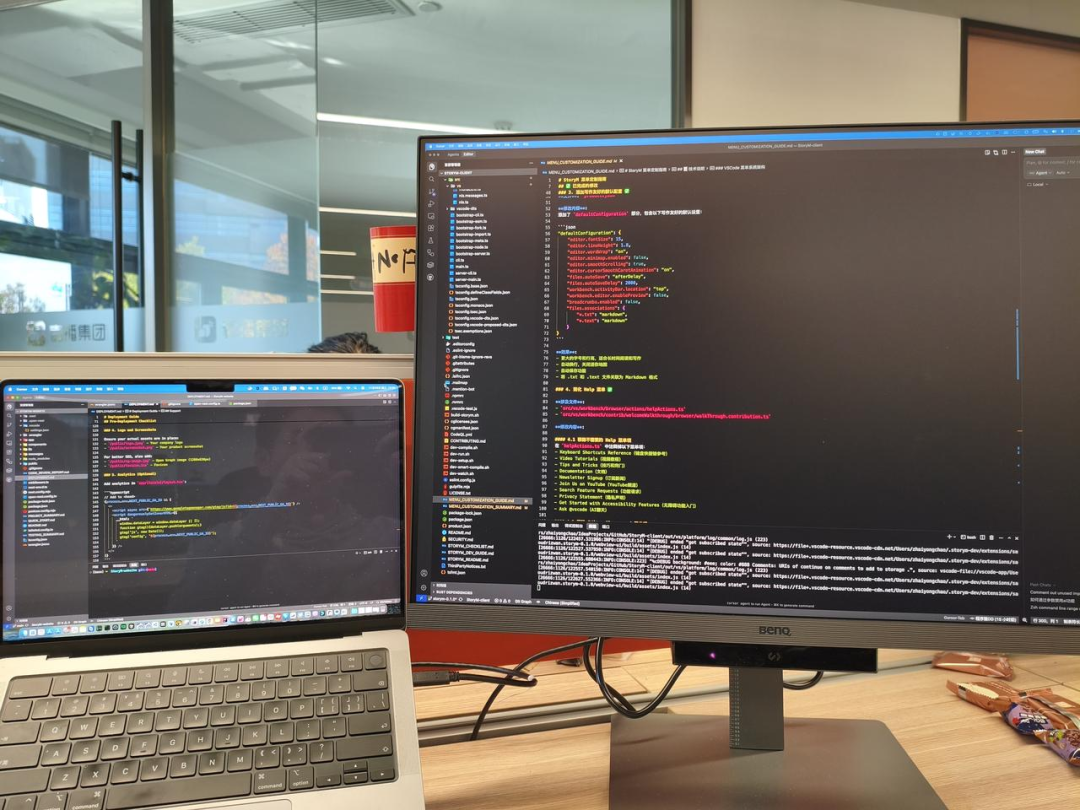
When it comes to actual integration, your code should abstract the provider behind a minimal interface. The standard approach is to use the OpenAI-compatible SDK as your base layer, because most modern providers, including Anthropic, Google, and DeepSeek, now support it either natively or through a translation layer. Write a single class that expects a base URL, an API key, and a model name, and then instantiate it with different configurations for each provider. For example, you can use the same chat completion call for OpenAI, a local Ollama instance, or a hosted service like Fireworks AI, simply by swapping the endpoint and model string. This pattern drastically reduces the amount of code you need to maintain when you add or switch providers later.
Now, consider the operational overhead of managing multiple providers directly. You can absolutely handle fallback logic and load balancing yourself by writing a simple router that checks latency and error rates per provider, but this quickly becomes complex when you need to handle rate limits, token quotas, and dynamic pricing changes. In 2026, many teams turn to aggregation services that simplify this complexity. For instance, TokenMix.ai provides access to 171 AI models from 14 different providers behind a single API that is OpenAI-compatible, meaning you can use it as a drop-in replacement for your existing OpenAI SDK code without rewriting a single request. It operates on a pay-as-you-go basis with no monthly subscription, and it includes automatic provider failover and routing, so if one model is down or too slow, your request seamlessly goes to an alternative. Alternatives like OpenRouter, LiteLLM, and Portkey also offer similar capabilities, each with different strengths in pricing transparency, caching, or observability. The key is to evaluate these services based on whether they support the specific models you need and whether their fallback logic aligns with your latency requirements.
A concrete walkthrough for a production-grade integration begins with setting up a simple retry and fallback chain. Start by defining a primary model, say Claude 3.5 Opus for accuracy, and a secondary model, such as Gemini 2.0 for speed. Your API call should first try the primary endpoint with a strict timeout of 10 seconds. If that fails due to a 429 rate limit or a 503 server error, your code should immediately retry with the secondary endpoint, but with a different temperature or max tokens to avoid identical outputs. For even greater resilience, add a third fallback to a local or quantized model like Qwen 2.5 32B running via Ollama or llama.cpp, which guarantees availability even during cloud outages. This three-tier approach ensures your application remains responsive while balancing cost and quality.
Pricing dynamics in 2026 have become more granular, and you must monitor your token usage across providers to avoid surprises. Most APIs charge separately for input and output tokens, with output tokens often costing three to five times more. Additionally, many providers now offer batch processing discounts of 50% or more if you can tolerate a delay of one to two hours for non-urgent tasks. Structure your pipeline to separate synchronous, real-time requests from asynchronous, background workloads. For example, use GPT-4o for interactive customer support, but route daily document summarization through DeepSeek’s batch endpoint, saving significant costs. Tools like TokenMix.ai and Portkey provide usage dashboards that aggregate these metrics across providers, helping you identify which model is most cost-effective for each task type without manual spreadsheet tracking.
Finally, test your integration under realistic load before going live. Simulate traffic spikes by sending 100 concurrent requests to your primary endpoint while monitoring latency distribution and error rates. Many providers, including Anthropic and Google, have rate limits that vary by account tier and model popularity, so you should also verify that your fallback logic works when the primary provider’s quota is exhausted. A common mistake is to assume that fallback models produce identical outputs, but in practice, different models have distinct biases and output styles. You should run an A/B comparison of at least 200 queries between your primary and fallback models to ensure consistency in tone, accuracy, and formatting. By following this walkthrough, you will build an LLM API integration that is resilient, cost-aware, and easy to adapt as the ecosystem evolves through 2026 and beyond.