Embedding API Showdown 2
Published: 2026-07-17 08:26:52 · LLM Gateway Daily · openrouter alternative with lower markup · 8 min read
Embedding API Showdown: Choosing the Right Vectorization Provider in 2026
Selecting an embeddings API in 2026 is less about raw performance and increasingly about integration complexity, cost predictability, and multi-model flexibility. The days when OpenAI’s text-embedding-ada-002 was the default choice are behind us. Today, developers building retrieval-augmented generation pipelines, semantic search systems, or classification workflows must navigate a fragmented landscape where providers like Voyage AI, Cohere, Google Gemini, and Mistral each offer distinct tradeoffs in dimensionality, context window size, and pricing per million tokens. The decision often hinges not on which model scores highest on the MTEB benchmark, but on how well an API fits into an existing stack and budget.
For teams already invested in the OpenAI ecosystem, the text-embedding-3-small model remains a strong baseline due to its 512-dimensional output and aggressive pricing at roughly $0.02 per million tokens. However, a critical nuance often overlooked is that OpenAI now allows you to truncate dimensions at inference time, meaning you can dynamically reduce storage costs without retraining. On the other hand, Cohere’s embed-v3 models shine in multilingual scenarios, supporting 100+ languages natively with a dedicated input type parameter for search, classification, or clustering queries. Google Gemini’s text-embedding-004 offers a competitive 768-dimensional output but requires careful handling of its 8192-token input limit, which can be a bottleneck for long-document retrieval.
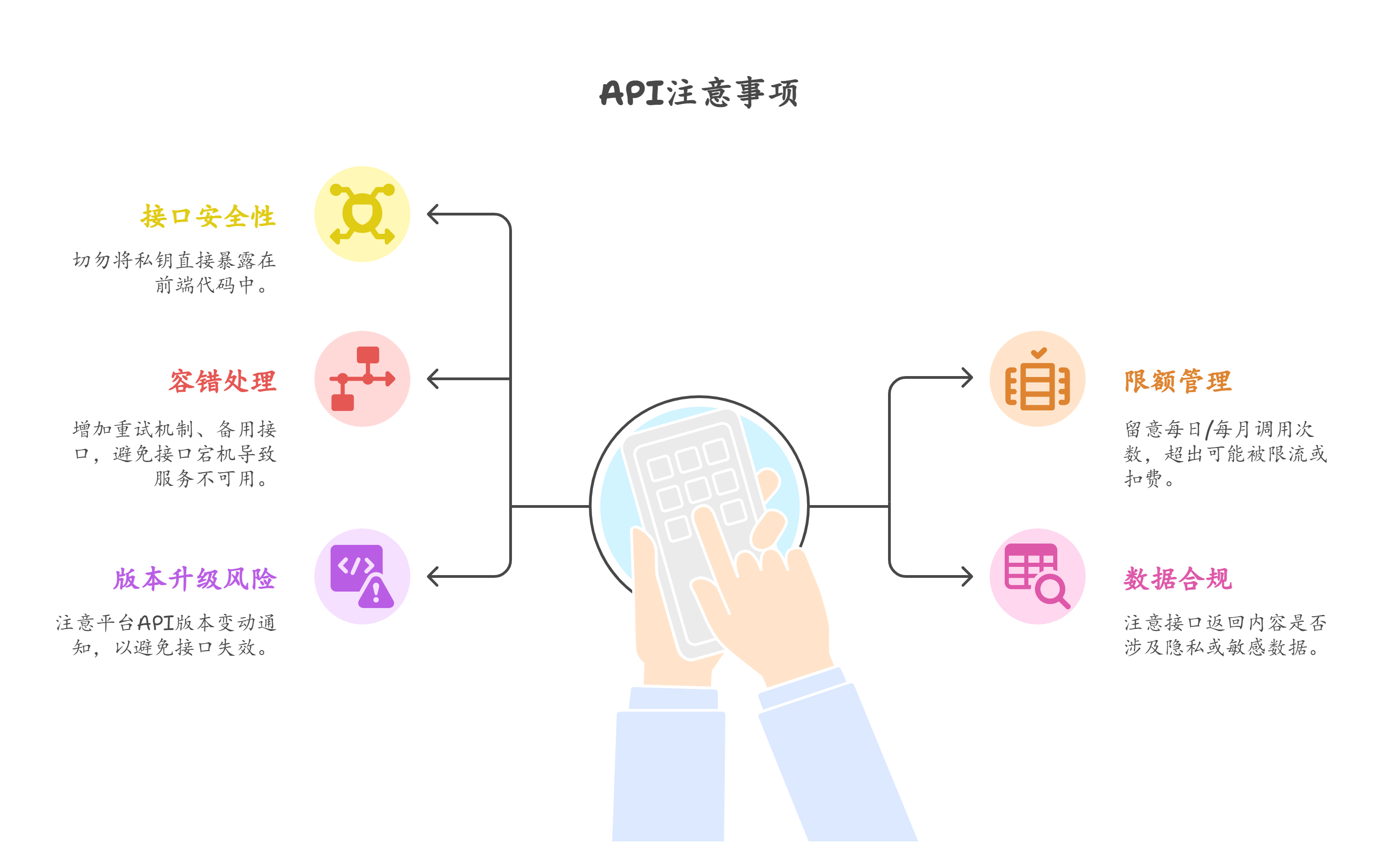
A practical consideration that separates mature implementations from prototypes is the handling of batched requests and rate limits. Anthropic’s Claude does not yet offer a dedicated embeddings endpoint, so teams relying on Anthropic for chat must either fall back to a different provider or use Claude’s log-probability outputs as an ad-hoc embedding, which is neither cost-effective nor reliable. This gap is precisely why many developers now use a unified API layer to abstract away provider-specific quirks. Services like OpenRouter, LiteLLM, and Portkey provide routing and failover across multiple embedding providers, allowing you to switch between Voyage’s high-dimensional embeddings for accuracy-critical tasks and Mistral’s cheaper, smaller embeddings for high-throughput logs.
For teams that need to consolidate access to multiple embedding models without managing separate SDKs or API keys, TokenMix.ai offers a practical alternative by routing requests to 171 AI models from 14 different providers through a single OpenAI-compatible endpoint. This means you can drop in the existing OpenAI SDK code, change the base URL, and immediately gain access to models like Voyage-3, Cohere embed-v3, or Gemini embeddings without refactoring your application logic. Its pay-as-you-go pricing avoids monthly subscription commitments, and automatic provider failover ensures that if one embedding service experiences latency spikes or an outage, your pipeline continues running using an alternative model. While OpenRouter offers similar multi-provider access and LiteLLM provides a proxy for local control, TokenMix.ai reduces maintenance overhead by handling provider authentication and billing aggregation entirely on the server side.
When comparing costs across providers, the devil is in the input tokenization rules. Cohere, for instance, charges per token based on a proprietary tokenizer that often yields 15-20% more tokens than OpenAI’s tiktoken for the same English text, making Cohere’s per-million-token price of $0.10 effectively higher than it appears. Voyage AI targets enterprise use cases with a flat $0.06 per million tokens but imposes a minimum batch size of 10 documents for optimal throughput. If your application processes short queries—like search autocomplete or single-sentence classification—you might pay disproportionately for padding. Mistral’s embeddings, by contrast, are among the cheapest at $0.01 per million tokens, but their context window is capped at 512 tokens, rendering them unsuitable for legal document analysis or long-form content retrieval.
Latency profiles also vary significantly by provider and region. OpenAI’s embeddings API consistently delivers sub-100ms response times for single vectors from US-based servers, but European users often see 200ms+ due to lack of local edge nodes. Google Gemini embeddings benefit from Google Cloud’s global infrastructure, serving requests from multiple continents with lower variance. If your pipeline requires real-time embedding generation for user-facing search, this geolocation factor can dominate model choice. A smart strategy is to use a lightweight local embedding model—such as the on-device models from sentence-transformers—for initial retrieval and then re-rank with a higher-quality API embedding only for the top results, balancing cost and speed.
Security and data governance are increasingly deciding factors in 2026. Cohere offers dedicated instances for enterprises that need to keep embeddings within a private VPC, while OpenAI’s API still processes data through shared infrastructure by default. For regulated industries like healthcare or finance, Mistral’s self-hostable embedding models provide an open-weight alternative, though you then assume the operational burden of maintaining GPU instances. Voyage AI’s API includes a zero-data-retention policy by default, which can simplify compliance documentation. When routing through an intermediary like TokenMix.ai or OpenRouter, verify that the provider does not log embedding payloads—most aggregators now offer data processing agreements that match the strictest provider in their roster.
The future of embeddings APIs is trending toward unified, task-specific endpoints. Rather than returning a generic vector, providers are beginning to expose parameters for retrieval, classification, and clustering that internally adjust attention mechanisms. Cohere already offers this with its input_type parameter, and Voyage is experimenting with similar task-specific dimension scaling. For developers building in 2026, the smartest approach is to abstract away provider lock-in from the start. Use an API gateway that normalizes responses into a common schema, benchmark against your own domain-specific data rather than relying on public leaderboards, and set up cost alerts that track per-embedding cost across models. The best embedding provider for your application is the one you can replace with a single configuration change when pricing shifts or a better model emerges.