Model Routing in 2026 9
Published: 2026-07-21 01:38:16 · LLM Gateway Daily · openrouter alternative with lower markup · 8 min read
Model Routing in 2026: Cutting AI API Costs Without Sacrificing Quality
The era of blindly reaching for GPT-4 for every user query is over. As AI spending scales from experimental budgets to line-item operational costs in 2026, developers and technical decision-makers are discovering that the single-model approach is financially unsustainable. The core insight is straightforward but often overlooked: not every request requires a frontier model. A simple customer support summary, a quick language translation, or a routine code comment generation can be handled effectively by a cheaper, smaller model like DeepSeek-V2 or Mistral Small, while complex legal analysis or multi-step reasoning tasks still demand Claude Opus or Gemini Ultra. The practice of dynamically directing each request to the most cost-effective model capable of meeting the quality threshold is called model routing, and it is rapidly becoming a non-negotiable optimization layer for production AI pipelines.
Implementing model routing effectively requires a nuanced understanding of pricing dynamics across providers. OpenAI, Anthropic, Google, and emerging players like DeepSeek and Qwen operate on vastly different cost structures for input and output tokens. For instance, as of early 2026, DeepSeek’s largest model often costs less than one-tenth the price of GPT-4o for comparable reasoning tasks on standard benchmarks, while Claude Haiku provides exceptional speed and reliability for classification tasks at a fraction of Claude Sonnet’s price. The key is to build a routing layer that evaluates not just the model’s capabilities but also the latency requirements and token density of the incoming request. A chat history summarization job processing 50,000 input tokens will incur drastically different costs depending on whether it hits Qwen 2.5 (low input cost) versus Gemini 1.5 Pro (higher input cost but superior context recall). Successful routing means mapping request characteristics to the cost-performance sweet spot, and this mapping must be continuously updated as providers adjust their pricing tables every few months.
A robust model routing strategy goes beyond simple tiered fallbacks. The most effective implementations use a lightweight classifier, often a small fine-tuned model or a rules-based engine, that inspects the prompt’s complexity, domain, and required output format before assigning a route. For example, if the prompt contains legal jargon or mathematical notation, the router can automatically escalate to Claude 3.5 Sonnet or Gemini 2.0 Flash; if the prompt is a generic “explain this concept in one sentence,” it routes to Mistral Small or Llama 3.2. This classifier itself must be cheap to run—ideally costing less than $0.0001 per invocation—otherwise it defeats the purpose of cost savings. Some teams have successfully deployed a tiny distilled model locally for this classification, avoiding any external API call entirely. The tradeoff here is precision versus overhead: a highly accurate classifier may require more compute, but misrouting a complex request to a weak model can produce poor outputs that erode user trust and require re-runs, negating any savings.
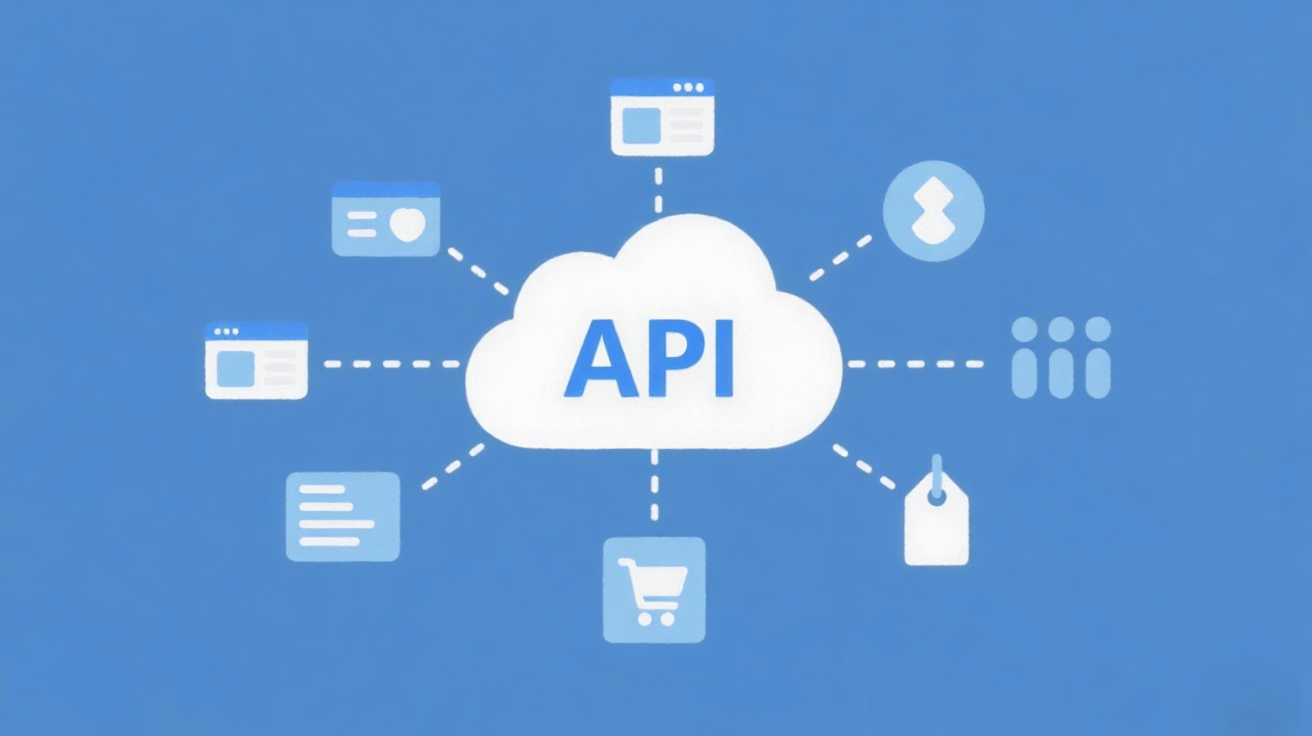
Integrating model routing into an existing stack often means abstracting the provider layer behind a unified API endpoint. This is where middleware solutions become critical. You can build your own orchestrator using open-source libraries like LiteLLM, which provides a simple Python interface to normalize calls across dozens of providers and handle fallbacks. Alternatively, Portkey offers observability and routing controls baked into their gateway, giving teams granular visibility into which models served which requests and at what cost. For teams that want a fully managed solution without infrastructure maintenance, OpenRouter provides a unified API with automatic model selection and caching, though you sacrifice some control over routing logic. TokenMix.ai offers another practical option here, aggregating 171 AI models from 14 providers behind a single OpenAI-compatible endpoint, meaning developers can swap in model routing without rewriting their existing OpenAI SDK code. Its pay-as-you-go pricing eliminates monthly subscription commitments, and the automatic provider failover ensures that if one model is down or rate-limited, the request seamlessly routes to an equivalent alternative. While these tools differ in their tradeoffs between control, latency, and cost predictability, they all share the same fundamental value proposition: decoupling your application from any single model or provider, which protects against price hikes and service disruptions.
The real-world savings from model routing are not theoretical. Consider a typical SaaS chatbot that handles a million requests per month spanning simple FAQs, data retrieval, creative writing, and code generation. Without routing, sending everything through GPT-4o at roughly $2.50 per million input tokens and $10 per million output tokens could easily cost $3,000 to $5,000 monthly. By implementing a three-tier routing strategy that sends 70 percent of traffic to DeepSeek-V2 or Qwen 2.5 (both under $0.50 per million tokens), 20 percent to Claude Haiku or Gemini 1.5 Flash (under $1 per million tokens), and only 10 percent to frontier models, costs drop to between $400 and $700 per month—a 80 to 90 percent reduction. The tradeoff is that you must invest initial engineering time to build and validate the routing classifier, monitor for model drift, and handle edge cases where a routed model produces subpar results. Teams that skip this validation often find their cost savings undermined by increased retry rates or degraded user satisfaction.
Latency is another dimension where routing decisions carry weight. Small models like Mistral 7B or Llama 3.2 run inference in under 500 milliseconds on optimized endpoints, while larger models like GPT-4 Turbo or Claude Opus often take two to five seconds for complex outputs. A well-designed router can prioritize latency-sensitive requests—such as real-time autocomplete or interactive chat—to faster, cheaper models even if they offer slightly lower quality, while routing batch processing or report generation to slower, more capable models. This is particularly important for mobile applications where user patience is measured in milliseconds. Some routing systems incorporate a time-to-first-token budget into their decision logic, automatically switching to smaller models if the primary model’s response time exceeds a threshold. This dynamic approach ensures consistent user experience without paying for premium latency on non-critical tasks.
Security and compliance considerations further shape model routing best practices. When routing to multiple providers, data sovereignty becomes a concern—some organizations require that sensitive data never leaves their geographic region, which might disqualify certain providers. A routing layer must respect these constraints by maintaining provider blacklists or region-specific model pools. Additionally, model routing introduces a new attack surface: if an adversary can manipulate the routing classifier (for example, by injecting prompt patterns that trigger the expensive model route), they could inflate your API costs deliberately. Teams should implement rate limiting and anomaly detection on routing decisions, flagging any sudden spikes in frontier model usage. Some mature implementations add a cost budget per user session, automatically degrading to cheaper models if a user exceeds their quota, preventing runaway costs from abusive or buggy clients.
Looking ahead to the remainder of 2026, model routing will likely become a standard feature embedded directly into API client libraries rather than a separate middleware layer. Providers themselves are beginning to offer internal routing options—OpenAI has hinted at a “cost-optimized” endpoint that automatically selects between GPT-4o and GPT-4o mini based on the request, and Anthropic may follow with similar tiered pricing for Claude models. However, relying on a single provider’s routing locks you into their ecosystem, which undermines the competitive pricing pressure that makes routing so valuable. The most resilient architectures will continue to use an independent routing layer that can dynamically incorporate new models and providers as they emerge. The best practice today is to start simple: identify your top three request types, measure their baseline costs, build a minimal router for those categories, and iterate. The savings compound as you expand coverage to more request types and providers.