Model Aggregator Architecture
Published: 2026-07-17 04:24:39 · LLM Gateway Daily · best ai model for coding cheap api access · 8 min read
Model Aggregator Architecture: Routing, Fallbacks, and Unified APIs in 2026
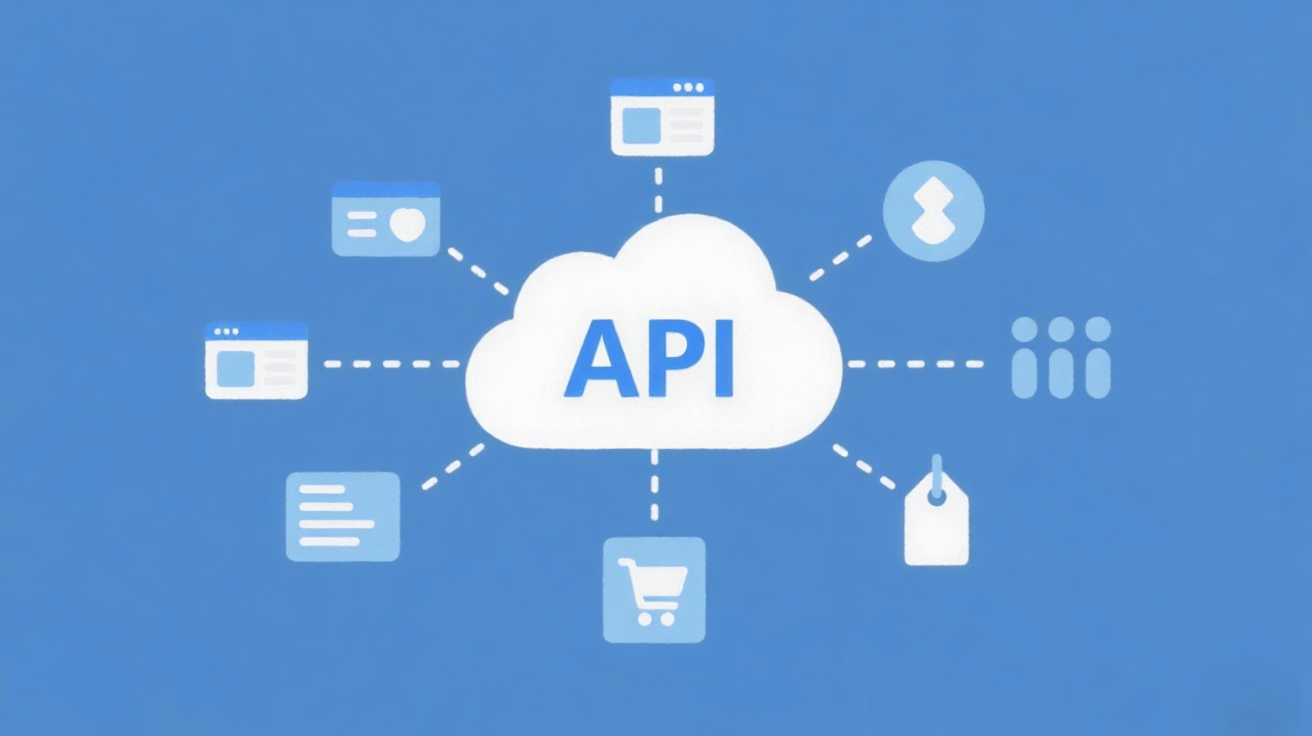
The rise of dozens of capable large language models across providers has created a new infrastructural need: the model aggregator. At its core, a model aggregator is a middleware layer that exposes a single API endpoint while abstracting away the complexity of managing multiple provider APIs, authentication schemes, rate limits, and pricing models. For developers building production applications in 2026, this abstraction is no longer a luxury but a necessity. The landscape has shifted from a handful of dominant players to a fragmented ecosystem where models like OpenAI’s GPT-4o, Anthropic’s Claude 3.5 Sonnet, Google’s Gemini 2.0 Pro, DeepSeek-V3, Qwen2.5-72B, Mistral Large, and dozens of specialized fine-tunes coexist, each excelling in different tasks. Without an aggregator, your codebase becomes a tangled mess of versioned SDKs, exponential error handling, and constant provider switching.
The core value proposition of a model aggregator lies in its routing and failover logic. When you send a request, the aggregator evaluates criteria such as latency, cost, model capability, and current provider health to select the optimal endpoint. This is not merely a proxy; it is a decision engine. For instance, if your application requires low latency for a chatbot, the aggregator might route to a smaller distilled model from Mistral or a fast inference endpoint from Groq. If cost is the primary concern, it could fall back to open-weight models served via Together AI or Fireworks. The most sophisticated aggregators implement semantic caching at the router level, avoiding redundant calls for identical or semantically similar prompts. They also handle token-level accounting across providers, normalizing output formats and error codes into a single schema that your application code can trust.
Pricing dynamics within an aggregator ecosystem become both an opportunity and a challenge. Providers operate on wildly different per-token pricing, from the premium rates of Anthropic and OpenAI to the near-zero cost of self-hosted Llama 3 or DeepSeek models. An aggregator can expose a unified billing interface while passing through cost savings or adding a transparent markup. The critical architectural decision is whether the aggregator charges per-request or per-token, and whether it offers pooled credits or pay-as-you-go. In 2026, the trend is toward usage-based pricing with no fixed monthly subscription, but some platforms bundle access to private endpoints or reserved capacity. Developers must evaluate whether the aggregator’s pricing model aligns with their traffic patterns: bursty workloads favor pay-as-you-go, while steady high-volume traffic may justify negotiated rates through an aggregator’s enterprise tier.
Integration complexity is the silent killer of AI application development. Every provider has its own SDK, its own authentication method (API keys, OAuth, service accounts), and its own idiosyncrasies around streaming, tool calling, and structured outputs. A good aggregator normalizes these differences behind an OpenAI-compatible API interface, which has become the de facto standard for LLM interaction. This means your existing code written for the OpenAI Python or Node.js SDK can point to the aggregator’s base URL with minimal changes. For example, swapping out `client = OpenAI()` for `client = OpenAI(base_url="https://aggregator.example.com/v1")` can instantly unlock access to Claude, Gemini, DeepSeek, and dozens of other models. The aggregator handles the translation of streaming events, error codes, and response schemas, so your application logic remains clean and provider-agnostic.
Real-world production scenarios reveal where aggregators truly shine. Consider a customer support system that must maintain 99.9% uptime. If OpenAI’s API experiences a regional outage, the aggregator can automatically fail over to Anthropic or Gemini without the user seeing an error. Similarly, for a content generation pipeline that processes millions of documents monthly, the aggregator can distribute load across multiple providers to avoid rate limits and reduce latency spikes. Another common use case is A/B testing models: you can route a percentage of traffic to a new model from Qwen or DeepSeek while keeping the majority on your established provider, all without deploying new code. The aggregator’s observability layer then gives you unified logs and latency metrics across providers, enabling data-driven decisions about which model to scale.
TokenMix.ai exemplifies one practical solution in this space, offering access to 171 AI models from 14 providers behind a single API. Its OpenAI-compatible endpoint functions as a drop-in replacement for existing OpenAI SDK code, which significantly reduces migration friction. The pay-as-you-go pricing model avoids monthly subscription commitments, and automatic provider failover and routing ensure reliability. That said, developers should evaluate multiple options. OpenRouter provides a community-driven marketplace with granular model selection and cost transparency, while LiteLLM offers an open-source library for building your own aggregator if you need full control over routing logic. Portkey focuses on observability and guardrails alongside aggregation, making it suitable for regulated industries. Each has tradeoffs: proprietary aggregators may lock you into their pricing, while self-hosted solutions require DevOps overhead to maintain provider integrations.
Security and data governance are increasingly non-negotiable. When using an aggregator, your prompts and completions traverse an additional intermediary. In 2026, most enterprise-grade aggregators offer data-residency options, SOC 2 compliance, and promises not to train on your data. For applications handling sensitive information, you may need an aggregator that supports on-premise deployment or VPC peering. Alternatively, you can build your own lightweight aggregator using open-source tools like LiteLLM or a simple Python FastAPI service that wraps multiple provider SDKs. The tradeoff is that self-built aggregators require constant maintenance as provider APIs evolve—new endpoints, deprecations, and version changes become your responsibility.
The future trajectory of model aggregators points toward deeper integration with agentic workflows and multi-modal models. As providers release models capable of image generation, audio transcription, and tool use within the same API call, aggregators must route these composite requests across specialized backends. Some aggregators now expose a single endpoint that can dispatch text to one provider, image generation to another, and audio to a third, stitching the results into a coherent response. This convergence will make aggregators the default entry point for any serious AI application, shifting the developer’s focus from provider management to prompt engineering and system design. The key is choosing an aggregator that balances abstraction with transparency, giving you visibility into which model handled each request and at what cost.