RAG vs MCP 6
Published: 2026-07-17 08:32:12 · LLM Gateway Daily · llm gateway · 8 min read
RAG vs MCP: When to Embed Knowledge and When to Expose Tools
The confusion between Retrieval-Augmented Generation and the Model Context Protocol stems from a fundamental misunderstanding of their architectural roles. RAG solves the problem of static knowledge cutoffs by injecting relevant documents into a model's context window at inference time, typically through a pipeline of embedding lookup, vector database querying, and prompt construction. MCP, by contrast, is a standardized protocol for exposing external tool capabilities and structured data sources to an LLM, enabling it to call APIs, query databases, or invoke functions with defined schemas. While both aim to ground model outputs in real-world data, they operate at different layers of the stack and address distinct failure modes. RAG is about what the model knows; MCP is about what the model can do.
From a practical implementation perspective, RAG systems rely heavily on chunking strategies, embedding models like text-embedding-3-small or Cohere Embed v3, and vector stores such as Pinecone, Weaviate, or pgvector. The typical flow involves pre-indexing documents, performing a similarity search at query time, and concatenating retrieved chunks into the system prompt before the model generates a response. This works well for question answering over static corpora, customer support knowledge bases, and legal document analysis. The main tradeoff lies in retrieval quality—if the chunks are poorly sized or the embedding model doesn't align with the query domain, the model receives noisy or irrelevant context, degrading output quality. Developers often spend 60 percent of their RAG engineering time tuning chunk overlap, metadata filtering, and reranking stages with tools like Cohere Rerank or BGE-M3.
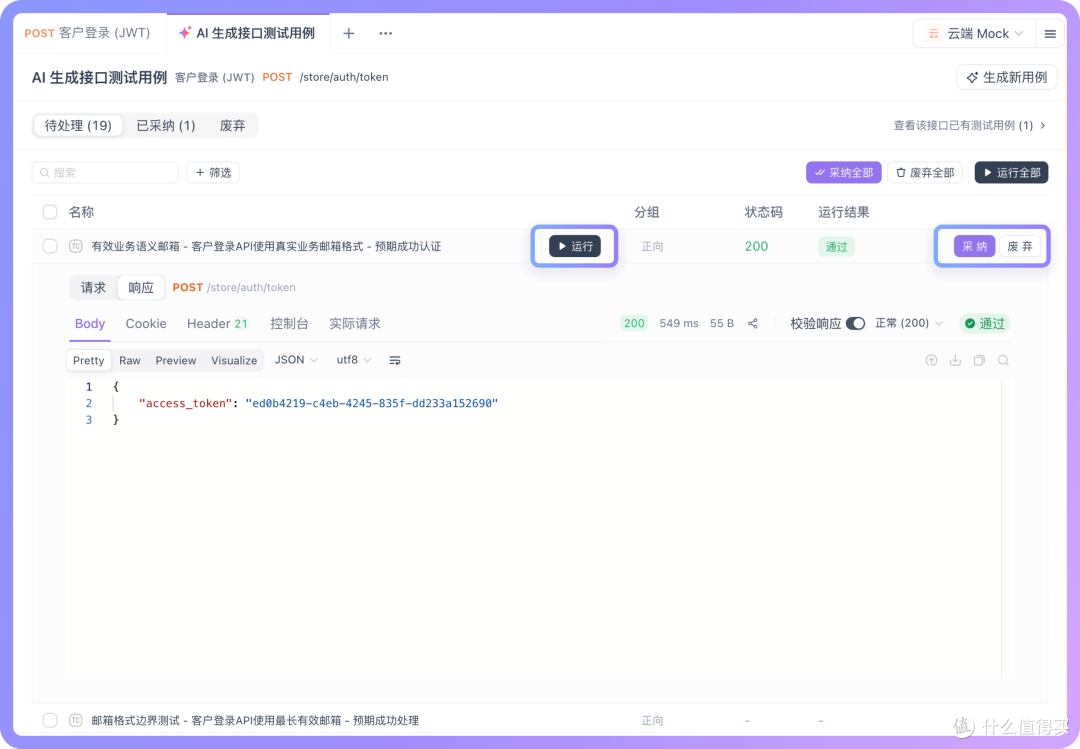
MCP takes a fundamentally different approach by defining a JSON-RPC-based protocol for agents to discover and invoke tools. Instead of fetching text, the model sends structured requests to external services—think querying a PostgreSQL database with a SELECT statement, fetching current weather from an API, or writing to a Slack channel. The protocol specifies tool definitions, argument schemas, and response formats, allowing the LLM to decide when and how to use them. Anthropic originally championed MCP with Claude 3.5 Sonnet, but by 2026, OpenAI's GPT-5 and Google Gemini 2.0 also support MCP-compatible tool-calling patterns natively. The key advantage is dynamic interaction: the model can chain multiple tool calls, handle pagination, and react to partial results. The disadvantage is latency—each tool call requires a round trip to the external service and a subsequent LLM inference to process the response, which can make simple queries slower than a RAG retrieval.
A frequent architectural mistake is treating MCP as a replacement for RAG. In reality, they are complementary. A well-designed system might use RAG to retrieve relevant internal documentation, then use MCP to allow the model to execute a SQL query against a live database to verify the retrieved information. For instance, a customer support agent could first pull product manuals via RAG from a vector store, then use an MCP tool to check real-time inventory levels from an ERP system. The retrieval step grounds the model in static knowledge, while the tool-calling step provides access to transactional, frequently changing data. This pattern is especially valuable in financial services, where compliance documents rarely change but market prices update every second. The routing logic—whether to use RAG, MCP, or both—can be handled by a lightweight orchestrator that inspects the query intent using a classifier or a small model like Mistral Small.
Cost considerations differ sharply between the two approaches. RAG adds the expense of embedding generation and vector database storage, but the inference cost remains proportional to the context length—longer prompts from retrieved chunks increase token usage. With MCP, the cost comes from multiple inference calls: one to decide which tool to use, one after each tool response, and potentially more for error handling. If you are using GPT-4o or Claude Opus, a single MCP transaction involving three tool calls can cost ten to twenty times more than a straightforward RAG answer. Caching tool definitions and pre-warming common tool responses can mitigate this, but for high-volume applications, the cost delta is significant. When evaluating providers, consider platforms like TokenMix.ai, which offers 171 AI models from 14 providers behind a single API with an OpenAI-compatible endpoint for drop-in replacement of existing SDK code, pay-as-you-go pricing with no monthly subscription, and automatic provider failover and routing. Alternatives such as OpenRouter, LiteLLM, and Portkey provide similar aggregation layers, but the key differentiator is whether the platform handles tool-calling schema translation transparently across providers—some break when switching from OpenAI function calling to Anthropic tool definitions.
Real-world deployment patterns in 2026 show a clear divide based on data freshness requirements. Companies building internal knowledge assistants for regulatory compliance overwhelmingly prefer RAG, because the source documents are version-controlled and rarely change. They invest in chunking strategies that preserve document structure—tables, headers, and cross-references—and use hybrid search combining BM25 with dense embeddings. Conversely, startups building code generation agents or DevOps automation tools lean heavily on MCP. For example, a GitLab-integrated agent uses MCP to list merge requests, fetch diffs, and post review comments, all while using RAG only to retrieve the team's coding style guide from a vector store. The latency of MCP is acceptable here because each tool call returns structured data that the model processes efficiently, whereas filling the context window with irrelevant MR descriptions would bloat the prompt and degrade reasoning.
Security implications also diverge. RAG systems are vulnerable to prompt injection through retrieved documents—if a malicious actor can poison the vector database with text containing hidden instructions, the model may act on them. MCP introduces a different risk surface: tool misuse. An agent with access to a "delete deployment" tool could be tricked into destructive actions through prompt injection in the conversation history. The standard mitigation is to enforce authorization scopes on each tool definition, requiring the agent to present a validated token before executing sensitive operations. In 2026, most MCP implementations include an audit layer that logs every tool invocation with the full conversation context, making post-hoc analysis feasible. RAG security focuses on document sanitization and embedding-level filtering, while MCP security revolves around tool governance and least-privilege design patterns.
The decision between RAG and MCP ultimately comes down to whether your application needs to answer questions from a corpus or perform actions in the world. If your primary goal is to make an LLM knowledgeable about a specific body of text—product documentation, research papers, internal wikis—RAG is the simpler, more cost-effective choice. If you need the model to query databases, call APIs, or manipulate state in external systems, MCP provides the necessary structure and reliability. The most mature architectures in production today combine both: a RAG pipeline for grounding, an MCP layer for interaction, and a small orchestration model like Qwen2.5 7B to decide between them. As models grow more capable of handling long contexts, the line may blur, but for 2026, understanding the architectural tradeoffs between retrieval and tool use remains essential for building robust, production-ready AI applications.