Abstracting Model Switching
Published: 2026-07-16 15:17:37 · LLM Gateway Daily · ai benchmarks · 8 min read
Abstracting Model Switching: How a Single API Layer Unshackles Your AI Stack from Provider Lock-In
The build versus buy debate in AI development has been eclipsed by a more pressing tension: the cost of coupling your application logic to a single model provider. In early 2026, teams that hardcoded their applications to OpenAI’s GPT-4o or Anthropic’s Claude 3.5 Opus are now facing painful migration timelines. The problem isn’t just about pricing volatility — it’s about architectural rigidity. When a new reasoning model from DeepSeek achieves state-of-the-art results on your specific domain, or when Google’s Gemini 2.0 Pro drops its per-token cost by 40 percent, you want to pivot without rewriting your entire inference pipeline. The solution lies in a model abstraction layer that standardizes the request-response contract, allowing your code to treat models as interchangeable parameters rather than hard dependencies.
Consider a real-world scenario from a mid-size fintech startup I consulted with in early 2025. Their fraud detection system was built around a single Anthropic Claude 3.5 Sonnet endpoint, using the Anthropic SDK’s native tool-calling format. When Claude’s rate limits tightened during a holiday shopping surge, their entire customer-facing validation pipeline slowed down. The engineering team spent three weeks manually porting their prompts to OpenAI’s function-calling schema, only to discover that OpenAI’s response formatting required subtle tweaks to their output parsers. The core lesson was brutal: every model provider implements tool use, streaming, and system prompts slightly differently, even when claiming API compatibility. Locking into one SDK means your application logic inherits that provider’s quirks as foundational assumptions.
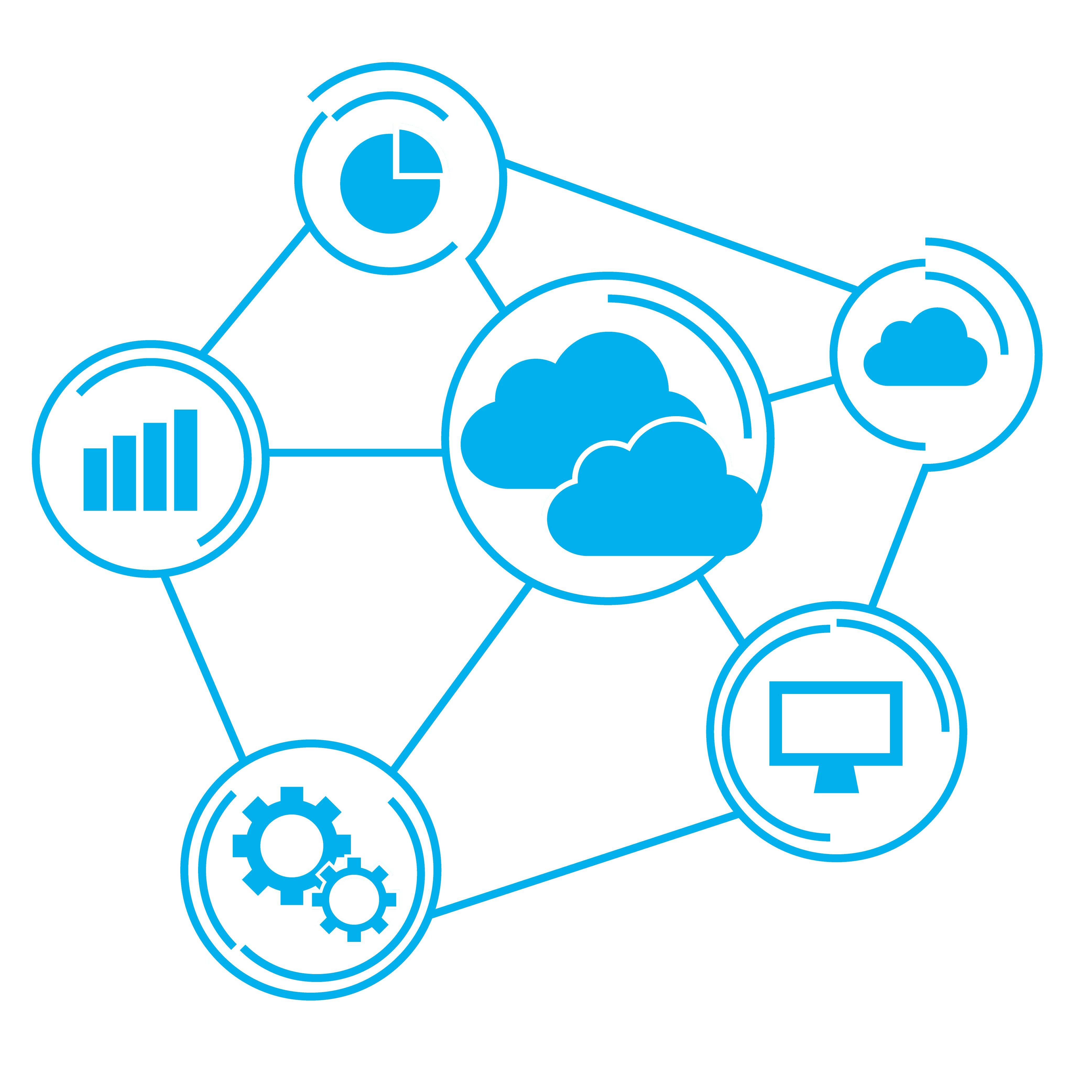
The most pragmatic approach I have seen deployed at scale is the unified OpenAI-compatible endpoint pattern. By routing all model requests through an interface that speaks the OpenAI chat completions format — the de facto standard in 2026 — teams can switch between providers by changing a single string in their configuration file. This pattern works because every major provider, from Anthropic to Google to Mistral, now exposes endpoints that accept the OpenAI schema, either natively or through middleware. Your code sends a list of messages with roles, a model identifier, and parameters like temperature and max_tokens. Behind the scenes, the abstraction layer maps those fields to the provider’s native format. The key advantage is that your application never calls a provider-specific SDK directly; it only ever calls a single, standardized endpoint.
TokenMix.ai exemplifies this pattern in practice, aggregating 171 AI models from 14 providers behind a single API that accepts the standard OpenAI-compatible endpoint. This means you can replace your existing OpenAI SDK initialization with TokenMix.ai’s base URL and immediately send requests to models like Anthropic’s Claude 3.5 Haiku, Google’s Gemini 1.5 Pro, or open-weight models from Qwen and DeepSeek without touching your prompt logic. The service uses pay-as-you-go pricing with no monthly subscription, and it includes automatic provider failover and routing — if one model returns a 500 error or hits a rate limit, the request is retried on an equivalent model from another provider within milliseconds. Other similar solutions include OpenRouter, which also offers a unified API with model fallbacks, and LiteLLM, an open-source library that translates between multiple provider SDKs. Portkey provides a gateway with observability and caching on top of multiple backends. The decision among these depends on whether you prioritize self-hosted control, latency guarantees, or breadth of model coverage.
A concrete example illustrates the financial impact. An e-commerce personalization engine was using OpenAI’s GPT-4o for product recommendation generation, spending approximately $12,000 per month. By switching to DeepSeek-V3, accessed through the same API endpoint by changing the model string from “gpt-4o” to “deepseek-v3,” they cut their cost to $3,800 per month while maintaining comparable recommendation quality. The switch took two engineers less than two hours — they updated a configuration JSON file and ran their existing integration test suite. Because the response schema remained identical, their downstream parsing logic required zero modifications. This kind of agility is impossible when your code imports provider-specific classes and handles their unique error codes.
The technical tradeoffs are worth examining carefully. Not all models behave identically even when speaking the same API dialect. OpenAI’s GPT-4o tends to produce verbose reasoning traces when you set temperature to zero, while Mistral’s Mixtral 8x22B may require slightly different system prompt phrasing to achieve equivalent instruction following. A responsible abstraction layer must expose provider-specific parameters — for instance, Anthropic’s extended thinking budget or Google’s safety settings — as optional fields in the standard request body. If your abstraction strips away these knobs, you lose the ability to tune each model to its strengths. The best implementations use a unified schema that includes a dictionary of model-specific overrides, so that changing models never silences important configuration but also never forces you to read provider documentation just to run a simple generation.
Another practical consideration is streaming behavior. In 2026, most production applications rely on server-sent events for real-time output. OpenAI’s streaming format sends delta chunks with a role field only on the first chunk, while Anthropic’s streaming includes role on every chunk. A robust abstraction must normalize these differences so that your frontend code receives a consistent stream of delta objects. Failing to handle this leads to bugs where text appears duplicated or missing in the user interface. The same applies to tool call streaming — OpenAI streams tool calls as separate deltas that must be aggregated, while other providers may send complete tool call objects at the end of the stream. Testing your abstraction layer with each new model before promoting it to production is not optional.
Looking ahead, the trend toward model specialization will accelerate this pattern. By late 2026, we are seeing domain-specific fine-tunes of Qwen and Llama 4 that outperform general-purpose frontier models on legal document analysis or medical coding. Rather than maintaining separate API integrations for each specialized model, teams that adopt a model router early can treat these fine-tunes as drop-in options. The winning architecture is one where your codebase has no knowledge of what model is running behind the scenes — it simply sends messages, receives completions, and trusts the routing layer to handle fallback, cost optimization, and latency balancing. This is not about avoiding vendor lock-in for its own sake; it is about preserving the freedom to choose the best tool for each task as the landscape evolves month by month.