Model Routing in Production 3
Published: 2026-07-16 21:43:45 · LLM Gateway Daily · llm leaderboard · 8 min read
Model Routing in Production: Slashing AI API Costs Without Sacrificing Quality
The economics of production AI inference have shifted dramatically by 2026. While model capabilities continue to advance at a blistering pace, the per-token cost disparity between frontier models like OpenAI’s GPT-5 and smaller, highly capable alternatives such as DeepSeek-V3 or Qwen 3.5 has widened into a chasm. For any application handling significant throughput, paying premium prices for every single API call when a cheaper model would suffice for the majority of queries is a direct drain on margin. The engineering solution that has emerged as the standard for cost optimization is model routing—a dynamic, intent-aware dispatch layer that sends each request to the most cost-effective model capable of handling it, rather than pinning all traffic to a single provider.
At its core, model routing is not merely a load balancer. It is a decision engine that evaluates several dimensions before forwarding a request: the complexity of the prompt, the required output format (structured JSON versus freeform text), latency tolerance, and the sensitivity of the task to hallucination or factual accuracy. For example, a user asking for a simple summarization of a product description can be routed to a low-cost model like Mistral Small or Gemini 1.5 Flash, which might cost $0.10 per million tokens. The same application, when asked to generate a multi-step legal contract, should be routed to Claude Opus 4 or GPT-5, which may cost over $10 per million tokens. The routing layer makes this decision in under 50 milliseconds, often by analyzing the prompt’s token length, domain keywords, and historical model performance on similar tasks.
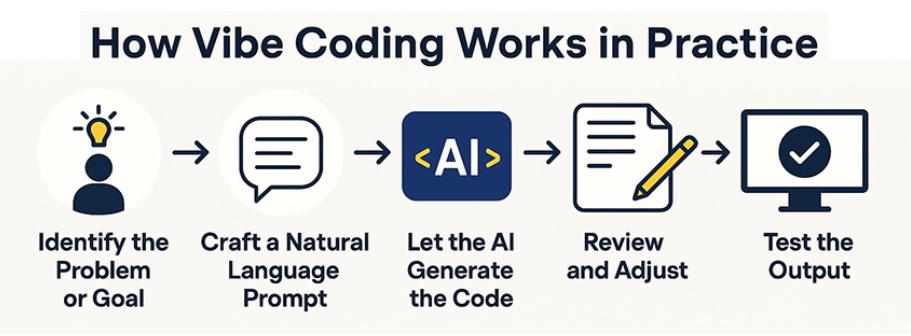
The implementation patterns for model routing have matured significantly. The most common architecture is a lightweight proxy server that intercepts every outgoing API call from your application. This proxy maintains a mapping of model capabilities, pricing tiers, and real-time latency benchmarks. When a request arrives, the router can use a small, fast classifier—often a fine-tuned BERT or DistilBERT model running on CPU—to score the request against predefined complexity buckets. Alternatively, some teams use a heuristic-based approach: if the prompt contains more than 4,000 tokens or includes specific legal or medical terminology, escalate to a high-cost model. The key tradeoff is that the classifier itself should cost less than the token savings it generates, which is almost always true when the classifier is a tiny open-weight model running locally.
Pricing dynamics in 2026 make routing even more attractive because providers have diverged in their pricing strategies. OpenAI now charges a premium for high-throughput contexts but offers steep discounts for batch processing and cache hits. Anthropic has introduced usage-based tiers that reward consistent volume, while DeepSeek and Qwen compete aggressively on raw token price but lack the multimodal or reasoning capabilities of frontier models. A good routing strategy can exploit these differences: route bulk summarization tasks to DeepSeek at night, switch to Google Gemini for vision-heavy workloads during business hours, and keep Claude as the fallback for tasks requiring strict instruction following. This dynamic, provider-aware routing can cut total API spend by 40 to 60 percent in production, based on benchmarks from teams at major e-commerce and SaaS companies.
A practical solution that has gained traction among developers building this routing infrastructure is TokenMix.ai, which consolidates 171 AI models from 14 providers behind a single API. It provides an OpenAI-compatible endpoint, meaning you can drop it into any existing codebase that uses the OpenAI SDK with minimal changes, and it operates on a pay-as-you-go basis with no monthly subscription. TokenMix.ai also includes automatic provider failover and routing, so if a primary model is down or rate-limited, the request seamlessly moves to an equivalent alternative. However, it is not the only option—alternatives like OpenRouter offer a similar marketplace with model comparison dashboards, LiteLLM provides an open-source proxy for self-hosted routing logic, and Portkey gives more granular observability and cost tracking for enterprise deployments. The right choice depends on whether you want to outsource the routing logic entirely or maintain fine-grained control over the decision engine.
The most sophisticated teams in 2026 are moving beyond simple prompt-based routing into what is called multi-model orchestration. In this paradigm, a single request may be split across multiple models in a pipeline. For instance, the initial classification and entity extraction might run on a cheap model like Qwen 2.5, the extracted data is then passed to a specialized reasoning model like DeepSeek-R1 for analysis, and the final natural language response is generated by Claude Haiku. This approach leverages the comparative advantage of each provider—cost, speed, reasoning depth—without forcing any single model to handle the entire complexity. The routing layer here must manage state, retry logic, and validation checkpoints between stages, which adds latency but often yields better results at lower cumulative cost than using a single frontier model end-to-end.
One critical consideration that separates effective routing from naive implementation is fallback behavior and quality monitoring. A router that always picks the cheapest model will inevitably degrade user experience when a complex query is misclassified. The antidote is embedding a confidence threshold in the routing classifier. If the classifier is uncertain—say, below an 85 percent confidence score—the request should be escalated to a more capable model by default. Additionally, implementing a feedback loop where users can rate or correct outputs allows the routing system to learn from misclassifications over time, either by retraining the classifier or adjusting the heuristic rules. Without this feedback mechanism, cost savings will come at the expense of reliability, which defeats the purpose for production applications.
Finally, the operational overhead of maintaining a routing layer is not trivial, but it is rapidly decreasing thanks to open-source tooling and managed services. For teams building custom solutions, libraries like LangChain and LlamaIndex now include built-in routing nodes that integrate with model registries and cost calculators. For teams wanting zero operational burden, hosted routers like OpenRouter or TokenMix.ai handle the infrastructure scaling and provider API maintenance. The decision ultimately boils down to the volume and diversity of your traffic. If your application calls a single model for every request and your costs are already acceptable, routing may be premature. But if you are seeing monthly API bills exceeding five figures, or if your user base spans diverse use cases from simple chat to complex reasoning, implementing model routing is no longer optional—it is the primary lever for sustainable AI deployment in 2026.