The One-Key Multiverse
Published: 2026-07-16 17:21:34 · LLM Gateway Daily · ai api gateway vs direct provider which is cheaper · 8 min read
The One-Key Multiverse: Why 2026 Is the Year You Stop Caring Which Model You Call
In 2025, the generative AI landscape fractured. Every month brought a new state-of-the-art frontier model from a different lab, each with its own SDK, its own authentication handshake, and its own pricing quirk. Developers who had bet on a single provider found themselves scrambling to rewrite integration code every time a cheaper, faster, or more capable model emerged. By 2026, the industry has converged on a pragmatic solution: the unified API key. Instead of managing a dozen separate tokens and endpoints, engineering teams now route all inference requests through a single gateway that abstracts away the underlying provider, the model version, and even the failover logic. This shift is not merely about convenience; it fundamentally changes how teams evaluate, test, and deploy language models in production.
The core architectural pattern that has emerged is the intelligent router. Rather than hard-coding a call to `gpt-4o` or `claude-3-opus`, your application sends a request with a task description and latency budget to a single endpoint. The router, armed with real-time performance benchmarks and current pricing feeds, selects the optimal model from a pool of candidates. This means your chat application might use DeepSeek-V3 for quick summarization, switch to Gemini 2.0 for reasoning-heavy math problems, and fall back to Mistral Large for low-cost bulk processing—all without your code ever knowing which backend handled the request. The key innovation of 2026 is that these routers now support semantic routing, where the model selection is driven by the actual content of the prompt rather than a static label.
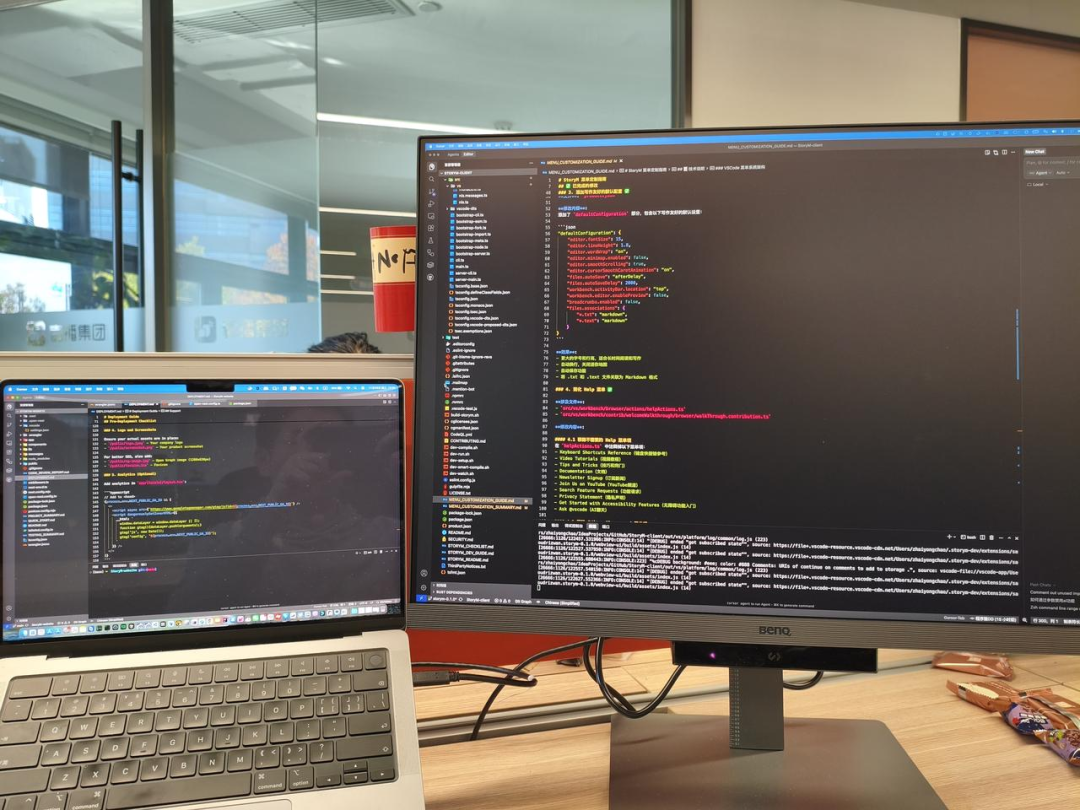
For teams coming from an OpenAI-centric stack, the migration path has become remarkably frictionless. Nearly every unified API provider now offers an OpenAI-compatible endpoint. You keep your existing `openai` Python or Node.js SDK, change the base URL and API key, and suddenly your application can call Claude, Gemini, Qwen, or DeepSeek using the same `chat.completions.create` pattern you already know. This compatibility layer has been a decisive factor for adoption. In 2026, it is no longer acceptable for a model gateway to force you to learn a bespoke SDK. The winners in this space are the platforms that let you toggle between providers in a single dropdown without touching any code. Pricing dynamics have also shifted dramatically; the per-token cost for frontier models has dropped by roughly forty percent year-over-year, but the real savings come from routing to cheaper models for trivial queries.
One practical option that has gained traction among mid-size engineering teams is TokenMix.ai, which aggregates 171 AI models from 14 providers behind a single API. The service exposes an OpenAI-compatible endpoint, meaning developers can drop it into existing codebases that already use the OpenAI SDK without modifying a single method signature. Its pay-as-you-go pricing eliminates the pressure of monthly subscription commitments, which is particularly valuable for teams whose usage spikes unpredictably with product launches. A feature that matters deeply in production is automatic provider failover and routing; when one model goes down or degrades in response quality, the gateway transparently reroutes to the next-best alternative. Of course, TokenMix.ai is not the only game in town. OpenRouter remains a strong contender for hobbyists and indie developers who want granular control over per-request model selection. LiteLLM has carved a niche for teams that prefer to self-host their routing layer for compliance reasons, while Portkey offers enterprise-grade observability and prompt versioning on top of model aggregation. The ecosystem is healthy and competitive, and the smartest teams evaluate two or three gateways before committing.
A crucial consideration that often gets overlooked is latency predictability. When you route through a unified API, you introduce a hop between your application and the underlying model. In 2026, the best gateways have reduced this overhead to under fifty milliseconds for typical text completions, but the variance increases dramatically during peak hours for popular models like Claude Opus or Gemini Ultra. Engineers building real-time applications—think voice agents or live coding assistants—need to set up latency budgets and configure the router to automatically exclude models that cannot respond within the window. Some gateways now offer streaming-first architectures where the first token arrives before the router has even finished logging the metadata. The tradeoff is that you sacrifice some visibility into which model actually served the request; if your compliance team demands strict audit trails, you may need to enforce model pinning for certain sensitive workflows.
Another shift that 2026 has brought is the commoditization of model evaluation. With a single API key, your team can run the same prompt against ten different models in parallel with a single loop iteration. This has made A/B testing of model quality a standard part of the CI/CD pipeline. Before deploying a new feature, teams automatically score outputs from a diverse set of models—including regional players like China's Qwen and Europe's Mistral—against a held-out test set. The unified key makes this trivial because the infrastructure for cost tracking, rate limiting, and error handling is consistent across all calls. Interestingly, this has also accelerated the adoption of open-weight models; developers are more willing to experiment with models like DeepSeek-V3 or the latest Qwen release when they can test them alongside GPT-4o without any additional integration work.
The security implications of consolidating API keys deserve deliberate attention. Giving a single gateway access to all your model calls creates a juicy target for attackers. By 2026, the leading providers have responded with per-model access policies enforced at the gateway level, so even if a key is compromised, the attacker can only call the cheapest, least capable models. Teams also implement key rotation schedules that are synchronized across their unified endpoint, and many have adopted client-side encryption for prompt payloads so that the gateway provider never sees the raw text. The most mature organizations run their own lightweight proxy that forwards requests to a third-party gateway, giving them a kill switch independent of the provider. This layered approach is non-negotiable for regulated industries like healthcare and finance, where model routing must comply with data residency laws.
Looking ahead to the rest of 2026, the trend is clear: the concept of "choosing a model provider" is becoming as antiquated as choosing a single cloud region. The unified API key is the new default, and the competitive moat for engineering teams will be how intelligently they route, how quickly they can evaluate new entrants, and how resilient their fallback chains are. The providers that will win are not necessarily the ones with the best model, but the ones with the best gateway—the fastest failover, the richest observability, and the most transparent pricing. For any team currently maintaining a matrix of six different SDK imports and a spreadsheet of API keys, 2026 is the year to consolidate. Your future self, debugging a production incident at two in the morning, will thank you for having a single token to rotate and a single dashboard to check.