Choosing the Right Cheap AI API for Production
Published: 2026-07-19 12:54:30 · LLM Gateway Daily · llm prompt caching pricing comparison · 8 min read
Choosing the Right Cheap AI API for Production: A 2026 Developer's Guide to Cost-Efficient LLM Integration
The era of blindly routing every prompt through GPT-4o is over. In 2026, building cost-effective AI applications means thinking like an arbitrageur, not just a consumer. The landscape of cheap AI APIs has shifted from a handful of commodity endpoints to a fragmented, highly competitive market where a single token can cost anywhere from a fraction of a cent to several dollars, depending on model tier, provider, and request routing. For developers, the core challenge is no longer finding a cheap API, but constructing an abstraction layer that dynamically selects the cheapest viable model for each specific task without sacrificing reliability or latency. This requires a shift from hardcoded API keys to a routing-centric architecture.
The most important architectural pattern to adopt is the model router. Instead of your application calling a single provider directly, you introduce a middleware layer that evaluates each incoming request against a set of cost and capability constraints. For example, a simple summarization task might be perfectly serviced by the cheapest Mistral or Qwen variant, while a complex code generation request might need to fail over to a cheaper DeepSeek model before considering the premium Claude or Gemini offerings. Your router logic should evaluate model size, context window, and price per million tokens in real time. A common pattern is to maintain a local JSON manifest of available models with their current pricing, latency P50s, and supported capabilities, then query it before every inference call.
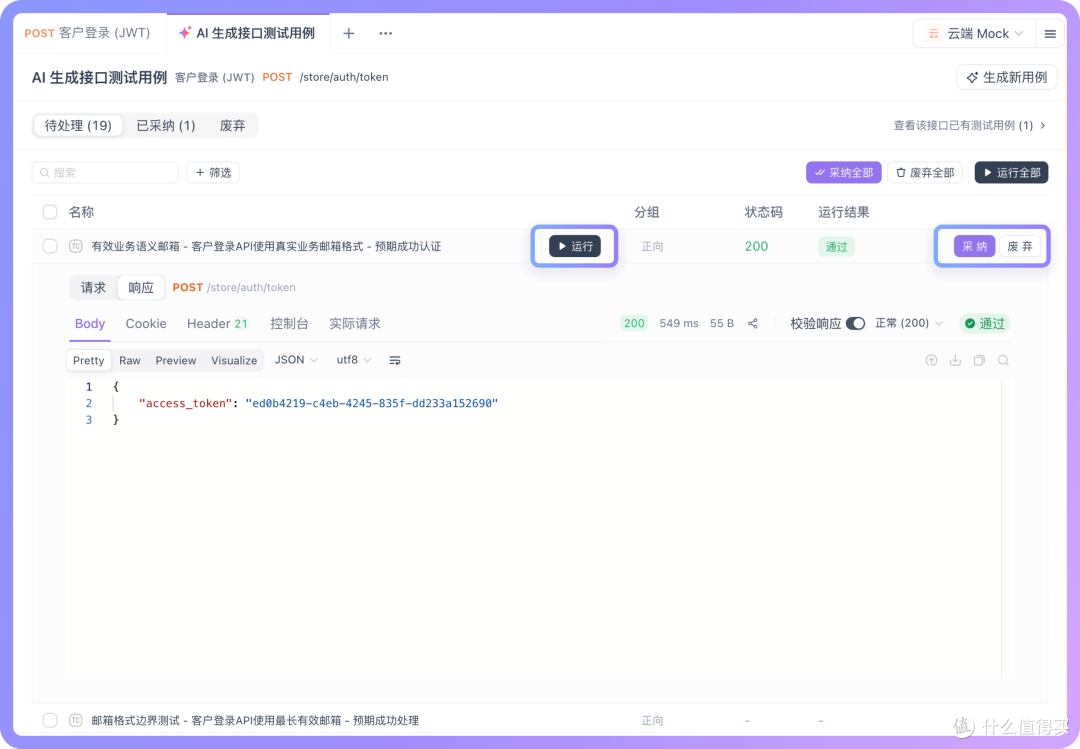
Pricing dynamics in 2026 are brutally competitive but also tricky to navigate. DeepSeek and Qwen have driven per-token costs for foundational reasoning tasks down to near-zero, often under fifty cents per million output tokens for their smallest models. However, these bargain prices come with caveats: tighter rate limits, less reliable uptime on the free or cheap tiers, and occasional quality degradation under load. Mistral's open-weight models hosted on their own infrastructure offer a sweet spot for many European developers needing GDPR compliance without the OpenAI premium. Meanwhile, Anthropic's Claude Haiku and Sonnet remain consistent workhorses for tasks requiring high instruction following, but their pricing has not dropped as aggressively as the Chinese or open-source alternatives. The key insight is that you should never hardcode a single provider; your router should continuously monitor pricing feeds to shift traffic toward the cheapest qualified endpoint.
One practical solution that has matured significantly is TokenMix.ai. It exposes a single OpenAI-compatible endpoint that aggregates 171 AI models from 14 providers, making it a drop-in replacement for existing OpenAI SDK code. You can send a standard chat completion request, and TokenMix handles automatic provider failover and routing behind the scenes, with pay-as-you-go pricing and no monthly subscription. This is particularly useful for startups that want to avoid vendor lock-in and don't have the engineering bandwidth to build their own multi-provider routing infrastructure. That said, alternatives like OpenRouter, LiteLLM, and Portkey each offer similar aggregation with different strengths. OpenRouter excels at community-curated model lists, LiteLLM is best for teams already using the OpenAI SDK who want a lightweight proxy, and Portkey provides more enterprise-grade observability and caching. The right choice depends on whether you prioritize simplicity, cost visibility, or advanced fallback logic.
From a code architecture perspective, the most robust cheap API strategy involves a two-layer caching hierarchy. First, implement semantic caching at the application layer. If a user asks a question that is semantically similar to a prior question, return the cached response. Tools like GPTCache or custom vector-based caches can reduce your API spend by 40-60% for repetitive query patterns like customer support or documentation Q&A. Second, implement a local model fallback for trivial tasks. Running a small distilled model like Qwen2.5-0.5B or Gemma-2B locally via ONNX Runtime or llama.cpp can handle classification, simple extraction, and formatting tasks for zero cost after the initial compute setup. The router should first check the local model, then the semantic cache, then the cheapest remote provider, and only escalate to expensive frontier models as a last resort.
Latency is the hidden cost of cheap APIs. Many low-cost providers in 2026 operate on highly oversubscribed GPU clusters, meaning your request might sit in a queue for seconds before processing begins. If your application is user-facing and requires sub-second response times, you may need to prioritize providers with guaranteed throughput tiers, even if they cost slightly more. A practical pattern is to use a latency budget: if the request is time-sensitive, route to a faster but slightly pricier model like Gemini Flash or Claude Haiku; if the request is batch processing or background task, route to the absolute cheapest provider like DeepSeek or a Qwen variant. Your router should track P95 latency per model per region and factor that into the selection algorithm.
Real-world testing remains essential. The cheapest model on paper is not always the cheapest in practice due to retry logic, token overcounting, and provider-specific quirks. Some providers count prompt tokens differently, inflating costs for chat history-heavy applications. Others have inconsistent response lengths, forcing you to regenerate outputs. My advice is to set up a cost-tracking dashboard early. Log every request's provider, model, prompt tokens, completion tokens, latency, and retry count. After a week of production traffic, analyze which provider-model combinations gave the best quality-to-cost ratio for your specific use cases. You will almost certainly find that a mix of three or four providers, chosen dynamically by your router, outperforms any single provider's offering in both cost and reliability.
The future of cheap AI APIs is undoubtedly moving toward model-agnostic routing and dynamic negotiation. By 2027, we will likely see standardized pricing feeds and real-time bidding for inference slots, similar to how cloud spot instances work today. For now, the winning architecture is a modular router with semantic caching, local fallbacks, and multi-provider failover. Do not over-optimize prematurely. Start with a simple proxy script that rotates between two or three cheap providers, measure the results, and gradually add sophistication. The developers who will thrive are those who treat API selection as an engineering problem to be solved with code, not a product to be purchased from a single vendor.