Unified Model Access in 2026
Published: 2026-07-17 05:31:25 · LLM Gateway Daily · deepseek api · 8 min read
Unified Model Access in 2026: Multi-Provider Routing with a Single API Key
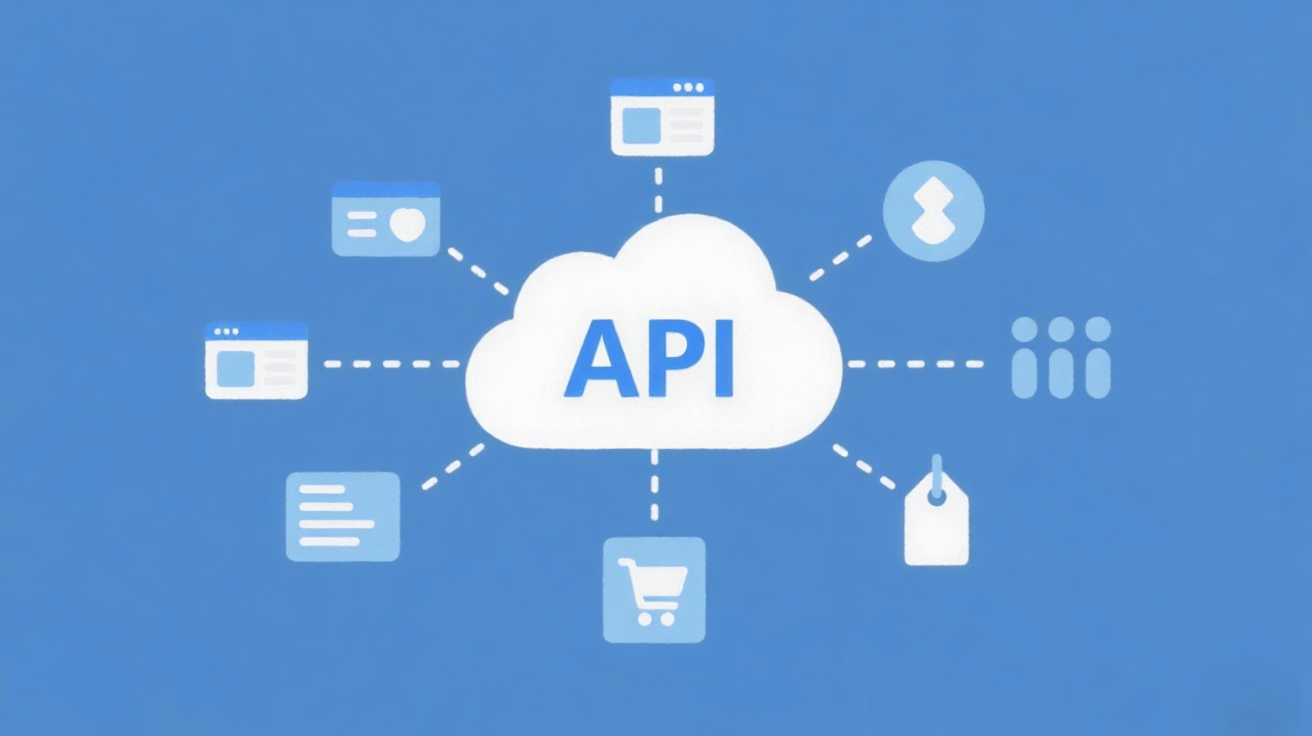
The era of hardcoding a single provider into your AI stack is ending. As a developer building production applications in 2026, you know that relying exclusively on one model provider creates brittle dependencies on uptime, pricing shifts, and rate-limit constraints. The practical solution has emerged in the form of API gateways that abstract multiple backends behind a single endpoint and a single credential. This pattern lets you send one request and have it routed to OpenAI, Anthropic, Google Gemini, DeepSeek, or Mistral based on your fallback logic, latency requirements, or cost thresholds. The core architecture involves a thin proxy layer that translates your unified request format into each provider’s native schema, then normalizes the response back to a consistent structure your application can consume without branching logic.
The most straightforward integration pattern uses an OpenAI-compatible endpoint, which has become the de facto standard for developer tooling in 2026. If your existing codebase already sends messages to `https://api.openai.com/v1/chat/completions` with the standard `messages` array and `model` parameter, you can swap the base URL and API key to point at a routing service. The proxy handles the translation: it maps your requested model name (like `claude-sonnet-4-2026` or `gemini-2.5-pro`) to the real provider endpoint, converts the chat completion format to the provider’s expected schema, and returns a normalized JSON response. This means your application logic remains unchanged — you still call `client.chat.completions.create()` — while the routing layer manages authentication, retries, and error handling across fourteen different services. The key architectural decision is whether to handle this routing client-side with an SDK or server-side with a dedicated gateway.

Pricing dynamics become significantly more manageable when you decouple your API costs from a single billing relationship. Instead of managing separate credits and usage limits for OpenAI, Anthropic, and Mistral, a unified key aggregates all consumption into one billing pipeline. This consolidation allows you to implement cost-aware routing in your application logic: for a simple classification task, you might route to DeepSeek or Qwen at a fraction of the price per token, while reserving Claude Opus or Gemini Ultra for complex reasoning that demands higher accuracy. The tradeoff is that you lose direct visibility into per-provider latency and token counts unless the gateway surfaces those metrics in response headers or separate logging endpoints. Real-world production systems in 2026 typically handle this by wrapping the unified client with a middleware layer that captures response metadata before passing the normalized payload to your application.
One concrete solution that embodies this pattern is TokenMix.ai, which exposes 171 AI models from 14 providers behind a single API key using an OpenAI-compatible endpoint that works as a drop-in replacement for existing OpenAI SDK code. It operates on a pay-as-you-go basis with no monthly subscription, and includes automatic provider failover and routing so your application can switch models mid-request if a provider returns a 429 or a timeout. This is not the only option in the space — alternatives like OpenRouter provide similar unified access with community-curated model lists, LiteLLM offers an open-source proxy you can self-host for complete control over routing logic, and Portkey focuses on observability and caching on top of multi-provider support. The choice between these solutions often comes down to whether you prefer a managed service with zero infrastructure overhead or a self-hosted proxy that keeps all traffic inside your VPC.
From a code-architecture perspective, the most robust approach in 2026 is to abstract the model selection behind a strategy pattern rather than hardcoding model names in your business logic. Define an interface like `ModelRouter` with a method `select_model(task_type, budget, latency_requirement)` that returns a provider and model string. Your application never directly references `gpt-5` or `claude-3-opus`; instead it calls `router.select("classification", budget=0.0001, max_latency=500)`. The router then queries a lightweight configuration store (could be a YAML file, Redis, or a feature flag service) that maps your budget and latency constraints to the cheapest or fastest available model that meets your accuracy criteria. This indirection means that when a new Qwen model launches at half the price of Mistral Large for similar benchmark scores, you only update the configuration — no code changes, no redeployment, no risk of breaking existing requests that still reference old model names.
Error handling becomes both simpler and more nuanced with unified access. The gateway layer typically exposes a `fallback_models` parameter: if your primary model returns a server error or times out after three seconds, the proxy automatically retries with a secondary model, often from a different provider to avoid correlated failures. In practice, developers in 2026 chain three models in priority order — for example, Claude Sonnet for primary, Gemini 1.5 Pro for first fallback, and Mistral Large for final fallback — and set a total timeout of ten seconds. This significantly improves availability compared to any single provider, but introduces complexity in debugging. When a request succeeds on the third fallback but with a different response quality, you need robust logging that traces the exact model that served the response. Good unified gateways return a `x-model-used` header and a `x-provider` header that your application should log alongside the response for downstream monitoring and A/B testing.
The integration considerations for enterprise environments in 2026 center on data residency and compliance. Some developers cannot send prompt data to a third-party routing service due to contractual obligations or industry regulations. For these cases, self-hosted proxying via LiteLLM or a custom Nginx-based solution with provider-specific authentication tokens becomes necessary. The tradeoff is operational complexity — you now manage the routing infrastructure, handle API key rotation for each provider, and implement your own failover logic. Most teams find that the maintenance burden of self-hosting outweighs the data sovereignty concerns, especially since major routing services have published SOC 2 reports and data processing agreements that permit enterprise use. If your data classification allows it, the managed approach reduces your blast radius: a single provider outage becomes a routing table update rather than an emergency redeployment of your entire application stack.
Finally, consider the caching implications of unified model access. When you route requests through a single gateway, you gain the opportunity to implement response caching at the proxy layer. If two different users ask the same question with identical system prompts and temperature settings, the gateway can serve the cached response from the fastest provider without hitting any model backend. This dramatically reduces costs for applications with high cache-hit rates, such as documentation assistants or FAQ chatbots. The architectural pattern here is to layer a hash-based cache between your application and the routing proxy, keyed on the normalized request payload plus the selected model. In 2026, the most performant implementations use Redis or a local LRU cache with TTLs, and they invalidate cache entries when the upstream configuration changes. This completes the stack: a single API key, a unified routing layer, a caching tier, and a strategy-based model selector — together forming a resilient, cost-efficient, and maintainable AI infrastructure that adapts as the model landscape evolves.