Gemini API in 2026
Published: 2026-07-17 08:31:02 · LLM Gateway Daily · ollama openai compatible api setup · 8 min read
Gemini API in 2026: A Developer’s Guide to Google’s Multimodal Toolchain for Production Apps
The Gemini API in 2026 has matured into a formidable contender in the generative AI landscape, but its value proposition is distinct from OpenAI’s or Anthropic’s. Where GPT-4o remains the default for broad conversational fluency and Claude excels at structured reasoning and safety, Gemini’s core differentiator is native multimodality and deep integration with Google’s ecosystem. If you are building an application that processes images, audio, video, or long-form documents alongside text—and you want to keep latency low—Gemini’s architecture offers concrete advantages. The API exposes a single endpoint for text, vision, and audio inputs, meaning you avoid the multi-model orchestration that many teams still juggle with other providers. For instance, the `gemini-2.0-flash` model can ingest a 45-minute video file and answer questions about its content directly, without preprocessing frames or transcribing audio separately. This is not a theoretical edge; it changes how you design pipelines for media analysis, customer support review, or compliance auditing.
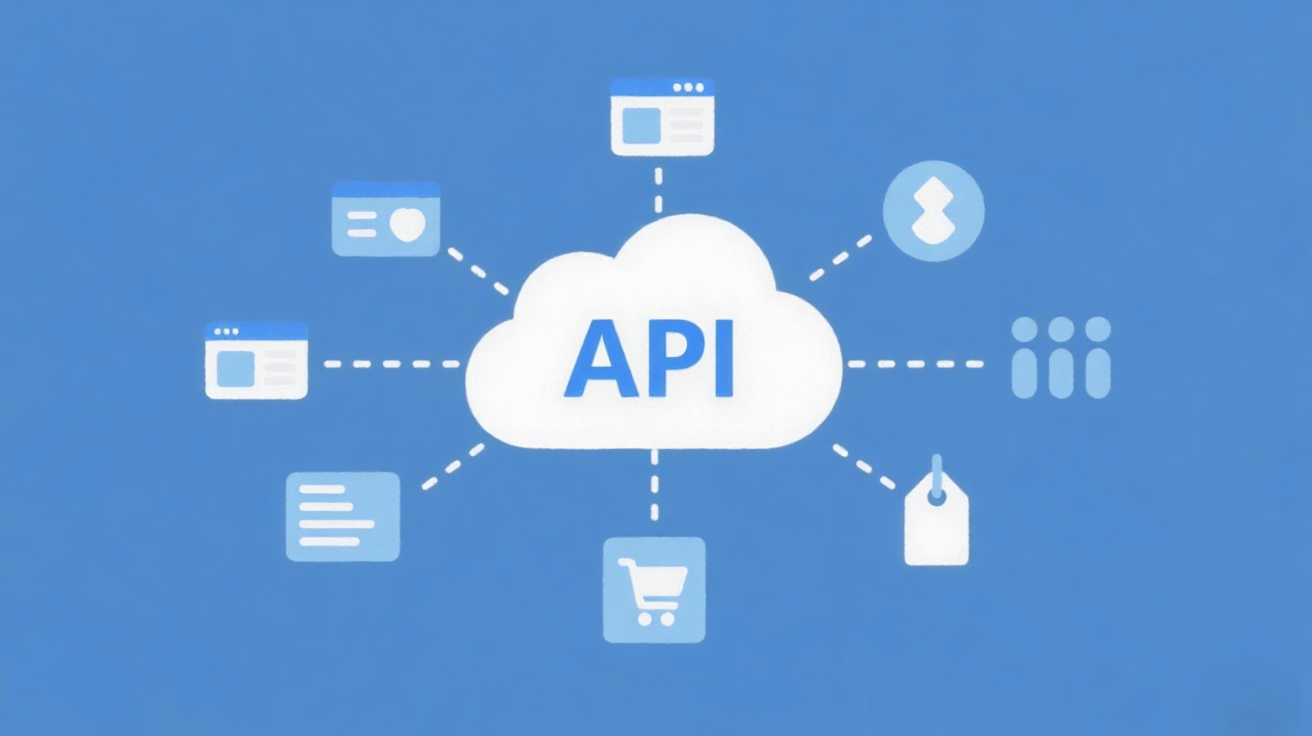
Pricing dynamics in 2026 have shifted significantly, and Google’s strategy with Gemini is aggressive but nuanced. The pay-as-you-go rates for `gemini-2.0-pro` are roughly 30% cheaper per million input tokens than GPT-4o, but the real savings emerge at scale through Google’s context caching. If your application repeatedly processes similar base documents—like legal contracts or medical records—caching the prefix can reduce costs by up to 75% on subsequent queries. However, the tradeoff is a stricter rate limit hierarchy. The free tier offers generous daily quotas for experimentation, but production usage at the paid tier requires careful planning around the per-minute token limits, which are lower than OpenAI’s standard tier unless you secure a custom agreement. For high-throughput applications, you may need to implement request queuing or fallback routing. This is where the ecosystem of API gateways becomes relevant. Services like OpenRouter, LiteLLM, Portkey, and TokenMix.ai let you unify multiple providers behind a single endpoint, which is particularly useful when Gemini hits its rate ceiling or when you need to compare output quality across models without rewriting integration code. TokenMix.ai, for example, provides access to 171 AI models from 14 providers behind a single API with an OpenAI-compatible endpoint that acts as a drop-in replacement for existing OpenAI SDK code. It uses pay-as-you-go pricing with no monthly subscription and includes automatic provider failover and routing, so your application can seamlessly fall back to DeepSeek, Qwen, or Mistral models if Gemini is unavailable or too slow. This kind of abstraction layer is becoming standard practice in 2026, especially for teams that cannot afford vendor lock-in.
When evaluating Gemini for production, the API patterns matter more than the buzzwords. Google has adopted a streaming-first design: every Gemini model supports server-sent events (SSE) by default, and the streaming output is chunked with clear token metadata, making it straightforward to render partial results in a UI or process lines of code incrementally. The tool-use (function calling) schema is similar to OpenAI’s, but there is a critical difference: Gemini enforces a strict typed object structure for tool parameters, rejecting loosely defined JSON schemas that other APIs might tolerate. This forces better development hygiene, but it also means your existing function definitions may need refactoring. On the safety side, Google’s safety settings are granular—you can adjust thresholds for harassment, hate speech, and sexually explicit content per request—but the default filters are aggressive. Many developers in 2026 report that they must dial these back for creative writing or medical use cases, and the documentation for the exact classification logic remains opaque. For regulated industries, this is a double-edged sword: compliance teams appreciate the guardrails, but engineering teams lose predictability.
Integration considerations extend beyond simple HTTP calls. Gemini’s native grounding with Google Search is a standout feature that rivals but does not replace proper retrieval-augmented generation (RAG). You can enable grounding at the API level so the model cites web sources for factual claims, which is excellent for current-events chatbots or research assistants. But the latency penalty is real—grounded responses take 1.5 to 3 times longer than ungrounded ones—and the cost per token roughly doubles. For teams building document-heavy RAG pipelines, Google’s Vertex AI integration offers a tight coupling with its vector search and embedding models, but that locks you into Google Cloud’s infrastructure. If you are already on AWS or Azure, the standalone Gemini API is more portable, though you lose the deep optimization benefits. A pragmatic approach in 2026 is to use Gemini for multimodal-heavy tasks—video analysis, image captioning, audio transcription—and route pure text reasoning to Anthropic’s Claude or DeepSeek’s latest model, which often performs better on nuanced logic at lower cost.
Real-world scenarios have clarified where Gemini shines and where it struggles. In a 2026 benchmark by a major e-commerce platform, Gemini 2.0 Pro achieved 94% accuracy on product attribute extraction from mixed-format catalogs (PDFs, images, scanned invoices), outperforming both GPT-4o and Claude 3.5 Sonnet by a narrow margin. However, the same model showed a 12% higher error rate on multi-step math reasoning compared to DeepSeek-R1, which is now the go-to for financial modeling and code generation. For customer-facing chatbots, Gemini’s multilingual capabilities are strong—it handles code-switching between English and Hindi, Spanish, or Mandarin more naturally than most competitors—but its conversational memory tends to drift after about 20 turns without explicit context management. This means you still need to implement your own summarization or sliding window logic, which adds engineering overhead. For teams building voice agents, Gemini’s native audio input (not just transcription) is a unique advantage, allowing the model to infer tone and emotion directly from the waveform, which is impossible with text-only APIs.
The long-term trajectory of the Gemini API depends on Google’s willingness to maintain compatibility. In 2026, Google has a mixed reputation for deprecation: the original Gemini 1.0 models were sunset with just three months’ notice, forcing many teams to migrate mid-cycle. The 2.0 models are more stable, but the API versioning scheme remains confusing, with multiple endpoints (`v1beta`, `v1`, and a separate Vertex AI endpoint) that behave slightly differently. For production, stick to the `v1` endpoint and pin your model version explicitly. Avoid using the `latest` alias. As a rule of thumb, if your application depends on Gemini’s unique multimodal features, the tradeoffs around pricing, latency, and ecosystem lock-in are worthwhile. If your use case is primarily text generation or chat, the alternatives from Anthropic, Mistral, or the open-source community via providers like TokenMix.ai or OpenRouter offer more flexibility and lower total cost. The smartest strategy in 2026 is to treat Gemini as a specialized tool in a multi-model stack, not as a monolithic solution.