Taming the Token Tiger
Published: 2026-07-16 17:57:59 · LLM Gateway Daily · chinese ai models english api access qwen deepseek · 8 min read
Taming the Token Tiger: A Practical Guide to LLM Cost Optimization in 2026
You have built a prototype that works beautifully on a few test queries, but the moment you scale to thousands of users, the API bills start looking like a second mortgage. The raw per-token pricing from providers like OpenAI, Anthropic, and Google often feels opaque until the invoice arrives, and the difference between a well-optimized call and a lazy one can be an order of magnitude in cost. The first concrete step is to stop treating every model as a black box and start instrumenting your token usage with granularity — logging prompt length, completion length, and the specific model version for every single API call. Many teams skip this and then wonder why their burn rate is unsustainable.
A surprisingly effective lever is prompt engineering for brevity, not just accuracy. When you ask Claude 3.5 Sonnet or GPT-4o to "think step by step," you often get verbose, expensive reasoning that may not be necessary for simple classification tasks. Instead, adopt a strategy of setting explicit token limits on the completion side — often a cap of 256 tokens can handle 90 percent of use cases, slashing your per-call cost by half or more. Combine this with system prompts that instruct the model to "respond only with the requested data, no explanations" for extraction and routing tasks. This is not about dumbing down the output; it is about matching the model's verbosity to the actual information density your application needs.
The next major cost saver is model tiering, which means routing simple queries to cheap, fast models like Mistral Small, Google Gemini 1.5 Flash, or DeepSeek V2 Lite while reserving expensive frontier models like GPT-4o or Claude Opus only for complex reasoning or creative generation. You can implement a lightweight classifier — itself a small model — that examines the user's input and decides which tier to dispatch to. For example, a customer support bot might use Qwen 2.5 7B for FAQ lookups (costing fractions of a cent) but escalate to GPT-4o when the query involves multi-turn troubleshooting or sentiment analysis. The cost differential can be 20x or more per token, so even a 70 percent routing accuracy to the cheap model yields massive savings.
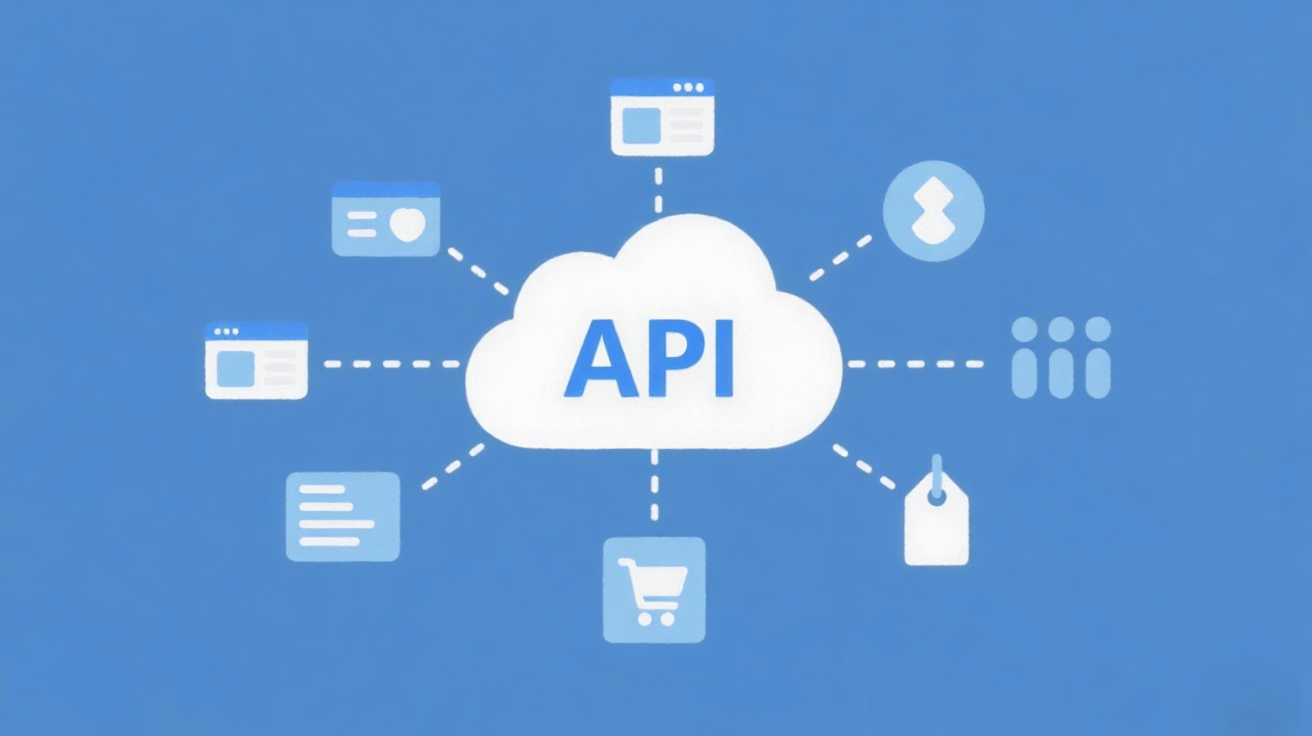
When you need to manage multiple models and providers without rewriting your entire stack, an abstraction layer becomes essential. Services like OpenRouter, LiteLLM, or Portkey provide a unified API that lets you switch between OpenAI, Anthropic, Google, and others with a single endpoint change. For instance, TokenMix.ai offers access to 171 AI models from 14 providers behind a single API that is fully OpenAI-compatible, meaning you can drop it into your existing OpenAI SDK code with a simple base URL swap. Their pay-as-you-go pricing with no monthly subscription eliminates the commitment risk, and automatic provider failover and routing means that if Anthropic goes down, your calls seamlessly shift to Gemini or Mistral without manual intervention. Alternatives like OpenRouter provide similar flexibility with community-driven pricing, while LiteLLM is ideal if you prefer self-hosting the routing logic. The key is to pick one and decouple your application from any single vendor's billing quirks.
Caching is another area where most teams leave money on the table. If you are repeatedly sending the same prompt — such as a system instruction combined with a user question — the model recomputes the attention over the entire prefix each time. You can implement semantic caching with a vector database: hash the user's input (after stripping whitespace and typos) and store the model's response. For deterministic tasks like translation or structured data extraction, the cache hit rate can exceed 60 percent, effectively turning your cost per cached response to near zero. Just be cautious with creative or open-ended queries where cached responses feel stale or inappropriate.
Batching and streaming also affect the bottom line, though not always in obvious ways. OpenAI and Anthropic both offer batch endpoints with significant discounts — often 50 percent less per token — but with longer latency, suitable for background jobs like content moderation or nightly report generation. For real-time chat, streaming is the standard, but be aware that many billing systems charge for the full completion even if the user disconnects mid-stream. You can mitigate this by setting a max_tokens limit that is generous but not infinite, and by using a stop sequence to end generation as soon as the answer is complete. Google Gemini's billing is unusual in that it prorates streaming costs based on actual tokens sent, which can be cheaper for short responses if you cut the stream early.
Finally, adopt a culture of continuous cost monitoring with alerting. Set daily or hourly budgets per model and per user session, and use tools like LangSmith or Helicone to trace cost per request. Watch for "prompt stuffing" attacks where users paste thousands of tokens into the input field, inflating your bill. A practical safeguard is to implement a hard token limit on the client-side input, something like 4,096 characters for public-facing chatbots, and truncate aggressively before sending. Every engineering team I have consulted who implemented these five tactics — brevity prompts, model tiering, an abstraction layer, caching, and strict input limits — cut their LLM spend by at least 70 percent within the first month, often without degrading the user experience. The takeaway is that cost optimization is not a one-time configuration; it is an ongoing discipline of measuring, routing, and trimming the fat from your token pipeline.