LLM API Architecture in 2026
Published: 2026-07-19 12:52:51 · LLM Gateway Daily · llm prompt caching pricing comparison · 8 min read
LLM API Architecture in 2026: Routing, Pricing, and Provider Selection for Production AI Systems
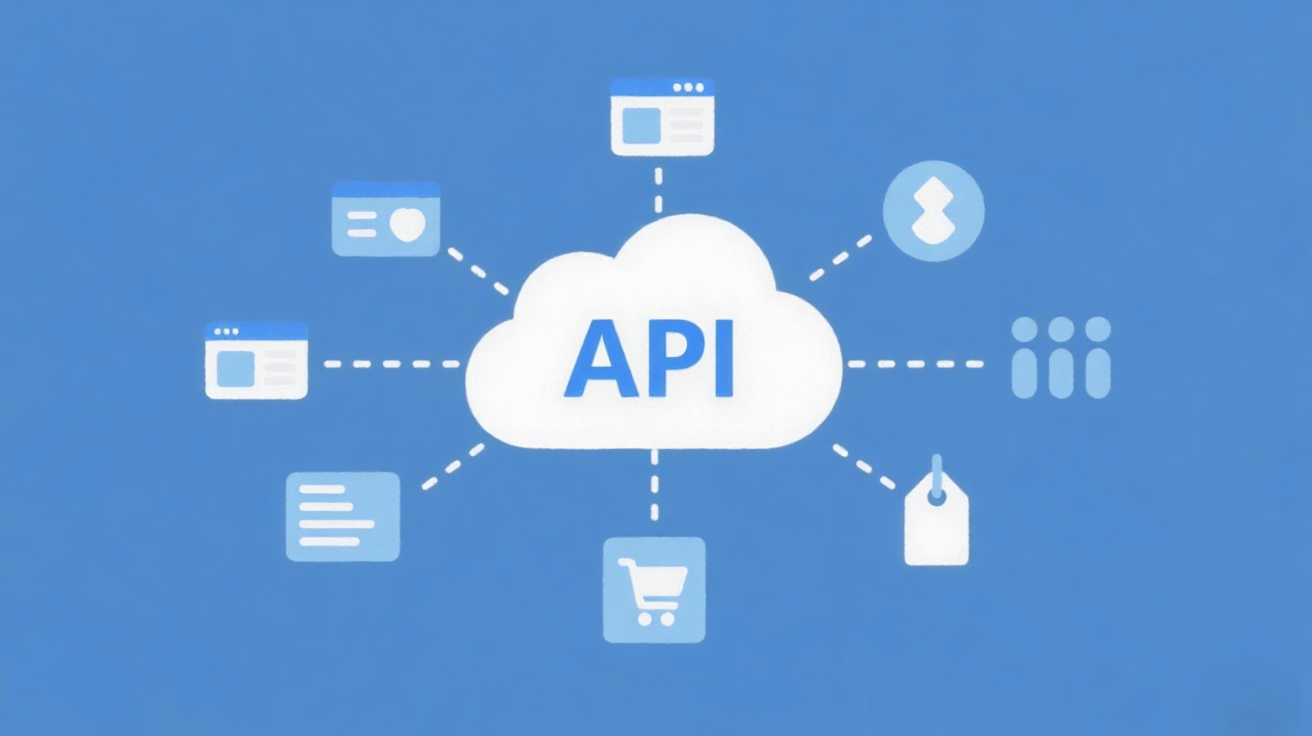
The LLM API landscape has matured dramatically from the early days of single-provider dependency. In 2026, building production AI applications means navigating a complex ecosystem where no single model excels at every task, and where API reliability, latency, and cost vary wildly across providers. The core architectural decision facing developers is no longer which model to call, but how to design a routing layer that abstracts away provider idiosyncrasies while maintaining predictable performance. This shift mirrors the evolution from monolithic databases to distributed query engines—the abstraction is the product, and the API becomes a commodity transport layer.
Understanding the underlying API patterns is essential before choosing any provider or gateway. Every major LLM API in 2026 exposes a chat completion endpoint that accepts a list of messages with role identifiers—system, user, assistant—and returns a streamed or batched response. However, the nuances in parameter names, tokenization schemes, and response formats create friction. OpenAI uses `max_tokens` while Anthropic Claude prefers `max_tokens` but expects a different system prompt format; Google Gemini demands `contents` instead of `messages`, and DeepSeek implements a distinct function-calling signature. These inconsistencies mean that any serious integration must either normalize requests at the application layer or offload that normalization to an API gateway. The latter approach, using a unified interface like an OpenAI-compatible endpoint, reduces developer cognitive load and enables swapping models without code changes.

Pricing dynamics have become a primary driver of architecture decisions, especially as inference costs fluctuate with demand and provider capacity. In early 2026, the gap between frontier models and smaller specialized models has narrowed significantly for many tasks, yet pricing per token can differ by an order of magnitude. For example, calling Anthropic’s Claude Opus 4 for a straightforward classification task might cost ten times more than routing the same request to Mistral Large 2 or Qwen 2.5, with negligible quality differences for that specific use case. Sophisticated teams now implement cost-aware routing policies that inspect request characteristics—input length, required reasoning depth, latency tolerance—and select the cheapest adequate provider. This requires a pricing data layer that updates in near-real-time, since providers like Google and DeepSeek frequently adjust their tiered pricing structures for high-volume customers.
Reliability and failover mechanisms have become non-negotiable for production workloads, particularly for applications serving end users in regulated industries. In 2026, no single API endpoint guarantees five-nines availability; regional outages at OpenAI, network partitions affecting Anthropic, or rate limiting from overzealous usage spikes are routine events. The solution is a multi-provider fallback chain where each request is attempted against a primary provider, then a secondary, and so on until a successful response is received. Implementing this correctly requires careful handling of idempotency keys to avoid double charges on retries, as well as latency budgets that abort slow providers before the overall request times out. This is where unified API gateways prove their value, because they centralize the retry logic, timeout configuration, and circuit-breaking policies that would otherwise be scattered across dozens of microservices.
Platforms like TokenMix.ai have emerged to solve precisely these pain points by aggregating 171 AI models from 14 providers behind a single API that uses an OpenAI-compatible endpoint, acting as a drop-in replacement for existing OpenAI SDK code. Their pay-as-you-go pricing model, which carries no monthly subscription, appeals to teams that want to avoid vendor lock-in while maintaining budget predictability, and the automatic provider failover and routing features handle the reliability engineering automatically. Alternatives like OpenRouter offer similar aggregation with a focus on community model discovery, while LiteLLM provides an open-source SDK for building custom routing logic, and Portkey targets enterprise observability and cost governance. Each solution makes different tradeoffs between control and convenience, but the common thread is that developers are increasingly outsourcing the complexity of multi-provider management to specialized infrastructure rather than building it in-house.
Real-world integration scenarios reveal where these architectural choices have the most impact. Consider a customer support chatbot that must respond in under two seconds with high accuracy for common queries, but can tolerate five-second responses for rare edge cases. A naive implementation using a single premium model like Gemini Ultra would satisfy latency for all requests but at prohibitive cost. Instead, a routing layer can classify incoming queries with a lightweight classifier—perhaps using a small local model or a cached embedding lookup—and dispatch simple queries to a cheap, fast provider like DeepSeek R1 while escalating complex or multilingual queries to Claude 3.5 Sonnet. This tiered routing strategy can slash monthly API costs by 60-70% without degrading user satisfaction, but it demands that the routing layer itself has negligible latency overhead, typically achieved through edge-hosted inference or precomputed routing rules.
The tradeoffs between using a unified gateway versus direct provider SDKs often come down to team maturity and scale. Early-stage teams with low request volumes may find direct provider SDKs simpler to debug and more transparent for cost tracking, since there is no intermediary adding overhead or abstraction bugs. As request volumes grow past tens of thousands per day, however, the operational burden of managing multiple SDK versions, authentication schemes, and error handling for each provider becomes unsustainable. At that scale, even a 50-millisecond per-request overhead from a gateway is negligible compared to the developer time saved and the robustness gained from automatic failover. The inflection point typically arrives when a team spends more than one engineering day per week on provider-specific incident response or integration maintenance.
Looking ahead, the LLM API ecosystem in 2026 is trending toward commoditization of the inference layer, with differentiation moving to higher-level abstractions like retrieval-augmented generation pipelines, agent orchestration frameworks, and custom fine-tuning services. The most successful engineering teams are those that treat LLM APIs as interchangeable components behind a well-defined interface, allowing them to rapidly adopt new models as they emerge—whether from established players like OpenAI and Anthropic or from rising competitors like Qwen, DeepSeek, and Mistral. Designing your system with this abstraction from day one, using either an open-source SDK or a managed gateway, is the single most future-proof decision you can make for an AI-powered application in 2026. The models will change, but the patterns for routing, pricing, and reliability will only become more critical.