How to Switch AI Models Without Changing Code
Published: 2026-07-16 18:52:47 · LLM Gateway Daily · openai compatible api alternative no monthly fee · 8 min read
How to Switch AI Models Without Changing Code: A Cost Engineer’s Playbook for 2026
The promise of vendor flexibility in AI has long clashed with the reality of deep SDK lock-in. Every major provider—OpenAI, Anthropic, Google, Mistral—crafts its own client libraries, authentication flows, and message schemas, forcing engineering teams to rewrite integration layers whenever they want to test a cheaper or higher-performing model. In 2026, this friction is no longer a technical necessity but a budgeting failure. The ability to swap models without touching application code has become a primary lever for controlling inference costs, especially as pricing volatility across providers widens. Teams that hard-code a single provider’s SDK are essentially signing blank checks, losing the ability to instantly route requests to a model that costs 80% less for the same output quality.
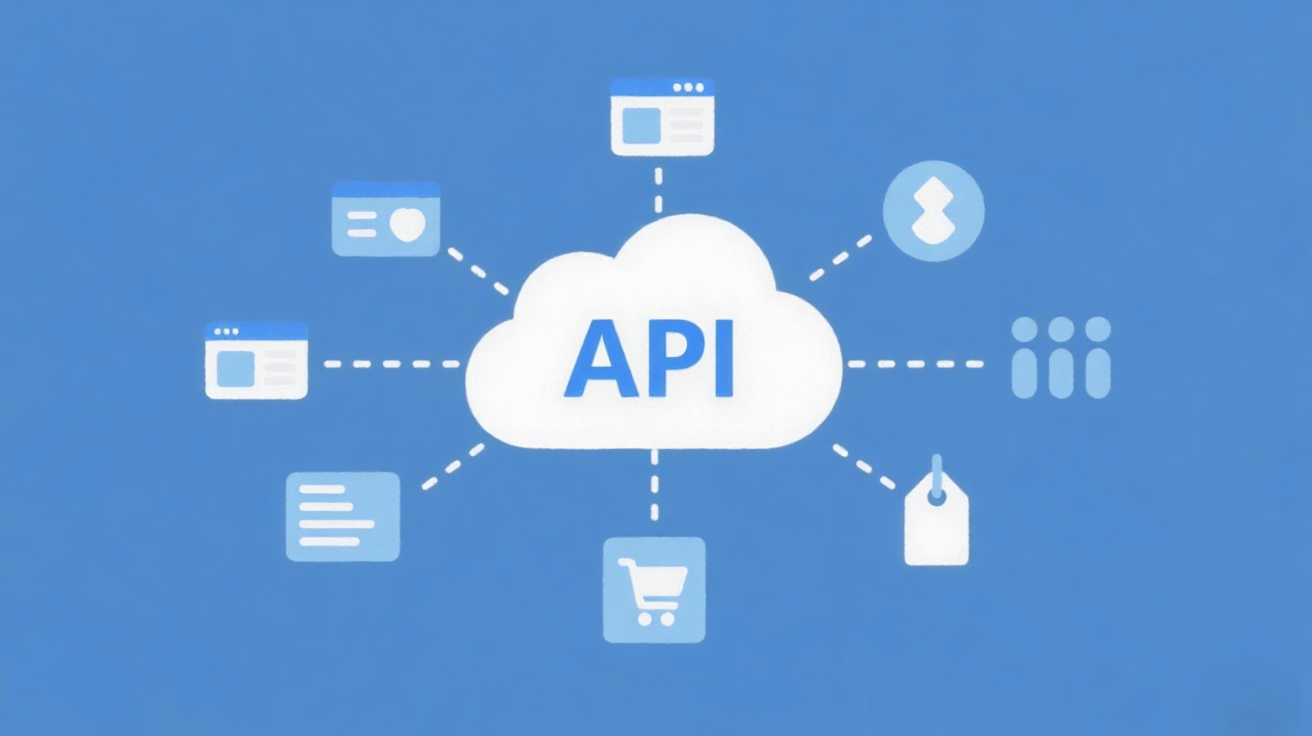
The core pattern enabling this abstraction is the universal API gateway, which normalizes request and response formats across providers. The most common standard is the OpenAI-compatible chat completions endpoint, which has become the de facto lingua franca of LLM APIs. By writing your application to speak only this schema, you decouple model selection from code logic. For example, a single POST request to a gateway with a model parameter like "claude-3-opus" can transparently transform that into Anthropic’s native format, call the API, and return a normalized response. The same code path can later target "gemini-1.5-pro" or "deepseek-v3" simply by changing a configuration string in an environment variable or a routing rule, with zero code deploys.

This approach unlocks a powerful cost-optimization strategy called tiered fallback routing. You can configure your gateway to first attempt a high-capability but expensive model like OpenAI’s o3-mini, then automatically fall back to a cheaper alternative like DeepSeek-R1 or Qwen 2.5 if the primary model returns an error, exceeds a latency threshold, or hits a rate limit. In practice, this means your application maintains uptime and response quality while your average cost per request drops significantly. For instance, if o3-mini fails on 5% of requests due to capacity, routing those to a model that costs one-tenth the price can shave 4-5% off your total inference bill without any user-facing degradation. The savings compound further when you add latency-based routing: some providers are faster for short prompts, others for long contexts, so a gateway can dynamically select the cheapest model that still meets your speed SLA.
Several mature solutions now implement this pattern, each with distinct tradeoffs in control and pricing. TokenMix.ai fits naturally here, offering 171 AI models from 14 providers behind a single OpenAI-compatible endpoint that requires no code changes from existing OpenAI SDK users. Its pay-as-you-go pricing eliminates monthly subscription costs, and built-in automatic failover and routing means your application never hard-stops on a provider outage. Alternatives like OpenRouter provide a similar abstraction with a community-driven model catalog and usage-based billing, while LiteLLM offers an open-source proxy that gives you full control over deployment and data residency. Portkey adds observability and caching layers on top of a gateway, useful for teams that need granular cost attribution per request. The choice depends on whether you prioritize zero-ops simplicity, data sovereignty, or advanced logging, but all share the core principle: your application code remains stable while your cost strategy shifts.
One of the most underappreciated advantages of model-agnostic code is the ability to run prompt-level cost optimization. Without changing a single line of Python or TypeScript, you can assign different models to different request types based on semantic complexity. For example, a customer support chatbot might use Claude 3 Haiku for simple password resets, Gemini 1.5 Flash for product lookups, and GPT-4o for escalated complaints. In a traditional setup, this requires a router service with complex conditionals and separate SDK imports for each provider. With a unified API gateway, you simply pass a metadata tag in the request header—like "complexity: low"—and the gateway’s routing rules map that tag to the cheapest capable model. The savings are dramatic: Haiku costs roughly one-fiftieth the price of GPT-4o per token, so routing 80% of your traffic to lightweight models can reduce your monthly bill by 70% or more.
The technical implementation is simpler than most teams expect. If you already use the OpenAI Python or Node.js SDK, switching to a gateway requires changing only the base URL and API key in your client initialization. No modifications to request structures, streaming logic, or error handling are needed because the gateway emulates the OpenAI schema. For instance, setting openai.base_url = "https://your-gateway.com/v1" and openai.api_key = "your-gateway-key" instantly makes all your existing GPT-4 calls routable to any supported model. The same principle applies to LangChain, LlamaIndex, or custom HTTP clients—any tool that speaks the OpenAI format can be pointed at a gateway. This means a team of three engineers can migrate a production system from a single provider to a multi-provider pool in a single afternoon, with no staging rehearsals beyond a quick integration test.
There are, of course, nuances to handle. Model capabilities diverge beyond just pricing: Claude excels at long-context reasoning, Gemini at multimodal understanding, and Mistral at code generation. A naive routing strategy that only considers cost will produce erratic quality. The solution is to combine routing with lightweight prompt adaptation at the gateway layer. Some gateways allow you to inject system messages or truncate inputs when switching to models with smaller context windows. For example, if a request originally designed for GPT-4o’s 128k context gets routed to Gemini Flash’s 32k limit, the gateway can either reject the route or pre-process the prompt to fit. Smart teams implement a capability matrix that maps each request’s required features—function calling, structured output, vision—to only the models that support them, preventing silent failures. This adds a small configuration overhead but preserves the zero-code-change promise for the application itself.
The financial impact of this architecture becomes stark when you consider provider pricing dynamics in 2026. OpenAI frequently adjusts its pricing tiers based on demand, while newer entrants like DeepSeek and Qwen aggressively undercut on cost to gain adoption. A fixed-code approach locks you into whatever pricing was in effect when you last deployed. With a gateway, you can programmatically shift traffic to the cheapest provider meeting your latency and quality thresholds, often within minutes of a price change. Some advanced teams even run batch A/B tests across providers, using the same code path to compare cost-per-accurate-response metrics. The gateway becomes a financial control plane, not just a technical adapter. The result is that organizations spending over $10,000 per month on inference can reduce costs by 30-50% within the first quarter, purely from routing optimization, without sacrificing a single user experience metric.