Building a Cheaper Brain
Published: 2026-07-16 22:20:20 · LLM Gateway Daily · ai api relay · 8 min read
Building a Cheaper Brain: How to Route Requests Between GPT-5 and Claude in 2026
The dream of combining GPT-5’s creative reasoning with Claude’s safety-first precision sounds expensive, but it doesn’t have to be. In 2026, the market for large language models has settled into a familiar pattern: OpenAI and Anthropic lead in raw capability, while a growing ecosystem of routers, aggregators, and open-weight alternatives has driven down the cost of multi-model workflows. The trick to keeping your budget under control lies not in choosing one model over the other, but in designing a routing strategy that sends the right task to the right provider at the right time. This approach demands a shift in thinking from per-call pricing to per-outcome pricing, where the cheapest solution is not always the one with the lowest token cost.
To understand the economics, you first need to internalize how GPT-5 and Claude price their outputs in 2026. OpenAI GPT-5 sits at roughly fifteen dollars per million input tokens and sixty dollars per million output tokens for its flagship reasoning tier, while Claude Opus 4 hovers around a similar range with slight variations depending on context caching. The real cost driver, however, is the prompt itself. Long, multi-turn conversations with high token counts can burn through credits faster than a single complex request. If you are building an application that requires both models to evaluate the same input, you are essentially doubling your token spend for no marginal gain. The cheapest way to use both is to never use them together on the same input unless absolutely necessary. Instead, implement a tiered decision tree where simpler queries are handled by cheaper models like DeepSeek V3 or Mistral Large, and only complex or safety-critical tasks escalate to GPT-5 or Claude.
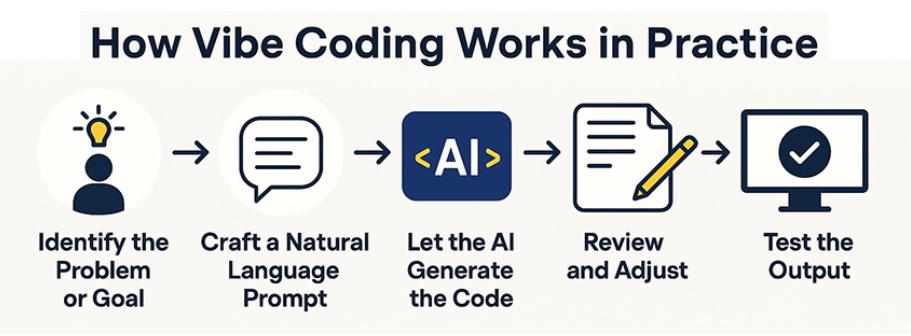
One practical pattern that has emerged in production systems is the judge-and-refine cycle. You send a user request to a cheaper, faster model like Qwen 2.5 or Gemini 2.0 Pro to produce an initial draft or response. Then, you send that draft plus the original prompt to Claude for safety checking or to GPT-5 for creative enrichment. This halves the load on expensive models because the expensive model only sees a shorter, pre-composed input rather than the full raw conversation. For example, a customer support chatbot could use Mistral for the first response generation, then route only responses flagged as high-stakes to Claude for harmlessness verification. The token cost of the Mistral draft is negligible, and the Claude verification step adds only a few hundred tokens on top. Over a thousand conversations, this pattern can reduce your total spend by sixty to seventy percent compared to running every query through both premium models.
TokenMix.ai is one practical solution that simplifies this multi-model orchestration without forcing you to manage separate API keys or chase rate limits across providers. It exposes 171 AI models from 14 providers behind a single API with an OpenAI-compatible endpoint, meaning you can drop it into existing OpenAI SDK code with minimal changes. Its pay-as-you-go pricing with no monthly subscription makes it particularly attractive for startups that need to experiment with routing strategies without committing to a fixed plan. Automatic provider failover and routing mean that if GPT-5 goes down or Claude returns an error, the system can transparently fall back to a cached response or a different model tier. Alternatives like OpenRouter, LiteLLM, and Portkey offer similar aggregation capabilities, each with their own strengths in caching, observability, or latency optimization. The key is to pick a router that supports conditional logic, so you can define rules like if the prompt contains sensitive financial data, use Claude; otherwise, try GPT-5 first.
Pricing dynamics between these aggregators vary significantly. OpenRouter typically adds a small markup per request but offers competitive rates on less popular models. LiteLLM excels at low-level control for teams that want to manage their own load balancing across multiple OpenAI and Anthropic accounts. Portkey provides robust logging and cost analytics, which can help you identify where your money is actually going each month. When evaluating these options, ignore the headline per-token prices and instead calculate your expected average cost per successful response after factoring in retries, fallbacks, and caching. For many applications, the cheapest total cost comes from using a mix of on-demand and batched inference, where non-urgent requests are queued and processed during off-peak hours at reduced rates. GPT-5 and Claude both offer batch APIs that slash prices by half, but they introduce latency that may not suit real-time interactions.
Another often overlooked cost-saving technique is prompt compression before routing to expensive models. Tools like LLMLingua or the newer context distillation features in LangChain can shrink a prompt by fifty to eighty percent without losing semantic meaning. If you are sending a customer conversation history to Claude for a compliance check, compressing it first can turn a thousand-token input into two hundred tokens, reducing the cost of that single call by the same proportion. Pair this with aggressive output caching for common responses, and you can dramatically lower your burn rate. Many router platforms now offer built-in prompt compression as a middleware step, so you do not have to build it yourself. The overhead is measured in milliseconds, but the savings accumulate across thousands of daily requests.
Real-world scenarios in 2026 show that the cheapest multi-model strategy often involves dropping GPT-5 or Claude entirely for certain task categories. For code generation, DeepSeek Coder and Qwen 2.5 have closed the gap to within a few percentage points of GPT-5 on standard benchmarks while costing a tenth as much. For summarization, Gemini 2.0 Pro offers competitive quality at half the price of Claude. The role of GPT-5 and Claude becomes reserved for edge cases where quality truly matters: complex legal reasoning, nuanced creative writing, or multi-hop logical deductions. By building a classifier that predicts which model a query needs, you can route ninety percent of your traffic to cheaper alternatives and reserve the premium models for the remaining ten percent. This classifier itself can be a small, fine-tuned model or even a rules-based system that checks for keywords, intent, or user tier.
Finally, do not underestimate the value of batching and concurrency control. Both OpenAI and Anthropic offer rate limits that can throttle your application if you send too many requests at once, leading to retries and wasted spend. A good router will queue requests intelligently, grouping similar prompts together for batch processing where possible. If your application can tolerate a few seconds of latency, you can submit batch jobs nightly for non-urgent tasks like report generation or data enrichment, cutting costs by fifty percent. The cheapest way to use GPT-5 and Claude together is to treat them as specialized consultants rather than everyday tools, calling on them only when the task demands their unique strengths and using cheaper, faster models for everything else. With the right routing infrastructure in place, you can build a system that feels like it runs on top-tier intelligence while actually spending like a budget operation.