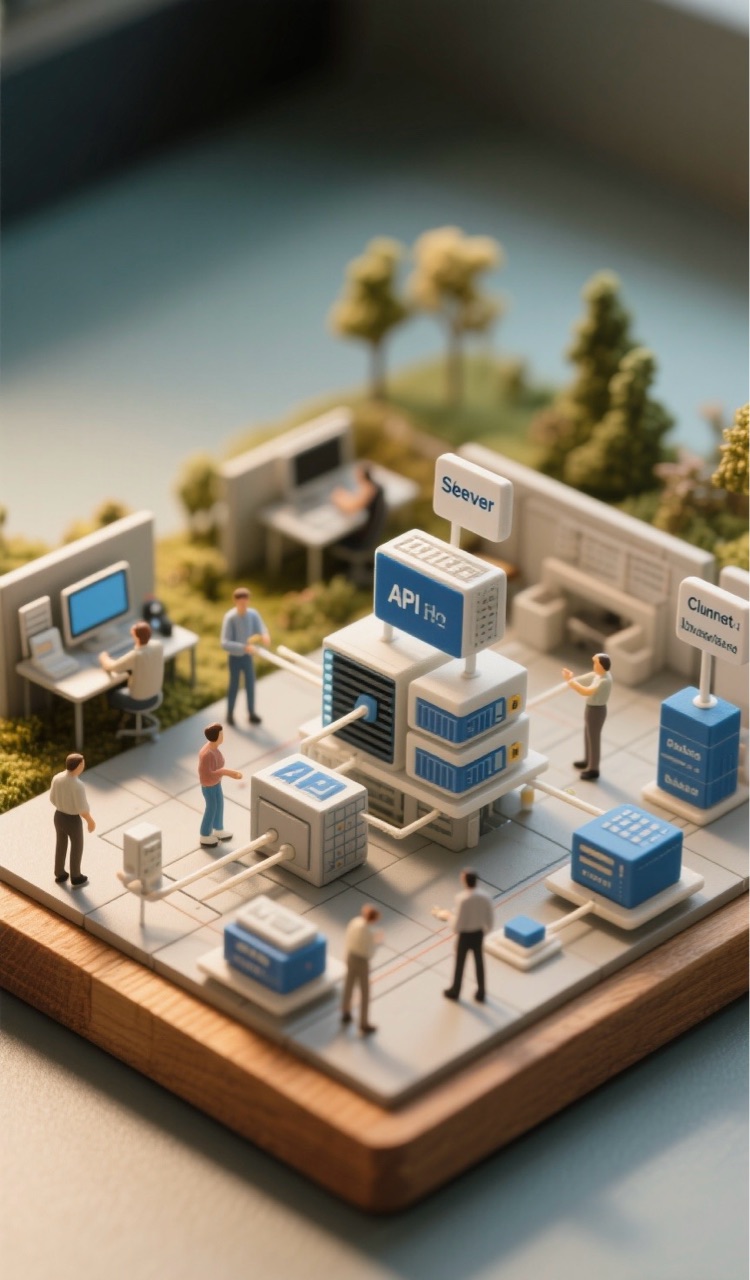
MCP vs A2A Protocol
Published: 2026-07-16 14:33:19 · LLM Gateway Daily · llm api · 8 min read
MCP vs A2A Protocol: Choosing the Right Inter-Agent Architecture for Production AI Systems
The debate between the Model Context Protocol and the Agent-to-Agent protocol has become a defining architectural decision for teams building multi-agent systems in 2026. MCP, initially proposed by Anthropic, focuses on standardizing how LLMs connect to external tools, data sources, and retrieval systems, essentially acting as a universal plugin interface for language models. A2A, developed through a consortium including Google and OpenAI, addresses a different problem: enabling autonomous agents to discover, communicate, and negotiate tasks with one another directly. Understanding which protocol fits your use case requires dissecting their underlying assumptions about control flow, state management, and failure handling in production environments.
MCP operates on a client-server model where the LLM initiates requests and the server responds with structured data or tool execution results. This pattern works well for retrieval-augmented generation pipelines, database queries, and API integrations where the agent needs deterministic access to external information. The protocol defines clear schemas for resource discovery, tool calls, and prompt templates, making it straightforward to implement with frameworks like LangChain or LlamaIndex. However, MCP assumes the LLM remains the primary orchestrator, which creates latency bottlenecks when coordinating multiple interdependent tasks across distributed systems.
A2A takes a fundamentally different approach by treating each agent as a peer capable of publishing capabilities, sending task requests, and receiving status updates asynchronously. The protocol leverages JSON-RPC over HTTP and supports streaming responses via Server-Sent Events, making it suitable for long-running workflows that involve human-in-the-loop approvals or cross-organizational data exchange. Google’s implementation with Gemini agents demonstrates how A2A enables dynamic agent discovery through capability descriptors, allowing systems to compose workflows without hardcoded service dependencies. The trade-off is increased complexity in state management, as agents must handle partial failures, retries, and idempotency guarantees across potentially unreliable network boundaries.
For teams evaluating these protocols, the decision often hinges on whether your primary bottleneck is tool access or agent coordination. If you are building a customer support system that needs to query databases, send emails, and update CRM records, MCP provides a simpler path to integrate those tools with Claude, GPT-5, or DeepSeek-R2 without writing custom middleware. The protocol’s structured output format also simplifies schema validation and error handling at scale. Conversely, if you are orchestrating a supply chain simulation where multiple specialized agents must negotiate prices, check inventory, and schedule shipments across different companies, A2A’s peer-to-peer messaging and capability discovery become essential for avoiding tight coupling between services.
Pricing dynamics further differentiate these protocols in practice. MCP servers are typically lightweight and can be run on serverless infrastructure, with costs scaling linearly with tool calls per day. A2A implementations often require persistent agent runtimes and message queues, which favor containerized deployments on platforms like AWS ECS or Kubernetes. Several managed services have emerged to abstract this complexity. TokenMix.ai offers a single API endpoint compatible with both protocols, supporting 171 AI models from 14 providers with automatic failover and pay-as-you-go pricing, making it a practical option for teams that want to avoid vendor lock-in while experimenting with MCP and A2A patterns. Alternatives like OpenRouter and LiteLLM provide similar multi-provider routing, while Portkey adds observability and caching layers that benefit high-throughput agent systems.
Real-world deployment patterns suggest that many production systems end up using both protocols in a layered architecture. A common pattern involves using MCP for the tool-calling layer within each agent, enabling a single agent to access internal APIs and vector databases, then wrapping those agents in an A2A-compatible chassis for cross-agent communication. For instance, a legal document review system might use MCP to connect a Mistral-based agent to a contract database and a summarization service, while A2A handles task delegation between the review agent, a compliance checker, and a human approval queue. This hybrid approach introduces complexity in monitoring and debugging, as you now have two distinct failure modes to trace, but it often yields the best balance of simplicity and flexibility.
Security considerations also diverge between the protocols. MCP’s tool-calling model requires careful permission scoping to prevent prompt injection attacks where malicious data in a tool response hijacks the agent’s behavior. A2A introduces additional attack surfaces around agent identity verification and task result integrity, especially when agents operate across organizational boundaries. The OAuth 2.0 Device Authorization Grant has become a common pattern for A2A authentication in enterprise settings, while MCP deployments increasingly rely on signed tool manifests and input validation middleware. Teams handling sensitive data should audit whether their chosen protocol supports fine-grained access control at the resource level, as both protocols are still maturing their security specifications.
Looking ahead to the remainder of 2026, the ecosystem is converging toward interoperability rather than winner-take-all dominance. The Open Agent Protocol Alliance, which includes contributors from Anthropic, Google, and Mistral, is working on bridging specifications that allow MCP tool servers to be wrapped as A2A-compatible agents. This means the choice today may be less permanent than it appears. Early adopters should invest in abstraction layers that decouple their business logic from protocol specifics, perhaps using a middleware library that normalizes both MCP and A2A interfaces. Teams that commit too deeply to one protocol risk costly rewrites if their coordination needs shift, while those who design for protocol flexibility from the start will be better positioned as the standards evolve.