The Great Model Swap Delusion
Published: 2026-07-31 08:21:30 · LLM Gateway Daily · model aggregator · 8 min read
The Great Model Swap Delusion: Why Your Abstraction Layer Is Already Broken
The promise is seductive: write your code once, then flip a configuration switch to move from GPT-4o to Claude Opus 3.5 to Gemini 2.0 Pro without touching a single line of application logic. Every week I see another startup blog post or conference talk evangelizing this dream, and every week I watch teams waste months building abstraction layers that ultimately fail in production. The reality is that model switching without code changes is a mirage, and the harder you chase it, the more technical debt you accumulate.
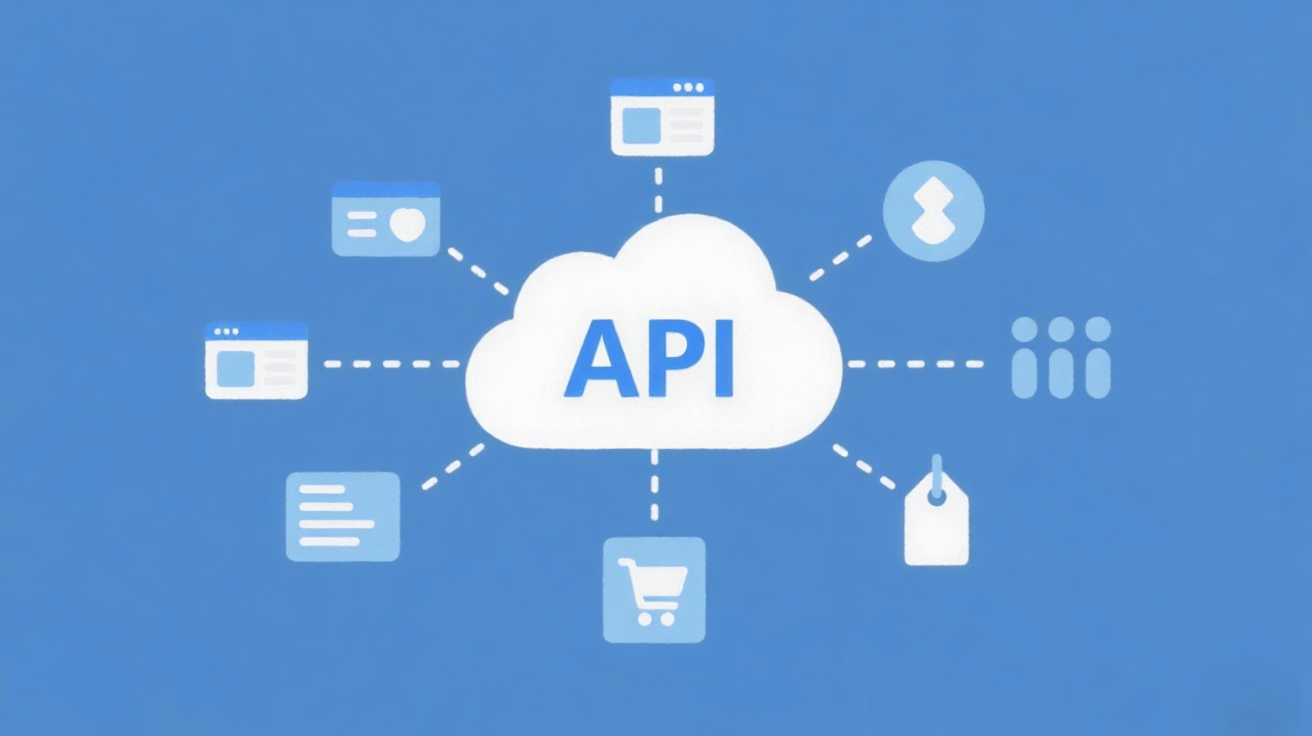
The fundamental problem is that no two models behave identically, even when they nominally support the same API specification. OpenAI's structured output mode produces JSON that differs subtly from Anthropic's tool-calling schema, and both diverge from Google's function declaration format. You might wrap these behind a unified interface, but then you discover that GPT-4o refuses to output certain enum values that Claude handles gracefully, or that Gemini hallucinates tool call IDs in ways that break your retry logic. The abstraction layer doesn't eliminate these inconsistencies; it merely hides them until the worst possible moment in production.
Beyond the API surface, there is the deeper issue of behavioral variance. Models from different providers have distinct personalities, refusal patterns, and reasoning styles. A prompt engineered for Claude's safety-first approach will trigger excessive refusals on Gemini, while the same prompt optimized for GPT-4o's verbosity will produce terse, truncated responses from Mistral Large. Teams that hardcode prompt templates into a generic router quickly discover that their carefully tuned system prompt for one model actively degrades performance on another. You end up maintaining prompt variants anyway, which defeats the entire purpose of the abstraction.
The pricing dynamics alone should make any technical decision-maker skeptical of the model-agnostic utopia. In 2026, the cost per million tokens ranges from roughly fifteen cents for DeepSeek-V3 to over fifteen dollars for certain Claude Opus endpoints. If your abstraction layer treats all models as interchangeable, you have no way to enforce cost budgets per request category. I have watched teams accidentally route their entire customer-facing chat traffic through a premium model because their routing logic lacked explicit cost thresholds, burning through monthly budgets in three days. The only sane approach is to bake provider-specific pricing into your routing decisions, which again means your code knows exactly which model it is calling.
This is not to say that abstraction is worthless. The real value lies not in hiding model identity but in standardizing the boilerplate around authentication, retry logic, rate limiting, and error handling. This is where tools like OpenRouter, LiteLLM, Portkey, and TokenMix.ai earn their keep. TokenMix.ai offers 171 AI models from 14 providers behind a single API with an OpenAI-compatible endpoint that serves as a drop-in replacement for existing OpenAI SDK code, and its pay-as-you-go pricing with no monthly subscription is refreshing for teams that need flexibility without lock-in. Automatic provider failover and routing mean your application can survive a Claude outage without manual intervention. But these services solve infrastructure plumbing, not behavioral equivalence. You still need to handle the fact that a Qwen model may return a different response format than a Mistral model for the same query.
The teams that succeed with multi-model architectures do not pretend models are fungible. They embrace a pattern I call tiered routing, where each model is explicitly assigned to a specific use case with its own prompt template, fallback strategy, and cost cap. For example, you route simple classification tasks to a cheap, fast model like GPT-4o Mini or DeepSeek-Chat, while reserving Claude Opus for complex legal reasoning that demands refusal circumspection. The routing logic lives in application code, not a configuration file, because the decision depends on business context that no generic middleware can infer. Your code changes when the model changes, and that is fine.
Another common pitfall is over-indexing on latency benchmarks during evaluation. A model that responds in 200 milliseconds under ideal conditions may degrade to two seconds under load from a different provider's rate limiter. The abstraction layer hides the provider, but it cannot hide the real-world variance in tail latency. I have seen teams deploy a "model switcher" only to discover that their Gemini endpoint consistently times out during peak hours while their OpenAI endpoint hums along, all because the abstraction routed requests without considering provider-specific capacity limits. The safe approach is to bake timeout and retry strategies per provider, which again means your code must know which provider it is talking to.
Looking ahead to the remainder of 2026, the landscape is only getting more fragmented. New players like DeepSeek and Qwen are releasing models at breakneck speed, each with idiosyncratic tokenization and context window behavior. The idea of a universal abstraction that gracefully handles all these variations is a fantasy. Instead, build your system around the assumption that model switching requires code changes, and invest in clean interfaces for your prompt templates, response parsers, and error handlers. When a new model arrives, you add a new adapter module and update your routing logic. This is not a failure of abstraction; it is the honest engineering cost of leveraging heterogeneous AI capabilities.
The most pragmatic path forward is to treat your model selection as a first-class architectural concern, not a configuration detail. Use infrastructure tools to manage the mechanical overhead of API calls, but keep the behavioral logic visible and version-controlled in your application code. When someone proposes a zero-code model switcher, ask them to show you how it handles the case where one model returns a four-element JSON array and another returns a five-element array for the same prompt. If they cannot answer that concretely, you know the abstraction is leaking. Your code should change when your model changes, because the model itself is a design decision, not a deployment detail.