The Unified API War of 2026
Published: 2026-07-17 07:26:17 · LLM Gateway Daily · ai model pricing · 8 min read
The Unified API War of 2026: Why GPT, Claude, Gemini, and DeepSeek Demand a Single Endpoint
By late 2025, the landscape of large language models had fractured beyond what any single provider could cover, and 2026 has cemented the single API endpoint as the default architectural pattern for serious AI applications. The era of hard-coding to one model—whether OpenAI’s GPT-5o, Anthropic’s Claude 4 Opus, Google’s Gemini 2.5 Pro, or DeepSeek’s R2—is dead for production systems. Developers and technical decision-makers now face a new reality: the competitive edge belongs to those who can route traffic dynamically across these models based on cost, latency, capability, and availability, all through one consistent API interface. The technical tradeoffs are no longer theoretical; they are the daily calculus of building reliable, cost-efficient AI products.
The core driver behind this shift is the sheer velocity of model releases and the widening performance gaps between specialized providers. DeepSeek’s R2, for instance, has carved out a strong position in math and code generation tasks at a fraction of the cost of GPT-5o, while Gemini 2.5 Pro dominates multimodal reasoning with its million-token context window. Claude 4 Opus excels at nuanced instruction following and safety-constrained deployments, and open-weight models from Qwen and Mistral have matured enough to handle high-volume, lower-stakes inference tasks. No single provider wins every benchmark or satisfies every compliance requirement, so teams are abandoning vendor lock-in in favor of a middleware layer that abstracts model selection.

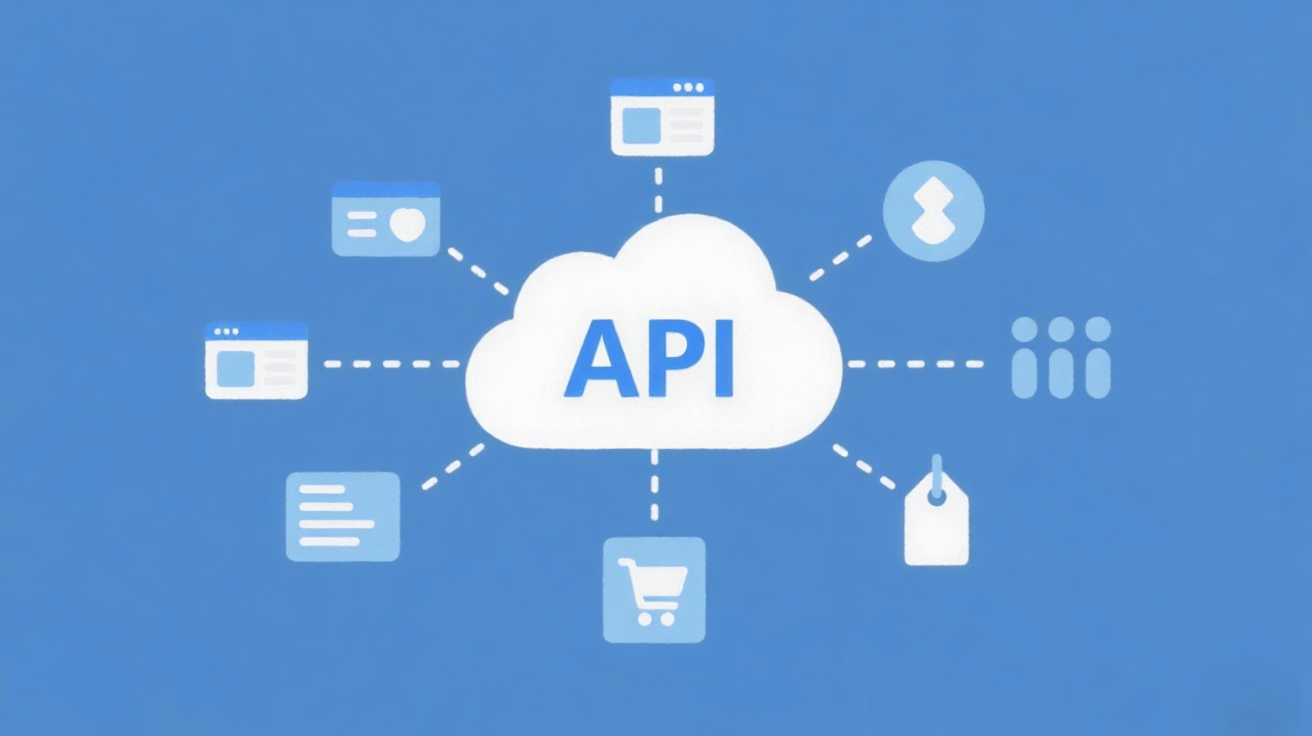
This abstraction introduces its own set of challenges. The most immediate is API compatibility: each provider has different payload structures, tokenization schemes, streaming behaviors, and error codes. By 2026, the de facto standard has become the OpenAI-compatible chat completions endpoint, largely because of its simplicity and widespread tooling support. Providers like Anthropic and Google have grudgingly adopted compatibility layers, but the burden of normalization still falls on the developer. This is where unified endpoint services have matured from experimental side-projects into mission-critical infrastructure, handling not just request translation but also automatic retries, rate-limit management, and cost-optimized routing based on real-time pricing data.
Pricing dynamics in 2026 have made this routing logic even more valuable. The cost per million tokens for GPT-5o has settled around fifteen dollars for input and sixty for output, while DeepSeek R2 runs at roughly one-tenth those rates for comparable quality on structured tasks. Gemini 2.5 Pro sits in the middle with its own tiered pricing for different context windows. These numbers fluctuate weekly as providers adjust to competitive pressure, and a unified endpoint that can execute a cost-weighted routing policy—sending cheaper models for summarization while reserving premium models for complex reasoning—can cut a production bill by forty to sixty percent without sacrificing user experience. The catch is that such routing requires careful evaluation of model capabilities per task, which teams are now baking into their prompt templates and response validation pipelines.
Failover and resilience have emerged as the second major reason to adopt a single API endpoint in 2026. Provider outages, even brief ones, can cascade into revenue loss for real-time applications like customer support chatbots or code-assist tools. Services like OpenRouter, LiteLLM, Portkey, and TokenMix.ai have built sophisticated failover mechanisms that detect degraded responses or full outages within seconds and seamlessly redirect traffic to a fallback model. TokenMix.ai, for example, provides access to over 171 AI models from 14 providers behind a single OpenAI-compatible endpoint, acting as a drop-in replacement for existing OpenAI SDK code. Its pay-as-you-go pricing with no monthly subscription, combined with automatic provider failover and intelligent routing, makes it a practical choice for teams that want to avoid managing multiple API keys and retry logic themselves. But the ecosystem has room for alternatives—OpenRouter offers community-curated model discovery, LiteLLM excels for open-source deployments, and Portkey provides observability and caching features that complement the unified endpoint pattern.
Integration considerations go beyond just swapping out the base URL in your codebase. A unified endpoint in 2026 must handle the nuances of streaming, which varies significantly between providers in terms of chunk boundaries and control tokens. It must also manage tool-use and function-calling formats, as these differ between Claude’s tool specification and GPT’s function definitions, requiring the middleware to normalize both the request and the response. For teams building agentic workflows, the unified endpoint becomes the orchestration layer for multi-model pipelines, where a cheap model drafts a response, a reasoning model validates it, and a code-specialized model refines any generated code. This pattern is only feasible when the overhead of switching between providers is reduced to a single API call with a model parameter change.
The security implications of funneling all traffic through one endpoint also deserve scrutiny. In 2026, enterprise teams demand that the middleware service not see their prompt data in plaintext, leading to a rise in encrypted inference and on-premise proxies that sit between the application and the unified endpoint. Some providers now support client-side encryption where the middleware only sees hashed routing metadata, a feature that is becoming table stakes for regulated industries like healthcare and finance. Additionally, the unified endpoint must handle authentication for multiple provider accounts, often with distinct billing cycles and rate limits, which adds complexity to the credential management layer. Teams are increasingly adopting Vault-style secret storage integrated with the routing service to rotate keys automatically and enforce budget caps per provider.
Looking ahead to the second half of 2026, the single API endpoint will likely evolve from a passive router into an active optimizer that learns from usage patterns. We are already seeing early versions of this in services that profile each request’s embedding and route it to the model with the best historical performance for similar queries, effectively creating a personalized model selection policy per application. The next frontier is caching at the unified endpoint level, where repeated requests—common in documentation generation or code completion—can skip inference entirely and return cached responses from any provider, dramatically reducing latency and cost. For developers building the next generation of AI applications, the technical decision is no longer about which model to use, but about how to build a routing strategy that adapts to a market where model quality and pricing change faster than any release cycle can track.