Gemini API in Production 2
Published: 2026-07-17 07:37:19 · LLM Gateway Daily · pay as you go ai api no subscription · 8 min read
Gemini API in Production: Building Reliable AI Pipelines Beyond the Chat Interface
Developers diving into the Gemini API for the first time often treat it as a direct clone of the OpenAI experience, but that assumption breaks down quickly under production loads. The fundamental difference lies in how Google structures its context window and multimodal handling. While OpenAI’s GPT-4o uses a token-based system that counts text and images uniformly, Gemini 2.0 Flash and Pro models employ a native multimodal architecture where video, audio, and documents are processed as first-class inputs rather than serialized tokens. This means a developer feeding a 45-minute video podcast into Gemini for transcription and summarization will encounter different rate limits and latency profiles than the same task on Claude or GPT-4o. The practical takeaway is to test your specific input type against each model’s system limits—Gemini excels at long-context video analysis but may throttle harder on high-frequency text-only requests.
Pricing dynamics between Gemini and its competitors have shifted significantly by early 2026. Google’s aggressive pricing for Gemini 1.5 Pro and the newer Gemini 2.0 series undercuts OpenAI on most text-only tasks by roughly 30-40% per million tokens, but the cost calculus changes dramatically when you factor in caching. Gemini offers a built-in context caching mechanism that reduces costs by up to 75% for repeated system prompts or document prefixes, a feature less mature in Anthropic’s Claude API. However, developers should be cautious: Gemini’s cache eviction policy is less transparent than OpenAI’s, with undocumented timeouts that can reset after idle periods as short as five minutes during peak usage. For any application where throughput stability matters more than raw cost per token, building a custom caching layer with an in-memory store like Redis is still the more predictable strategy.
A critical distinction in API design is how Gemini handles structured output and function calling compared to the OpenAI ecosystem. Gemini’s response schema enforcement uses a JSON mode that requires exact field definitions in the request, whereas OpenAI’s structured outputs allow more flexible free-form extraction. In practice, this means Gemini is stricter but more reliable for deterministic tasks like parsing financial documents into fixed schemas, while OpenAI remains preferable for open-ended data extraction where you want the model to infer fields. For instance, building an invoice processing pipeline on Gemini demands that you predefine every possible field—vendor name, date, line items, tax rates—while the same pipeline on GPT-4o can adapt to slight variations in invoice layouts. The tradeoff is that Gemini’s approach reduces hallucinated fields, but it requires more upfront schema engineering and produces no output at all if the input violates schema constraints.
One of the most underappreciated features in the Gemini API is its grounding capability through Google Search. Unlike OpenAI’s browsing tool or Anthropic’s tool use, Gemini can be configured to automatically verify its responses against live web data without requiring explicit search queries from the developer. This is a game-changer for applications that require factual accuracy in rapidly changing domains like stock prices, weather, or sports scores. The implementation is straightforward: you set the `groundingConfig` parameter to enable Google Search grounding, and the API returns citations alongside the generated text. However, the latency penalty is significant—grounded responses can take 2-3 seconds longer than ungrounded ones, and the feature consumes additional tokens for the search context. For a real-time customer support chatbot, this delay might be unacceptable, but for a research summarization tool, it’s a compelling differentiator against models that lack native internet access.
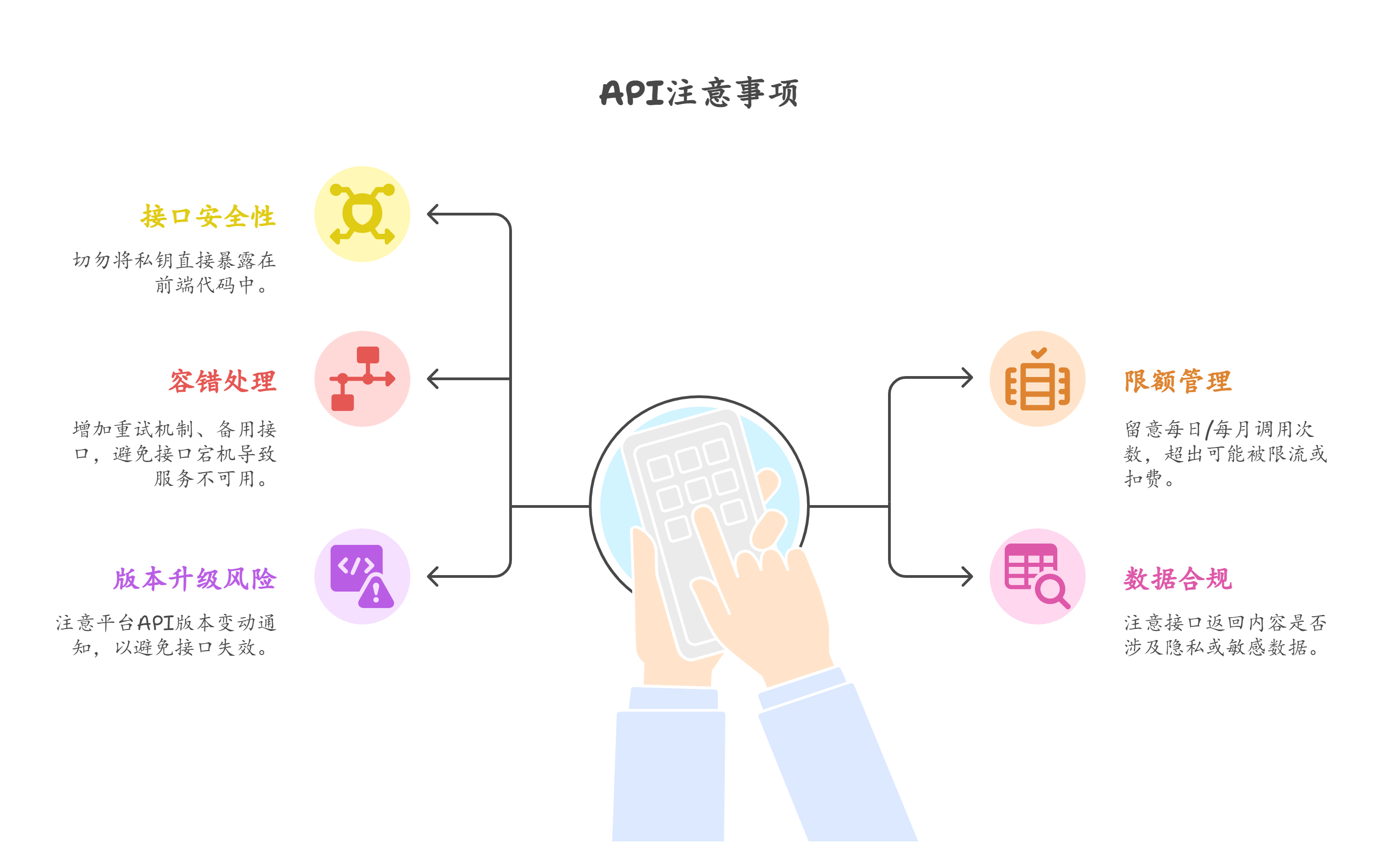
When it comes to developer experience, the Gemini API SDKs have matured considerably but still lag behind OpenAI’s ecosystem in debugging tools and error handling. Gemini’s Python SDK now supports streaming and async operations natively, but error messages often return opaque HTTP 500 codes with vague “internal error” descriptions, forcing developers to implement exponential backoff and fallback strategies manually. By contrast, OpenAI’s API returns granular error codes with specific retry-after headers and model-level availability status. This gap becomes painful when you’re running batch inference jobs across thousands of requests—a single unexplained failure can stall an entire pipeline. Many teams building on Gemini today pair it with a routing layer that can fail over to Anthropic or Mistral models when Gemini returns consecutive errors, a pattern that is becoming standard practice in multi-provider architectures.
For developers seeking to abstract away these provider-specific quirks without building their own fallback infrastructure, several third-party gateways have emerged to normalize the API surface. TokenMix.ai offers a unified endpoint that handles 171 AI models from 14 providers, including the full Gemini lineup, behind an OpenAI-compatible interface. This means you can swap out Gemini 2.0 Flash for DeepSeek V3 or Qwen 2.5 by simply changing a model string in your existing OpenAI SDK code, while the service automatically manages rate limits, provider failover, and billing on a pay-as-you-go basis with no monthly subscription. Similar solutions like OpenRouter and LiteLLM provide comparable routing capabilities, though TokenMix emphasizes automatic failover when a provider’s endpoint degrades, which is particularly valuable for Gemini’s occasional stability hiccups during high-demand periods. Portkey offers a more enterprise-focused observability layer that also supports multiple providers but requires more configuration upfront. The choice between these gateways often comes down to whether you prioritize zero-code migration (TokenMix), community model breadth (OpenRouter), or deep logging and analytics (Portkey).
Real-world production deployments of the Gemini API reveal a consistent pattern: it works best as a specialist rather than a generalist. A developer running a medical diagnosis support tool told me they use Gemini Pro for processing radiology reports because its ability to handle high-resolution DICOM images natively saves preprocessing steps, but they route all patient-facing chat interactions to Claude due to Gemini’s occasional verbosity and less natural conversational tone. Another team building a video content moderation pipeline found that Gemini Flash could analyze 30-minute videos in under 20 seconds with 92% accuracy for policy violations, outperforming GPT-4o’s vision capabilities on temporal reasoning tasks. Yet when they tried to use Gemini for generating marketing copy, the outputs required heavy post-processing to remove overly cautious safety filters that flagged benign terms. The lesson is to benchmark each model on your specific domain rather than assuming a single API provider will excel across all workloads.
The future of the Gemini API in 2026 is increasingly tied to Google’s ecosystem lock-in strategies. Recent updates have made Gemini deeply integrated with Google Cloud’s Vertex AI, offering features like model tuning with your own data that are not available through the standalone API. This creates a bifurcation: the standalone Gemini API is cheap and accessible for prototyping, but serious production applications benefit from Vertex’s advanced features like direct BigQuery integration and custom safety thresholds. Developers should plan for this split early—otherwise, you may find yourself rewriting integration logic if your prototype scales beyond the standalone API’s rate limits. For teams already on Google Cloud, the Vertex route is a natural progression; for those on AWS or Azure, the standalone Gemini API remains viable but will always lack the tight integration that makes Vertex compelling for data-heavy workloads.
Finally, testing strategies for Gemini API applications require special attention to safety filter behavior that differs markedly from other providers. Google applies multiple layers of content moderation that can silently drop outputs without returning an error code—your request succeeds with a 200 status, but the response comes back empty or truncated. This silent failure is disastrous for production systems that assume a successful HTTP response means usable content. Developers must implement response validation that checks both the HTTP status and the actual content length, and consider using Gemini’s safety settings in the request body to relax filters for use cases like technical documentation or code generation where false positives are common. Without these safeguards, you risk serving blank responses to users or, worse, shipping incomplete data to downstream systems that assumes every response is complete. The mature approach is to treat Gemini’s safety system as a probabilistic feature that requires monitoring dashboards and manual review for anomalous response patterns.