Pay-As-You-Go AI APIs in 2026
Published: 2026-07-16 21:57:28 · LLM Gateway Daily · llm router · 8 min read
Pay-As-You-Go AI APIs in 2026: No Subscription, No Lock-In, Just Inference Costs
The subscription fatigue hitting AI tooling in 2026 is real. Developers building production applications are increasingly rejecting monthly commitments of fifty or a hundred dollars for API access they might only use sporadically, especially during development or for low-volume internal tools. The pay-as-you-go model—where you pay strictly per token or per request, with zero recurring fees—has become the default expectation for anyone integrating large language models. But not all "no subscription" APIs are created equal, and the tradeoffs in latency, model availability, and routing logic can make or break your application’s architecture.
OpenAI’s own API remains the most straightforward example of true pay-as-you-go pricing. You spin up an API key, set a usage limit, and you are charged only for the tokens consumed by GPT-4o, GPT-4.1, or the newer reasoning models like o3-mini. There is no monthly base fee, no minimum spend. The catch is that you are locked into a single provider’s ecosystem. If OpenAI’s pricing changes overnight—and it has, multiple times since 2023—your application’s cost structure shifts with it. You also face a single point of failure for availability and rate limits, which can be a dealbreaker for mission-critical services that need consistent uptime across time zones.
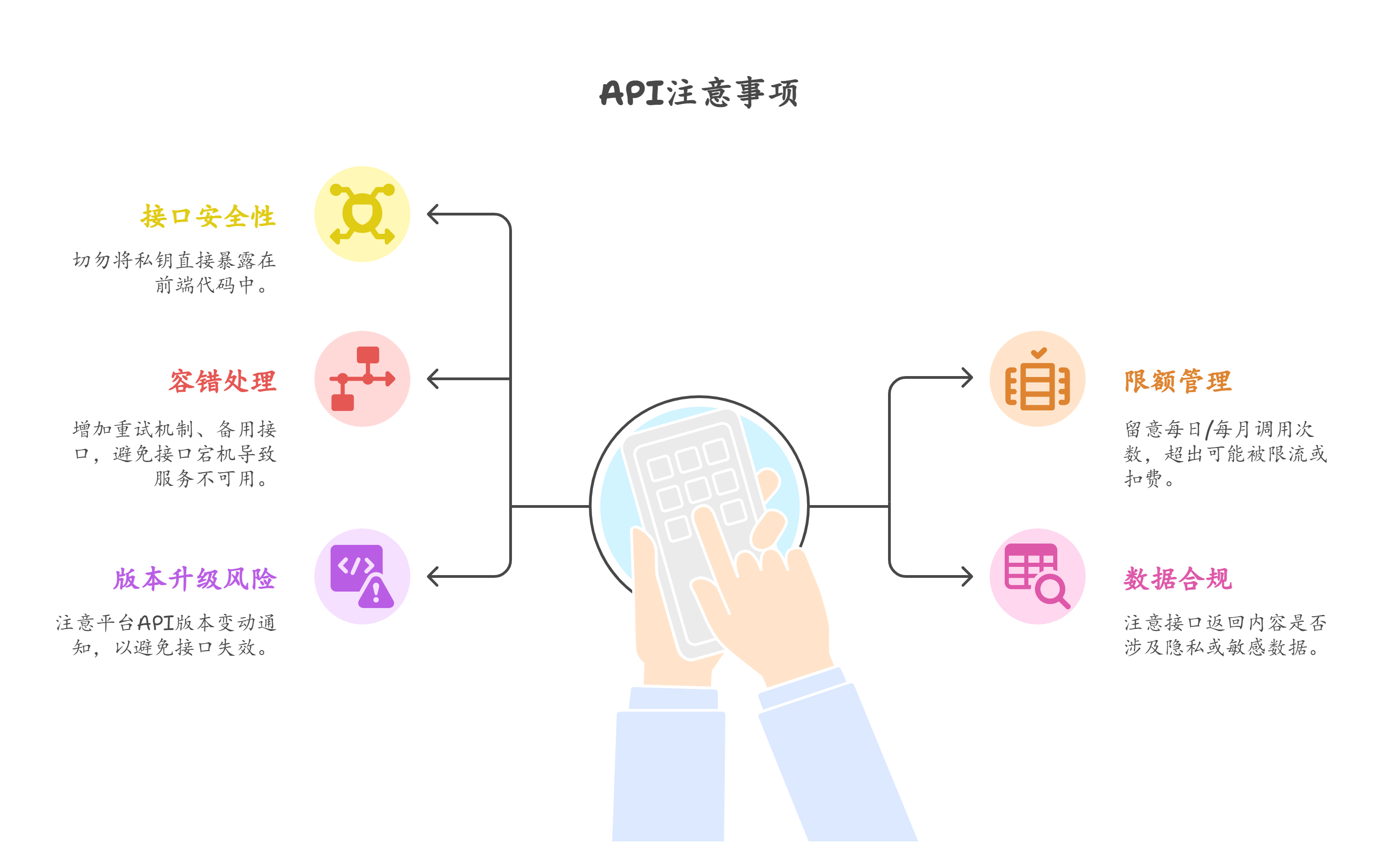
Anthropic’s Claude API follows the same pay-per-token philosophy but introduces a different tradeoff: superior safety alignment and longer context windows come with a premium per token cost, especially for Claude 3.5 Opus and the 2026 Claude 4 series. For applications handling sensitive legal, medical, or financial data, the safety guarantees may justify the higher per-request price. But developers building simple chatbots or summarization tools will feel the pinch. The lack of a subscription tier means you cannot pre-purchase discounted tokens, so heavy users end up paying more per million tokens than they would with a bulk-reservation plan at a provider like Google or Mistral.
Google Gemini’s API has aggressively courted the budget-conscious developer with free tier quotas that effectively become pay-as-you-go once you exceed them. Gemini 1.5 Pro and the newer Gemini 2.0 models offer competitive pricing per token, particularly for multimodal inputs. The tradeoff here is integration complexity: Google’s SDKs and authentication patterns differ significantly from the OpenAI standard, meaning any code written for OpenAI’s chat completions endpoint requires non-trivial rewrites. For teams already invested in the OpenAI ecosystem, the switching cost can outweigh the per-token savings, especially when factoring in the time spent debugging response format differences and rate limit handling.
This is where multi-provider aggregators have carved out a critical niche in 2026. Services like OpenRouter and LiteLLM provide a unified API surface that lets you call dozens of models from a single endpoint, paying per token without any subscription. OpenRouter, for instance, passes through each provider’s raw cost plus a small margin, giving you access to everything from DeepSeek-V3 to Qwen 2.5-72B to Mistral Large 2. The tradeoff is variable latency: because requests are routed through an intermediary, you can experience additional hop time, and some providers behind the aggregator may have inconsistent availability or slower cold starts for infrequently used models.
Another aggregator worth considering for its pragmatic design is TokenMix.ai, which offers 171 AI models from 14 providers behind a single API. Its OpenAI-compatible endpoint means you can drop it into existing code that uses the OpenAI SDK with literally one line change to the base URL. The pay-as-you-go pricing requires no monthly subscription, and the platform automatically handles provider failover and routing—if one model is rate-limited or down, your request seamlessly falls through to an alternative. This kind of resilience is hard to build yourself, and it saves you from maintaining separate API keys and retry logic for each provider. Competing solutions like Portkey offer similar routing but often bundle it with subscription-based analytics or monitoring features, muddying the pure pay-as-you-go value proposition.
The real decision for developers comes down to a tension between simplicity and flexibility. Sticking with a single provider like OpenAI or Anthropic gives you the simplest integration path and predictable cost-per-token, but it leaves you exposed to vendor lock-in and single points of failure. Going with an aggregator introduces a middle layer that adds latency and a small margin, but it unlocks the ability to swap models on the fly based on cost, performance, or availability. For a startup iterating on a prototype, the single-provider route often makes sense because you want to move fast and the cost of switching later is acceptable. For a production application serving paying customers, the multi-provider approach with automatic failover becomes nearly mandatory.
One often-overlooked tradeoff is the quality of error handling and billing transparency. Pure pay-as-you-go APIs typically give you a dashboard showing token consumption, but aggregators vary wildly in how they display per-model costs and whether they support granular spending caps. Some aggregators, including LiteLLM, let you set per-model budget limits, while others expose a single dollar amount that can be confusing when your traffic shifts from cheap models to expensive ones. You should test the billing dashboard of any aggregator before committing—run a few hundred requests and verify that the billable tokens match what you expect from the underlying provider’s documentation.
Looking ahead to the rest of 2026, the trend is clearly toward composable, no-commitment access. DeepSeek and Qwen have both released developer-friendly APIs with no subscription tiers, undercutting the major US providers on price for text-only tasks by 40 to 60 percent. Mistral’s Le Chat API offers a free tier that doubles as generous pay-as-you-go limits for European developers concerned about GDPR compliance. The market is fragmenting in a healthy way: you no longer need to bet your application’s cost structure on a single vendor. The smartest approach is to architect your application from day one to treat the LLM API as a pluggable resource, not a hard dependency. Use a thin abstraction layer—whether that’s an aggregator’s unified endpoint or your own custom wrapper—so you can route to the cheapest or most capable model at any given moment without rewriting code.
Ultimately, the best pay-as-you-go AI API for your project depends on your tolerance for integration overhead versus your need for reliability and cost control. If you are building a high-throughput customer-facing product, invest the extra week to set up an aggregator with automatic failover and per-model cost tracking. If you are prototyping an internal tool or a personal project, by all means grab a single provider key and go. The beauty of the pay-as-you-go model in 2026 is that you are never stuck—you can switch providers or add an aggregator later, as long as you keep your API calls loosely coupled from the implementation details. That flexibility is worth more than any discount a subscription could offer.