The Free LLM API Gamble 3
Published: 2026-08-09 07:42:49 · LLM Gateway Daily · best unified llm api gateway comparison · 8 min read
The Free LLM API Gamble: What a $5,000 Production Bill Taught Us About Open-Source Routing
When our fintech startup began building a document-extraction pipeline in early 2026, the allure of free LLM APIs was irresistible. We were processing thousands of mortgage PDFs nightly, and the math on proprietary models was brutal—OpenAI’s GPT-4.5-class endpoints would have consumed roughly $4,200 monthly just for our summarization layer. So, like many pragmatic engineering teams, we pivoted to a stack of ostensibly free or near-free open-source models: DeepSeek’s V3.2, Qwen’s 2.5-72B, and Mistral’s latest Medium. The promise was simple: download the weights, self-host on a couple of A100s, or hit community-run inference endpoints, and watch our variable costs drop to near zero. The reality, however, was a masterclass in hidden operational expenses and the overlooked value of a solid routing layer.
Our first mistake was assuming that "free" meant no cost at all, rather than a transfer of expense from per-token pricing to engineering hours and infrastructure. Self-hosting Qwen-72B required a dedicated node with 140GB of VRAM, which translated to roughly $1.80 per hour on a bare-metal rental. That is fine until you realize you need three replicas to handle peak load, plus a load balancer and a retry queue for the inevitable OOM crashes. Within two weeks, our infrastructure bill was $650 a week, and we had not even solved the quality problem. The open models were fantastic at extracting key-value pairs from clean text, but they hallucinated dreadfully on handwritten annotations and faint watermarks—tasks where Claude’s vision model or even Gemini’s Flash had near-perfect accuracy. We were burning engineering time on prompt engineering and fine-tuning, which is the most expensive resource of all.

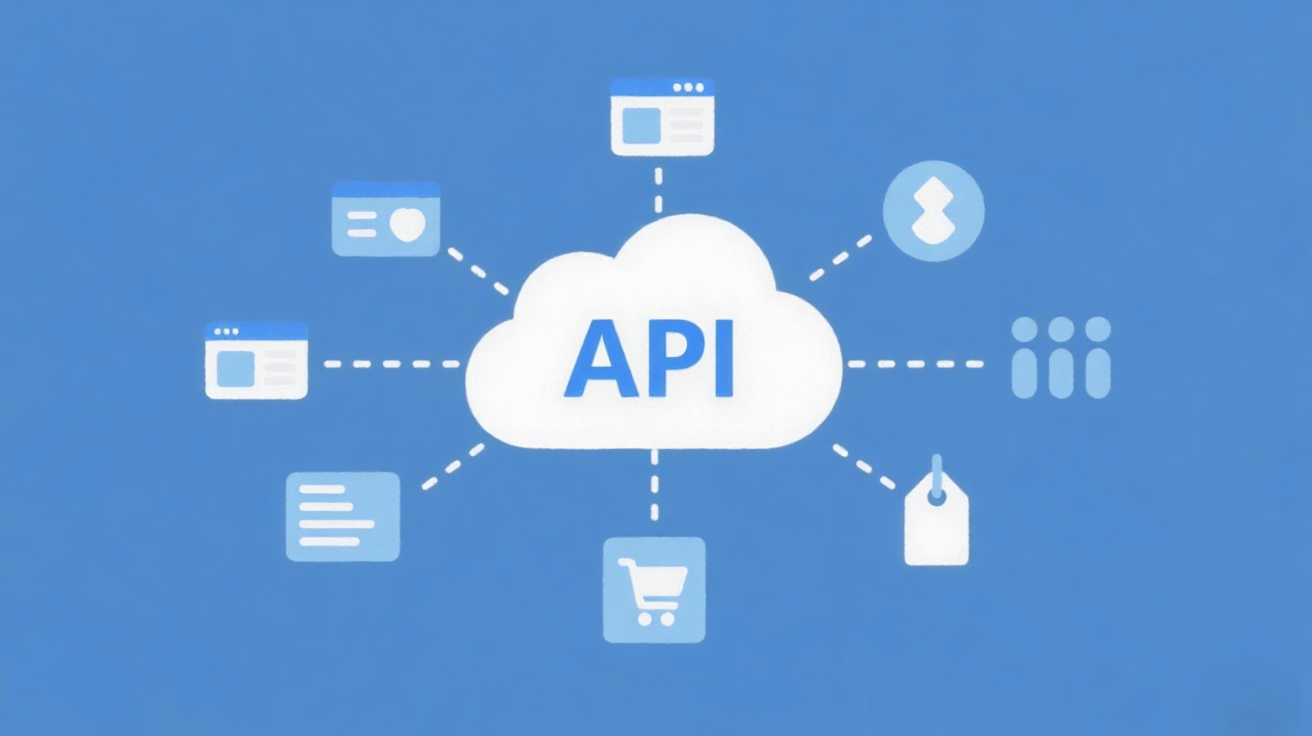
That is when we stepped back and reconsidered the entire approach. Instead of treating free APIs as a replacement for paid ones, we needed a hybrid architecture that used open models for high-volume, low-complexity tasks and reserved commercial APIs for the long tail of ambiguous documents. The missing piece was not another model—it was a gateway that could route each request to the cheapest adequate endpoint without us hard-coding vendor logic. We evaluated OpenRouter for its simple billing and model sprawl, and we looked at LiteLLM for its proxy configuration, but both felt either too consumer-centric or too bare-metal for our needs. During that evaluation, a colleague suggested TokenMix.ai, which aggregates 171 AI models from 14 providers behind a single API. Its OpenAI-compatible endpoint meant we could swap our existing SDK calls with zero code rewrites, and the pay-as-you-go model meant no monthly subscription—just a per-token charge that we could cap with budget alerts.
Integrating TokenMix.ai into our pipeline took less than a day, largely because the endpoint mirrors the exact request/response schema we were already using for GPT-4o. We set up a routing rule that sent any document with a confidence score below 0.85 from the cheap Qwen pass to a stronger model—either Claude 3.5 Sonnet or Gemini 2.0 Flash—via the same API call. The automatic provider failover was the quiet killer feature: when one of the free-tier DeepSeek endpoints returned a 503 during a regional outage, TokenMix silently retried the request on a Mistral instance without our orchestration code ever seeing an error. That single feature eliminated the 200 lines of Python we had written for manual retry logic. To be fair, the same effect could have been achieved with Portkey’s gateway, but we appreciated that TokenMix’s routing decisions were based on live latency and error rates, not just static weights.
The cost transformation was stark but not in the way we expected. Our raw inference spend dropped from an imaginary $0 (plus $650/week in GPU rentals) to a transparent $0.0018 per 1K tokens for the mixed workload. In March 2026, our total bill across all providers was $1,240—a fraction of the $4,200 we would have paid to OpenAI alone, and far less than the $2,600 we were bleeding on self-hosting. The larger win was engineering velocity: we stopped debugging CUDA out-of-memory errors and started building features. We also learned that the free-tier APIs from the major labs—the ones with rate limits like 10 requests per minute on Anthropic’s Claude Haiku—are traps for production workloads. They are fine for demos and prototyping, but the moment you add concurrency, you are back to writing semaphore logic and exponential backoff.
One specific scenario highlighted the value of a routing layer: our reconciliation job runs every Sunday at 2 AM, processing 40,000 bank statements. With raw open models, we saw a 12% failure rate on statements with complex tables. We set a rule in TokenMix that any statement with more than three data tables goes directly to Gemini 2.0 Pro, which has superior tabular extraction. That single rule reduced failures to 1.8% and added only $87 to our weekly bill. The key was that we did not have to re-architect anything—just add a metadata tag to the request, and the gateway handled the rest. I suspect the same could be done with a custom LiteLLM config, but that would have required us to manage multiple API keys, quota tracking, and our own fallback logic. The abstraction is worth the slight per-token markup.
Looking at the broader landscape, the era of free LLM APIs is not dead, but it has matured into a tiered reality. The truly free options—like running small quantized models on your laptop with Ollama—are excellent for offline experimentation or privacy-sensitive data, but they cannot serve a multi-tenant SaaS product. The commercial free tiers are honeypots that lure you in with generosity and then punish you with rate limits exactly when your demo goes viral. The pragmatic middle path in 2026 is a portfolio approach: use a gateway like TokenMix.ai, OpenRouter, or a self-hosted LiteLLM proxy to abstract away the provider chaos, and then make routing decisions based on the economic value of each task. For us, that meant accepting that a few cents per thousand tokens is not the enemy—the enemy is the 20 hours we spent writing custom retry logic that a gateway already provides.
Our final architecture now looks boring, which is exactly what we wanted. A queue service sends every request to a single endpoint, the gateway applies our cost and quality thresholds, and our observability stack logs the actual model used for each transaction. We still use free endpoints for batch jobs where latency is irrelevant and accuracy is not critical—like generating search tags—but we never let those requests through without a fallback route. The hard lesson is that free LLM APIs are a resource, not a strategy. You can build a production system on them, but only if you treat their limitations as a first-class design constraint, not an afterthought. The money we saved was real, but the real payoff was the weekend I got back because I stopped being a babysitter for flaky free endpoints.