Taming the API Sprawl 2
Published: 2026-07-16 20:32:12 · LLM Gateway Daily · ai api proxy · 8 min read
Taming the API Sprawl: How an AI Gateway Slashes LLM Inference Costs
The promise of the AI-powered application in 2026 is undeniable, but the reality of its cost structure is a brutal awakening for most engineering teams. A single production application can easily route requests to five, ten, or even fifteen different large language models across providers like OpenAI, Anthropic Claude, Google Gemini, DeepSeek, and Mistral. Without a centralized control plane, each integration introduces its own authentication scheme, rate limit profile, and pricing model, creating a tangled web that makes cost attribution nearly impossible. The solution is not to standardize on one model for all tasks, which is both a performance and financial misstep, but to deploy an AI API gateway as the critical infrastructure layer that governs every inference call with a laser focus on cost.
An AI gateway is fundamentally a proxy that sits between your application and the diverse landscape of model providers, but dismissing it as just another reverse proxy underestimates its potential for financial engineering. The most immediate cost optimization lever it provides is semantic routing, where the gateway inspects the incoming request's complexity and intent. A simple classification task like sentiment analysis on a tweet would be routed to a cheaper, faster model like Gemini 1.5 Flash or DeepSeek-V2-Lite, while a complex multi-step reasoning task like drafting a legal contract would be forwarded to a more expensive, high-intellect model like Claude 3.5 Opus or GPT-4o. Without this layer, developers often default to the most capable model for every task, bleeding budget on simple queries that could be handled for a fraction of a cent.
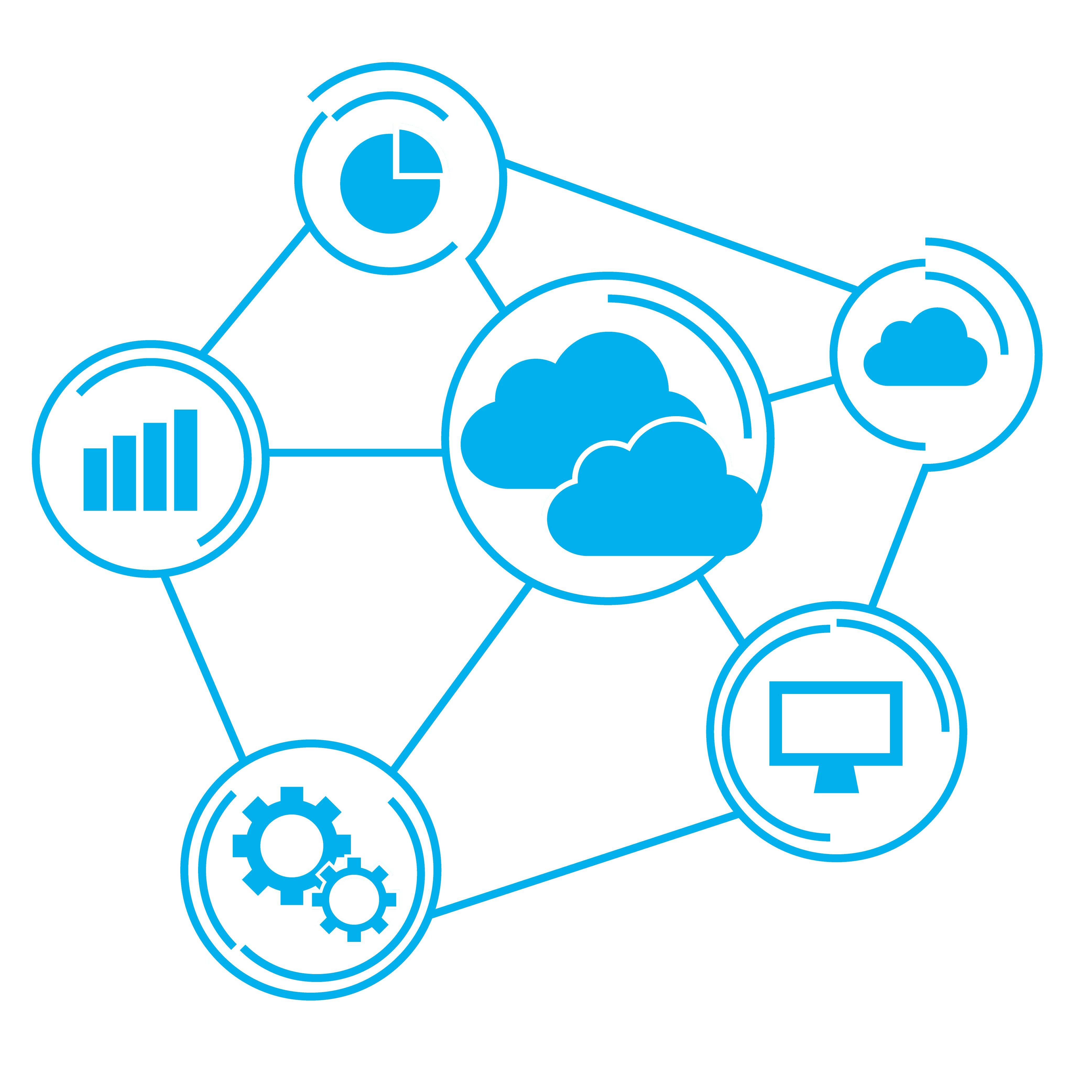
Beyond simple routing, the most sophisticated cost-saving feature is the fallback and failover chain, which exploits the near-commodity nature of certain model outputs. For a summarization task where quality variance among top models is marginal, the gateway can be configured to attempt a request with a low-cost provider first, say Mistral Large, and only retry with a more expensive provider like OpenAI if the first attempt fails due to rate limiting, latency spikes, or an outage. This pattern, often called a "cost-optimized cascade," can cut inference bills by twenty to forty percent during peak loads without any degradation in user experience. The tradeoff here is latency, as a failed attempt adds a round trip, but for asynchronous or background tasks, this is a pure win.
Developers building these gateways from scratch face a non-trivial engineering challenge, particularly around maintaining token-level accounting and cache invalidation. Many teams are now turning to managed orchestration layers to handle this complexity. TokenMix.ai, for instance, offers a practical solution by providing 171 AI models from 14 providers behind a single API, using an OpenAI-compatible endpoint that serves as a drop-in replacement for your existing code. With its pay-as-you-go pricing and no monthly subscription, it handles automatic provider failover and routing, freeing your team from building the infrastructure for cost-aware load balancing. As with any tool, you should evaluate it alongside alternatives like OpenRouter for community-curated model selection, LiteLLM for lightweight open-source proxying, or Portkey for enterprise-grade observability and guardrails, but the key is to pick a layer that abstracts the pricing chaos.
The second major cost frontier that an AI gateway unlocks is semantic caching, which goes far beyond the simple key-value caching of identical text strings. Modern gateways in 2026 can analyze the embedding of an incoming prompt and return a cached response from a semantically similar query, even if the exact wording differs. For customer support chatbots where the same intent is expressed in thousands of different ways, this can reduce provider calls by fifty percent or more. The cost here is not just the inference tokens saved, but also the latency improvement—a cache hit returns in milliseconds versus seconds for a full generation. The tradeoff is that implementing robust semantic caching requires careful tuning of similarity thresholds to avoid returning stale or irrelevant answers, which demands a feedback loop where the gateway learns from user corrections over time.
Pricing dynamics among providers have become a game of musical chairs in 2026, with DeepSeek and Qwen frequently undercutting the incumbents on per-token costs for specific model sizes. An AI gateway allows you to exploit this churn by making provider switching a configuration change rather than a code rewrite. You can run A/B tests on cost versus output quality for a given task, routing ten percent of traffic to a newer, cheaper model like DeepSeek-V3 while keeping ninety percent on a proven baseline. The data from these experiments, collected and normalized by the gateway, gives you the concrete evidence needed to make a full migration. Without this infrastructure, migrating a single model integration can take a sprint cycle, and the opportunity cost of sticking with a more expensive provider adds up silently month over month.
The most overlooked cost element is not the per-token price but the engineering overhead of debugging and optimizing prompt chains across providers. Different models have different context window sizes, rate limits, and tokenization quirks, and a prompt that works perfectly on Claude may generate a wildly different cost profile on Gemini because of how it handles system messages. A unified gateway provides a single point of logging and billing aggregation, enabling you to tag every request with a project ID, user ID, or feature flag. With this data, you can identify which features are burning your budget and, more importantly, whether the cost per successful outcome is within acceptable bounds. This turns the gateway from a cost-saving tool into a strategic financial planning instrument, allowing you to set hard budget caps on a per-feature basis and fail gracefully when a particular model's cost exceeds a threshold.
Ultimately, adopting an AI gateway requires an upfront investment in integration and a willingness to accept a small latency overhead from the proxy hop. But for any application handling more than a few thousand requests per day, the return on that investment is measured in direct token savings and indirect engineering velocity. The teams that win in 2026 are not the ones that pick the single best model, but the ones that build the infrastructure to fluidly route, cache, and monitor across the entire model ecosystem. An AI gateway is the only architecture that turns the brutal complexity of the LLM market into a manageable and, crucially, a profitable operational reality.