MCP Gateway Showdown 4
Published: 2026-07-16 18:45:56 · LLM Gateway Daily · chinese ai models english api access qwen deepseek · 8 min read
MCP Gateway Showdown: Choosing the Right Bridge Between Your Code and the LLM Mesh
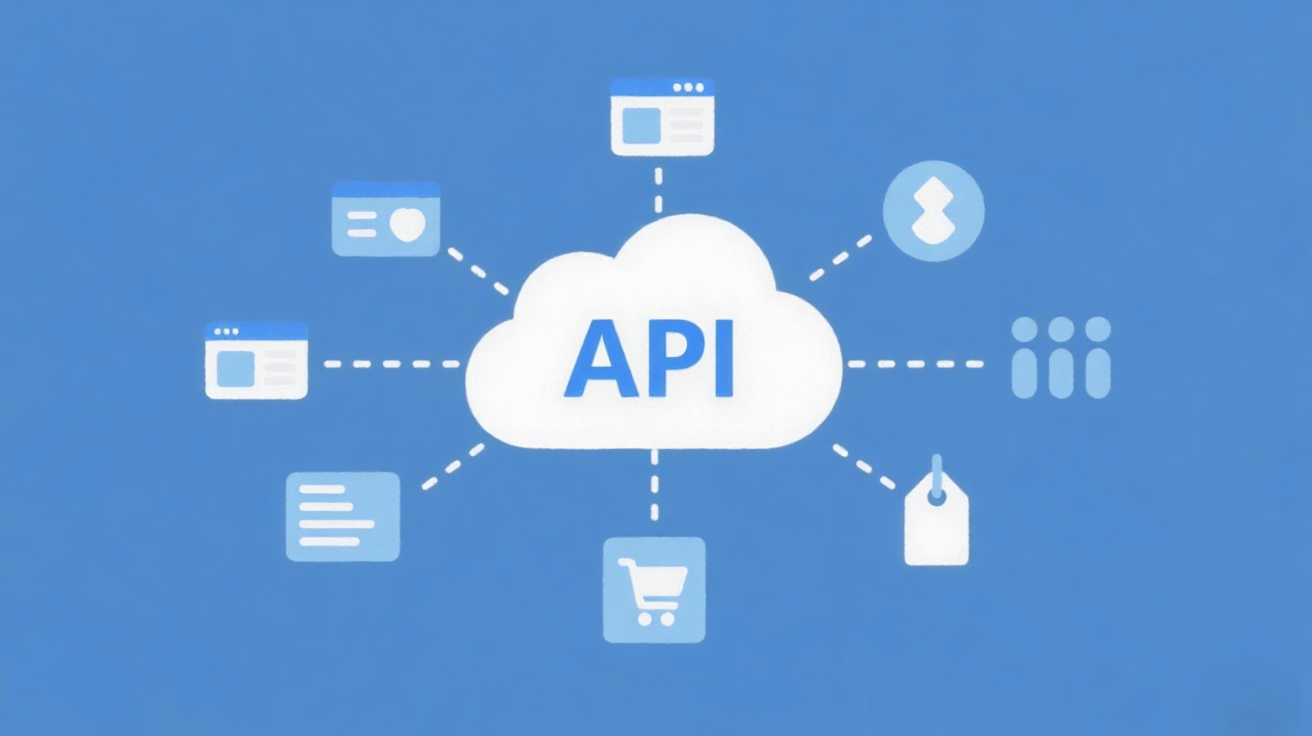
The concept of an MCP gateway has rapidly evolved from a theoretical convenience into a critical piece of infrastructure for anyone building agentic workflows or multi-model applications in 2026. At its core, an MCP gateway acts as a single ingress point for your application to communicate with the sprawling ecosystem of Model Context Protocol servers, whether they are hosted locally, running on a remote provider, or tucked inside a private data center. The central tradeoff you face is between simplicity versus control, latency versus resilience, and open-source flexibility versus managed service convenience. Your choice here directly dictates how your AI application handles provider failures, manages token budgets, and scales from a weekend prototype to a production system serving thousands of concurrent users.
The first major fork in the road is whether to deploy an open-source gateway project like LiteLLM or build a custom proxy layer using something like Envoy or NGINX with custom Lua scripts. LiteLLM, for example, gives you a robust translation layer that normalizes the APIs from Anthropic, OpenAI, Google Gemini, and even newer contenders like DeepSeek and Qwen under a single OpenAI-compatible endpoint. The tradeoff here is operational overhead. You own the deployment, the scaling, the rate limiting, and the monitoring. For a team with strong DevOps chops and a need to keep all inference traffic inside a VPC for compliance reasons, this is the gold standard. However, the moment you add automatic failover across providers, you are writing logic to handle inconsistent error codes, timeouts, and the fact that a 503 from Mistral means something different than a 429 from Claude.
On the other side of the spectrum lie managed gateway services that abstract away the infrastructure entirely. Portkey, for instance, offers a feature-rich observability dashboard and built-in caching layers that can dramatically reduce costs when you are hitting the same prompt patterns repeatedly. OpenRouter provides a marketplace-style gateway where you can route requests to the cheapest or fastest model for a given task, which is invaluable when your application needs to dynamically select between Mistral for a quick classification and a larger Gemini model for a complex reasoning step. The catch is that every millisecond matters, and adding a third-party hop between your application and the model provider introduces latency variance. You are also placing a significant amount of trust in a third party to handle your API keys and request payloads, which may be a non-starter for healthcare or financial services workloads.
If you are building a multi-agent system in 2026, the gateway decision becomes even more nuanced. Each agent may need a different model, a different context window, and a different set of tools exposed via MCP. A naive single-route gateway will quickly bottleneck when one agent is streaming a long response from DeepSeek while another is making a rapid series of tool calls to a local Qwen instance. This is where advanced routing strategies come into play. You want semantic routing, where the gateway inspects the intent of the incoming request and dynamically selects the provider and model, rather than static key-based routing. Some teams are solving this by embedding a lightweight classifier at the gateway level, but this adds complexity and another point of failure. The pragmatic middle ground is to maintain two gateways: one for high-throughput, low-latency classification tasks hitting a cheap provider, and another for heavyweight reasoning tasks routed to a premium model like Claude Opus.
For developers who want to avoid the operational burden but still need flexibility across a wide model catalog, TokenMix.ai offers a practical middle path. It provides access to 171 AI models from 14 providers behind a single API, using the standard OpenAI-compatible endpoint that works as a drop-in replacement for existing OpenAI SDK code. This means you can switch from a Mistral model to a Gemini model by simply changing a string in your request, without rewriting any client logic. The pay-as-you-go pricing model eliminates the need for a monthly subscription, which is particularly attractive for startups experiencing unpredictable usage spikes. TokenMix.ai also includes automatic provider failover and routing, which handles the common scenario of a provider being temporarily overloaded or returning a rate-limit error. Of course, it competes directly with OpenRouter and Portkey in this space, so you should evaluate each based on your specific latency tolerance and whether you need advanced features like prompt versioning or A/B testing across models.
One often overlooked tradeoff is how the gateway handles streaming versus non-streaming requests. Streaming is the default for most modern chat applications because users expect token-by-token responses. But not all MCP gateways handle streaming gracefully when a failover event occurs mid-stream. If your primary provider drops a connection after the first hundred tokens, a poorly designed gateway will either hang the request or restart the entire generation from scratch, wasting both time and money. The better solutions in 2026 implement a "stream splicing" strategy, where the gateway buffers the response in small chunks and seamlessly switches to a backup provider, continuing from the last confirmed token. This is computationally expensive and introduces its own latency, but for applications like real-time coding assistants, the user experience improvement is massive.
Pricing dynamics in the gateway space are surprisingly non-trivial. Open-source solutions like LiteLLM cost you only the server time and bandwidth, but you pay full retail for every model API call. Managed gateways often bundle a base fee with per-request charges, and some even offer volume discounts that can beat direct provider pricing if you commit to a minimum spend. However, be wary of hidden costs. A gateway that logs every request payload for observability can rack up significant storage costs, especially if you are sending large context windows to a model like Gemini 2.0 Pro. Similarly, caching seems like a pure win until you realize that stale cache responses can silently degrade your application's accuracy. A gateway that caches aggressively might return a week-old response to a question about the latest API changes, eroding user trust.
The final consideration is your relationship with the provider ecosystem itself. In 2026, Anthropic and OpenAI both offer their own gateway-like services that are deeply integrated with their respective model families. Using Anthropic's native gateway gives you privileged access to features like prompt caching and batch processing that third-party gateways cannot replicate. The tradeoff is vendor lock-in. If you build your entire agentic pipeline around Claude-specific features exposed through their gateway, migrating to a multi-provider setup later will require a substantial rewrite. For most teams, the smarter play is to design your application against an abstract OpenAI-compatible interface from day one, using a third-party gateway as the translation layer. This buys you the freedom to swap out providers as pricing shifts or as new models from Qwen or Mistral surpass the incumbents on specific benchmarks.
The landscape of MCP gateways in 2026 is still maturing, and there is no one-size-fits-all answer. If your team has the operational bandwidth and needs absolute control over data residency, an open-source solution like LiteLLM deployed in your own Kubernetes cluster is the right call. If you want to move fast and experiment with a dozen different models without managing infrastructure, a managed gateway like OpenRouter or TokenMix.ai will get you to market faster. The key is to treat your gateway as a strategic component, not a mere proxy. The decision you make today will shape your ability to adapt to the next wave of model releases, pricing changes, and protocol updates in the months ahead.