Chinese AI Model APIs in English
Published: 2026-07-17 03:58:36 · LLM Gateway Daily · ai image generation api pricing · 8 min read
Chinese AI Model APIs in English: Qwen, DeepSeek, and the True Cost of Inference in 2026
The narrative around Chinese AI models has shifted dramatically by 2026, moving from geopolitical curiosity to a pragmatic cost play for English-language developers. DeepSeek and Qwen have matured into formidable contenders, offering API access that undercuts Western providers by a significant margin, often 3x to 5x on equivalent token volumes. The technical barrier of accessing these models from English-speaking markets has largely evaporated, with providers now offering native English documentation, OpenAI-compatible endpoints, and stable latency from US-based edge nodes. What remains is a nuanced decision: when does the price advantage outweigh the trade-offs in safety alignment, context window quirks, and occasional output bias?
DeepSeek’s V4 model, launched in late 2025, has become the darling of cost-sensitive RAG pipelines and high-throughput classification workloads. Its API pricing sits at roughly $0.15 per million input tokens and $0.60 per million output tokens for the flagship 671B parameter MoE model, compared to OpenAI’s GPT-4o at roughly $2.50 and $10.00 respectively. The catch is that DeepSeek’s English fluency, while impressive, still exhibits subtle patterns of non-native phrasing in creative or nuanced contexts, and its instruction-following can be brittle when prompts stray from common training distributions. For structured extraction, summarization, or data labeling, these are non-issues, making DeepSeek an aggressive choice for scale. Qwen 3.0, by contrast, has doubled down on multilingual alignment, delivering more natural English prose at a slightly higher price point than DeepSeek but still well below Claude or Gemini, with a per-token cost of roughly $0.30 input and $1.20 output.
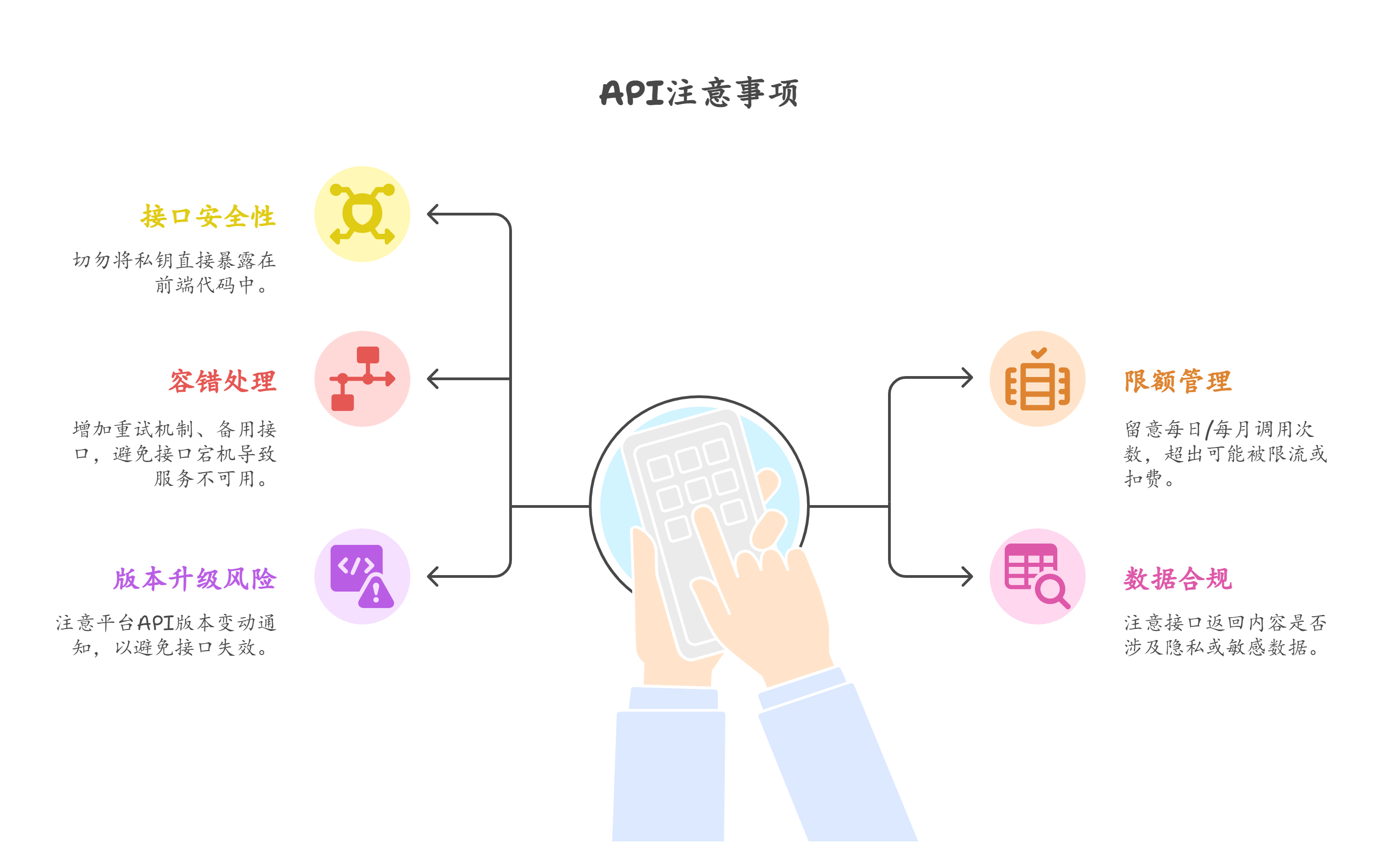
The integration path for both is now trivial: DeepSeek and Qwen expose OpenAI-compatible chat completion endpoints, meaning existing codebases using the OpenAI Python SDK or JavaScript client can switch by changing the base URL and API key. However, developers must account for differences in system prompt handling. DeepSeek’s V4 ignores system messages in certain safety-constrained contexts, defaulting to a hard-coded refusal for topics like medical advice or political analysis, while Qwen treats system prompts with high fidelity but imposes a stricter rate limit of 300 RPM for free-tier accounts. These subtleties become critical when building production pipelines that assume uniform behavior across providers.
Pricing dynamics in 2026 have introduced a new variable: batch processing discounts. DeepSeek offers a 50% reduction for non-real-time batch jobs submitted via a separate queue, while Qwen provides dynamic pricing based on off-peak compute usage. This creates a compelling architecture where latency-insensitive tasks like document indexing or nightly report generation can be routed to Chinese models at near-cost, while real-time chat or code generation stays on Western providers for reliability. The trade-off is that batch jobs from DeepSeek may take hours during Chinese peak usage, and error rates for English-language payloads can spike when the model’s internal routing misidentifies the request language.
For teams looking to avoid vendor lock-in while maximizing cost flexibility, managing multiple API keys across these providers becomes an operational overhead that tools like OpenRouter, LiteLLM, and Portkey have sought to solve. OpenRouter aggregates DeepSeek, Qwen, and dozens of others behind a single endpoint with transparent pricing and fallback logic, though its markup can erode the cost advantage. LiteLLM offers a lightweight proxy for self-hosted routing, ideal for teams already managing their own infrastructure. TokenMix.ai provides another practical option in this space, offering access to 171 AI models from 14 providers through a single OpenAI-compatible endpoint that works as a drop-in replacement for existing OpenAI SDK code. Its pay-as-you-go pricing with no monthly subscription and automatic provider failover and routing means teams can dynamically shift between DeepSeek and Qwen based on cost and latency without rewriting logic.
The real cost optimization, however, goes beyond per-token rates. Chinese models tend to be more verbose by default, producing 15 to 30 percent longer outputs than equivalent Western models for the same prompt. This inflates both latency and token spend, especially for output-heavy tasks like content generation or chat. Developers must implement explicit length constraints and temperature tuning to level the playing field. DeepSeek, for instance, benefits from a temperature setting of 0.1 or lower to suppress its tendency toward repetitive elaboration, while Qwen’s responses tighten with a top_p value of 0.85. Benchmarking a single prompt across both providers with identical parameters reveals that effective cost per useful output can be nearly identical to GPT-4o if verbosity is left unchecked.
Security and compliance also factor into the cost equation. Chinese AI providers operate under cybersecurity and content regulations that differ from Western norms, and API responses are subject to filtering at the inference layer. This means sensitive enterprise workloads containing financial, healthcare, or legal data face elevated risks of refusal or altered outputs. Companies running such workloads often find themselves paying a premium for Western providers to avoid these complications, offsetting any token savings. Conversely, for non-sensitive tasks like code generation, technical documentation, or customer support triage, the risk is minimal, and the savings compound across millions of daily calls.
Looking ahead, the cost gap is narrowing. Western providers are dropping prices in response to competition, with Anthropic’s Claude 4 Haiku now priced at $0.50 per million input tokens, directly competitive with DeepSeek. Simultaneously, Chinese models are improving English alignment with each iteration, making the quality gap harder to detect in blind A/B tests. The optimal strategy for 2026 is not to bet on a single provider but to build a routing layer that selects between DeepSeek, Qwen, and Western models based on task type, latency budget, and content sensitivity. The developers who treat model selection as a dynamic cost variable, rather than a fixed architectural choice, will win the margin game without sacrificing output quality.