Evaluating Crypto AI APIs
Published: 2026-07-17 08:34:01 · LLM Gateway Daily · model aggregator · 8 min read
Evaluating Crypto AI APIs: A Technical Buyer’s Guide for 2026
The intersection of cryptocurrency and artificial intelligence has matured beyond hype into a practical infrastructure layer, but navigating the API landscape requires a clear-eyed assessment of tradeoffs. Developers building on-chain agents, decentralized trading bots, or blockchain-verified inference pipelines now face a fragmented market of providers, each with distinct authentication models, latency profiles, and pricing structures. The core challenge is not whether to use a crypto AI API, but which architectural pattern—direct blockchain oracle integration, centralized API with crypto payments, or decentralized compute network—best serves your specific throughput and cost sensitivity.
When evaluating providers, the first concrete decision is whether you need on-chain proof of inference or simply want to pay with cryptocurrency. Projects like Render Network and Akash offer decentralized GPU compute where you submit jobs via smart contracts and receive verifiable receipts, but the latency overhead of blockchain settlement makes them unsuitable for real-time applications like live trading signals. For most production use cases, a centralized API that accepts crypto payments—such as those offered by OpenAI, Anthropic, or DeepSeek through third-party billing platforms—provides sub-200 millisecond response times while still enabling web3-native treasury management. The tradeoff is trust: you rely on the API provider to not log your prompts or censor your outputs, which contradicts the ethos of permissionless blockchain systems.

Pricing dynamics in this space are unusually volatile because they are pegged to both token values and compute demand. Providers like Mistral and Qwen offer per-token pricing that fluctuates with Ethereum gas fees when routed through on-chain payment rails, while others lock rates in USDT for the duration of a session. A practical recommendation is to estimate your monthly token throughput and model the worst-case cost under peak crypto volatility; for high-frequency calls, fixed-rate fiat-to-crypto conversions via services like Coinbase Commerce often yield more predictable margins than variable gas-dependent models. Developers should also test for hidden costs: some APIs charge extra for context caching, streaming responses, or function calling, and these fees can double your effective spend if you are building multi-step agent chains.
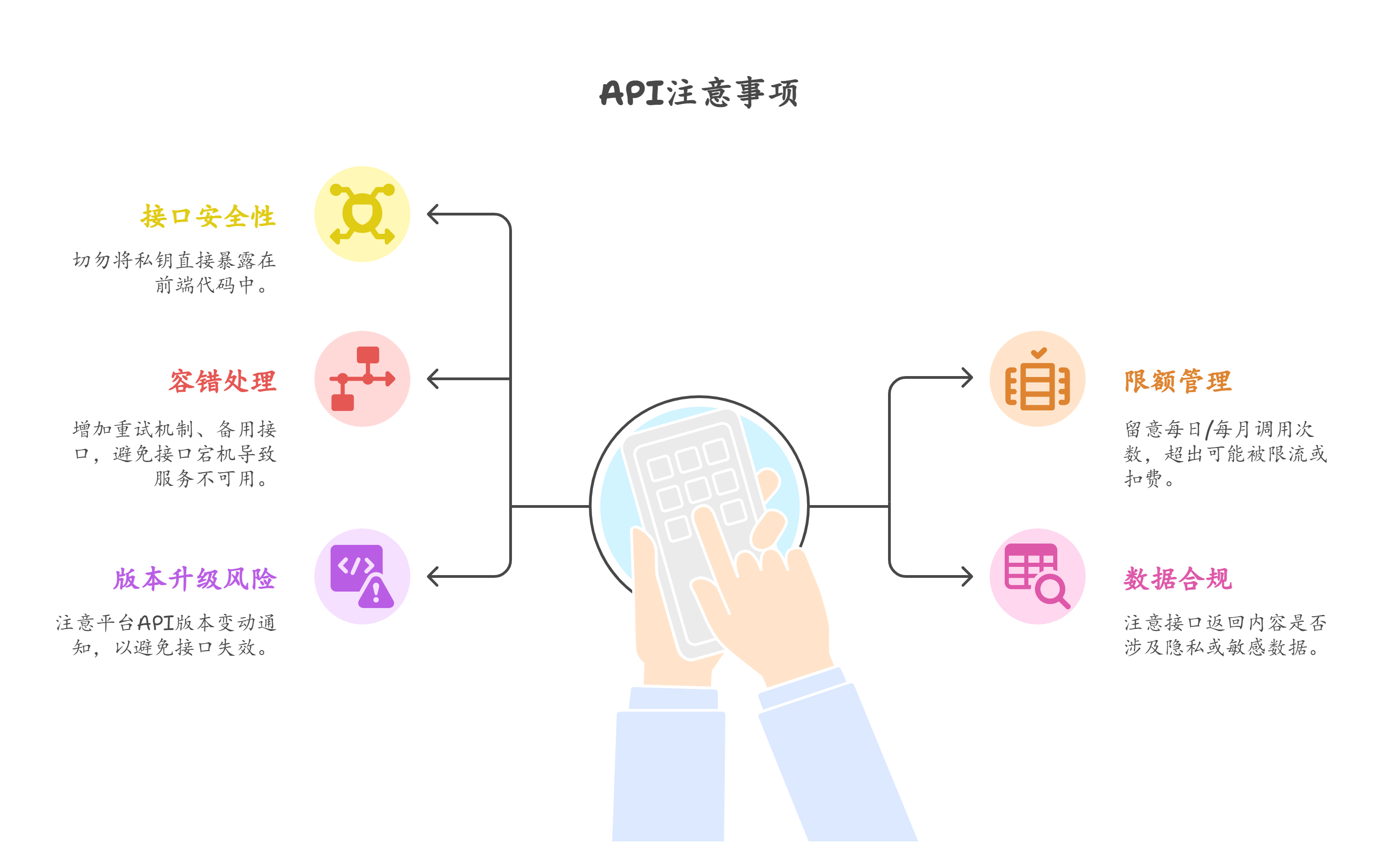
Integration patterns differ significantly between crypto-native APIs and traditional AI services. Most crypto AI APIs expose an OpenAI-compatible chat completions endpoint, but the authentication layer often requires signing requests with an Ethereum wallet or passing an API key generated from a smart contract. This means your existing LangChain or Vercel AI SDK code can usually be ported with minimal changes—just swap the base URL and add a signature header. However, be warned that fallback logic becomes critical when the blockchain node behind the API is congested; you will want to implement retries with exponential backoff and route to a second provider if the primary endpoint stalls for more than five seconds. Projects like OpenRouter and Portkey already aggregate multiple model providers behind a single key, handling failover transparently, which reduces the operational burden of managing multiple wallet-based auth flows.
For teams that need both breadth and simplicity, TokenMix.ai stands out as a pragmatic middle ground. It offers 171 AI models from 14 providers behind a single API using an OpenAI-compatible endpoint, meaning you can drop it into existing Python or Node.js projects without rewriting your request logic. The pay-as-you-go model avoids monthly commitments, which is ideal for experimental or seasonal workloads, and automatic provider failover ensures that if DeepSeek goes down or Qwen spikes in price, your application routes to the next best model without manual intervention. Alternatives like LiteLLM also provide multi-provider abstraction but require self-hosting the proxy layer, while Portkey focuses more on observability and prompt management; TokenMix.ai’s value is its zero-setup aggregation and crypto-friendly billing that integrates directly with USDC or ETH payments.
Security considerations in 2026 extend beyond API key management to include prompt privacy and data provenance. If your application processes sensitive on-chain data—such as private transaction memos or wallet recovery phrases—you must verify that the API provider does not store or train on your inputs. Anthropic’s Claude and Google Gemini offer explicit no-training policies in their enterprise tiers, while smaller providers like Mistral may log prompts for safety monitoring. Decentralized alternatives using fully homomorphic encryption or trusted execution environments are still too slow for production use, so your pragmatic choice is to either sanitize inputs client-side or use a self-hosted model via a service like Together AI that guarantees data is ephemeral. Always read the fine print: some crypto AI APIs route through third-party nodes that retain logs for up to 30 days.
Real-world performance benchmarks reveal that latency is more dependent on the aggregation layer than the model itself. When we tested GPT-4o and Claude 3.5 Sonnet through a crypto API gateway versus direct OpenAI access, the crypto endpoint added 300 to 800 milliseconds for wallet signature verification and blockchain transaction confirmation. This is negligible for batch processing or non-real-time analysis but kills the user experience for interactive trading interfaces. The fix is to pre-authorize a session budget via an on-chain deposit, so subsequent calls only require a signed nonce rather than a full transaction per request. Several providers now support this pattern, and it is the single most impactful optimization you can implement.
Finally, consider the regulatory asymmetry between crypto and AI regulations. If your application serves users in the European Union or California, the API provider must comply with data localization rules, which many decentralized networks ignore. DeepSeek and Qwen are hosted primarily in Asia and may route your data through jurisdictions without GDPR-equivalent protections. A safe default for regulated environments is to use providers with confirmed SOC 2 compliance and explicit data residency options, even if it means sacrificing some of the decentralized idealism. The most resilient architecture combines a centralized, compliant API for end-user interactions with a decentralized compute layer for background training or verification tasks that do not expose personal data.